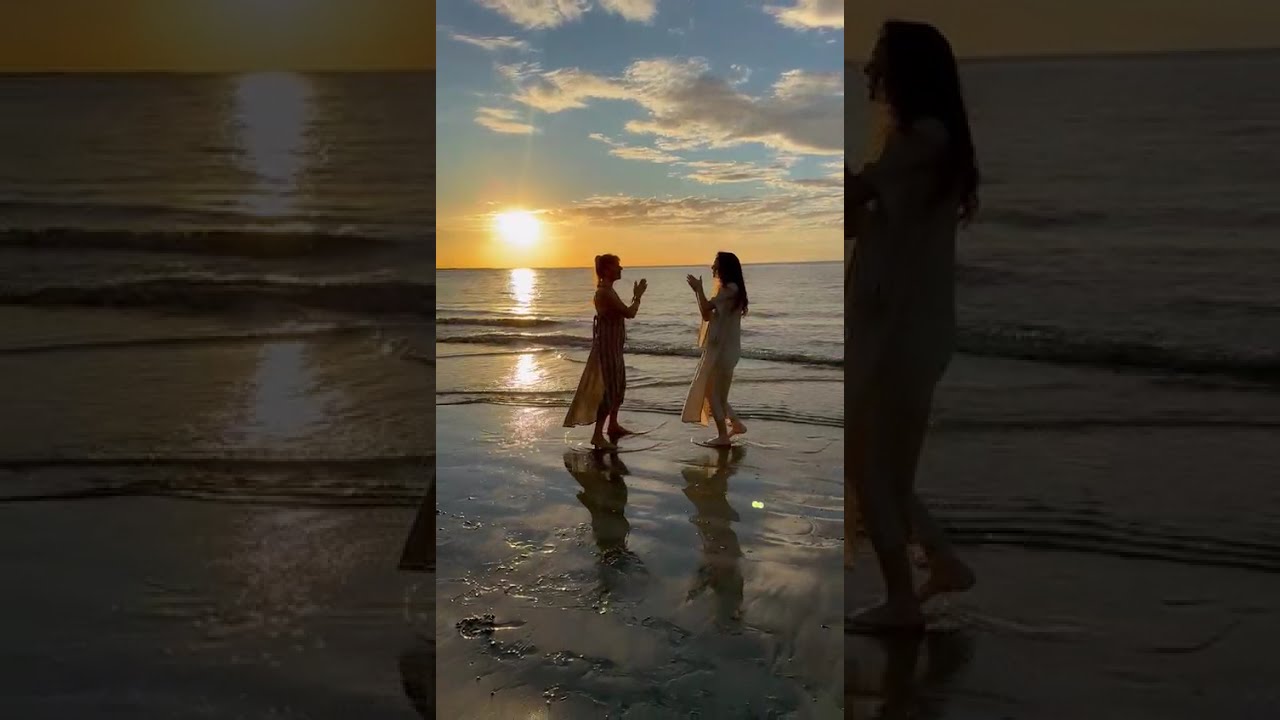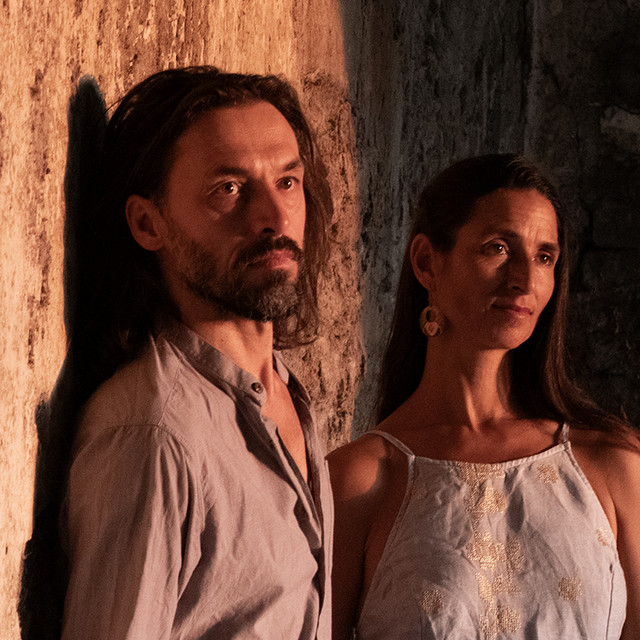
Mirabai Ceiba's Ocean is a kirtan—a call-and-response devotional chant—built on a single repeating metaphor: the ocean that refuses no river, and the open heart that refuses no part of you or me. The chant alternates between English lyrics and Sanskrit mantras (including invocations of Guru), creating a meditative practice that dissolves boundaries between self and other, acceptance and resistance. The piece works through repetition and musical call-and-response to embed its central teaching: that true openness means welcoming all tributaries, all aspects of being, without division.
What is the core metaphor of the Ocean chant?
The central image driving this kirtan is deceptively simple: the ocean refuses no river. In the opening verse, this line repeats several times, establishing the foundational teaching. An ocean—vast, containing, receptive—does not turn away any river that flows into it. Every tributary, no matter its origin or character, merges into the whole. Mirabai Ceiba then translates this natural image into psychological and spiritual territory: the Open Heart refuses no part of me, no part of you. The metaphor shifts from geography to interiority. The open heart becomes the ocean; the parts of ourselves we reject, deny, or hide become the rivers that seek to flow home. The practice, then, is learning to be that ocean—boundless, non-discriminating, willing to receive all that flows toward it.
How does repetition function as a teaching tool in this chant?
The song uses extreme repetition—the same four phrases return dozens of times across the eight-minute duration. This is not accidental or lazy; it is a core pedagogical method in kirtan and mantra practice. By repeating the same lines, the chant moves the listener from intellectual understanding into embodied knowing. The first time you hear "the ocean refuses no river," you might process it mentally. By the fifth, tenth, twentieth repetition, the rational mind begins to settle. The phrase starts to work differently—less as information to decode and more as a vibration to inhabit. The listener can begin to feel into the metaphor rather than think about it. This is why kirtan artists like Mirabai Ceiba use call-and-response structures and cyclical melodies: the form itself becomes a mirror of the teaching. Just as the ocean's waters cycle through rivers, evaporation, and rain, the chant cycles through its phrases, inviting the listener into that same circulation.
What do the Sanskrit mantras add to the chant?
Partway through the piece, after establishing the English teaching, Mirabai Ceiba introduces Sanskrit: Guru Guru, Guru good Guru, Guru Guru, Anduru Goodu Goodu. These are not random syllables. "Guru" appears throughout—a term meaning "teacher" or "one who dispels darkness." The repetition of "Guru Guru" invokes the principle of inner and outer guidance. There is also an invocation of expansion: words like "Anduru" carry the sense of the inner (antara in Sanskrit means interior or within). By weaving Sanskrit into the English lyrics, the chant bridges two traditions and two modes of consciousness. The English allows the rational mind to grasp the metaphor; the Sanskrit works below language, vibrating directly in the nervous system and opening channels associated with longer spiritual lineages. Many practitioners find that Sanskrit mantras, even when not consciously understood, carry transmitted power and meaning from centuries of repetition by devoted practitioners.
How does the open heart relate to spiritual acceptance?
The second half of the core teaching—the Open Heart refuses no part of me, no part of you—points to a subtle but profound spiritual principle: non-rejection. In most human conditioning, we are taught to accept some parts of ourselves and others, and to reject, suppress, or condemn others. This binary (good/bad, acceptable/unacceptable) fragments consciousness. The open heart, by contrast, does not operate on a principle of selection or judgment. It refuses nothing—not anger, not fear, not shame, not the difficult parts of another person. This does not mean condoning harmful behavior or abandoning discernment. Rather, it means recognizing that every part of the human experience, every emotion, every shadow, has a place within a larger compassionate awareness. When the heart "refuses no part," it creates space for integration. Parts that were exiled begin to return home. Parts of others that we might normally dismiss or fear can be met with curiosity rather than rejection. The chant, through its repetition and musical beauty, trains the nervous system to relax the perpetual guard against unwanted material and to practice this radical acceptance.
Why is call-and-response structure central to kirtan?
Throughout the performance, there is an implicit or explicit call-and-response structure. The lead voice (Mirabai Ceiba) sings a phrase; the response (whether from musicians, background singers, or the listener's own inner voice) completes it. "The ocean refuses no river, no river." "The Open Heart refuses no part of me, no part of you." This call-and-response mirrors relationship itself. It is a musical conversation, a dialogue. In the context of a live kirtan performance, this structure creates community: everyone in the room becomes a participant, not a passive audience. The repetition and musical hook allow even first-time listeners to join in. But beyond the social function, call-and-response embodies the teaching. Just as no river is turned away by the ocean, no voice is turned away in the circle of the chant. Every person who sings contributes to the whole. The form, once again, becomes the content. You learn about non-rejection not just from words but from the experience of being received into a collective voice.
What is the psychological impact of sustained musical repetition?
Neuroscience research on mantra and kirtan suggests that sustained repetition of meaningful phrases, especially when sung with melody and emotion, alters brain wave patterns and reduces activity in the default mode network—the neural system associated with self-referential thinking, worry, and rumination. When the same phrases cycle for eight minutes, the logical, analytical mind (which would normally filter and judge experience) begins to tire and quiet. This creates an opening for the limbic system (the emotional and sensing brain) and deeper layers of consciousness to become active. The open heart that the chant describes is not a metaphorical state only; it is also a neurological one—a shift in how the brain is organized. The repetition literally trains the system toward openness. Over time, with practice, a listener might notice that they feel more accepting, less reactive, more able to receive difficult emotions or feedback without immediate resistance. The chant does not just point to this state; it cultivates it through sound, rhythm, and repetition.
Where to go from here
If this kirtan resonates with you, consider engaging with it not as background music but as a structured practice. Sit with the song. Listen to it several times in succession, allowing the repetition to do its work. If you feel moved, sing along, let your voice join the call-and-response. Notice what arises as you repeat "the open heart refuses no part of me, no part of you"—where do you feel resistance in your own system? What parts of yourself do you habitually reject? What parts of others? The chant is an invitation to locate these boundaries and, gradually, to soften them. You might explore other kirtans by Mirabai Ceiba and similar artists to deepen your familiarity with call-and-response devotional practice. For deeper study of the metaphysics underlying this work, explore texts on non-duality and radical compassion—teachers like Ramakrishna Paramahamsa or contemporary teachers working in non-dual traditions often articulate philosophies that align with what this chant embodies. Finally, notice whether and how a sustained practice of chanting shifts your lived experience of openness, acceptance, and welcome in everyday life. The true measure of a spiritual practice is not how it makes you feel in the moment, but how it changes the way you meet the world.