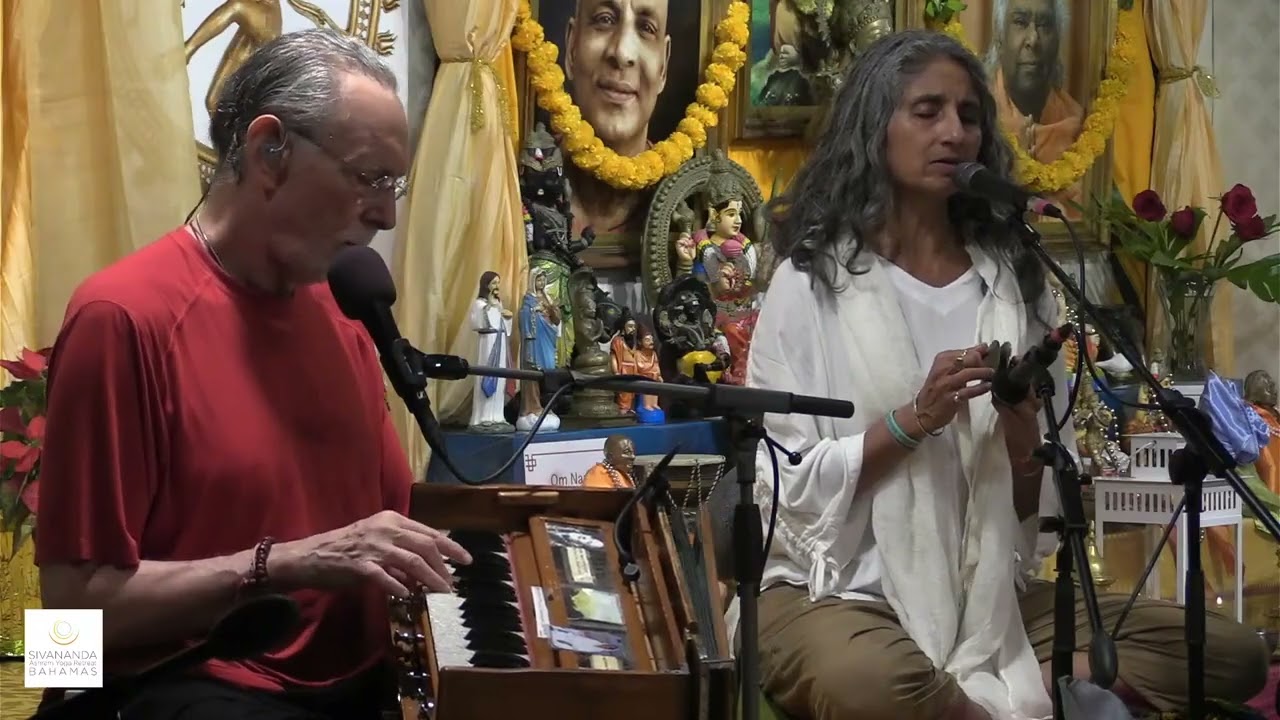
"Hari Guna Gao" is a devotional kirtan that asks us to sing of the qualities and divine attributes of Hari (Krishna), Radha, and their eternal love. Rooted in the Bengali street-singer tradition, the melody was composed by Jai Uttal on the day his friend and musical collaborator Don Cherry died—a moment of grief that transmuted into sacred song. The piece appears on both Uttal's original 1999 album Shiva Station and the 2014 re-recording Return to Shiva Station, performed here in intimate acoustic arrangement.
What Does "Hari Guna Gao" Mean?
The Sanskrit title translates directly: "sing of the qualities" (gao = sing, guna = qualities or attributes). Hari is a name for Vishnu and Krishna, the divine preserver and lover of devotion. The song's central instruction is to vocalize the divine virtues—not merely think about them or intellectualize them, but to voice them, embody them through sound. This is the heart of kirtan practice: repetition and vocal celebration of divine names and attributes as a form of direct spiritual engagement.
The lyrics invoke Krishna and Radha, the archetypal divine lovers in Hindu bhakti tradition. Radha's love for Krishna is considered the supreme model of devotion—selfless, unconditional, and expressed through longing and union. By singing "Hari Guna Gao, Radha Guna Gao, Krishna Guna Gao," the singer aligns with this lineage of devotion, offering their voice as a vehicle for remembrance and praise.
The Bengali Street Singer Roots
Uttal notes that the melody draws from "a baul song for the Indian street singers in Bengal" (3:01 in the video). Baul singers represent one of the world's oldest living folk-spiritual traditions—wandering minstrels of Bengal who sing of love, loss, the body as a spiritual vessel, and the divine as simultaneously transcendent and intimate. The baul tradition emphasizes direct experience over doctrine, and kirtan (devotional song) as a primary spiritual practice rather than supplementary ritual.
By grounding "Hari Guna Gao" in this baul lineage, Uttal connects the listener to centuries of Bengali mystics who understood singing as a form of alchemy—a transformation of breath, emotion, and intention into spiritual practice. The acoustic arrangement in this performance honors that tradition: voice and minimal instrumentation, allowing the melody and lyrical invocation to carry full weight.
Composed in Grief: The Don Cherry Connection
What makes this piece particularly potent is its origin story. Uttal explains: "It was an amazing day. It was the day that my good friend and my musical collaborator Don Cherry died. I was working on music and I got a phone call from my friend saying that Don had just passed away. I was so moved I started crying really bad and I got on the keyboard, just made these chords and made this melody" (3:01-3:13).
This is not incidental biography. The grief—genuine, sudden, and overwhelming—became the crucible in which the melody emerged. Rather than suppressing or delaying his emotional response, Uttal moved directly into creative expression at the keyboard, allowing sorrow to organize itself into harmonic and melodic form. This reflects a core bhakti principle: all emotional intensities—love, longing, fear, grief—are valid entry points into the divine. Grief is not opposed to devotion; it can be its deepest expression.
Don Cherry, the jazz trumpet virtuoso and world-music explorer who died in 1995, was himself a spiritual seeker and musical bridge-builder. That Uttal composed this kirtan on the day of Cherry's passing suggests the melody carries not just Uttal's sorrow, but a kind of spiritual honoring—a way of transfiguring loss into offerings of devotion.
The Album Evolution: From Shiva Station to Return to Shiva Station
"Hari Guna Gao" first appeared on Shiva Station, Uttal's groundbreaking 1999 album exploring the mysticism of Shiva, the Hindu god of transformation and cosmic dissolution. Shiva is the Lord who dances the world into being and out of being, the yogi absorbed in meditation, and the protector of devotees. The song's inclusion on an album about Shiva might seem tangential—the lyrics focus on Hari (Krishna) and Radha—but there is a deeper unity: all forms of devotion, whether directed toward Shiva's transcendence or Krishna's intimate love, point toward the same source.
In 2014, Uttal re-recorded the album as Return to Shiva Station, described as bringing "us closer to the music itself with unadorned, intimate arrangements that illuminate directly the spiritual heart of each composition." This acoustic live version exemplifies that intent. The studio re-recording stripped away production layers to expose the song's essential gesture: a human voice singing sacred names and attributes, with melody and harmony as the only support. The "acoustic style" is not a reduction but a clarification—removing everything that distracts from the direct transmission of devotion through sound.
Kirtan as Spiritual Technology
The act of singing "Hari Guna Gao" is not passive listening or intellectual contemplation. Kirtan is a participatory technology of consciousness. When a singer or a listener vocalizes or hears the names of Krishna, Radha, Hari, and Govinda, several things occur simultaneously:
- Sonic vibration: Sanskrit names are held to carry inherent power and resonance. Chanting or singing them aligns the nervous system and consciousness with specific frequencies believed to open channels to devotion.
- Memory and association: Each name carries centuries of lineage, stories, and spiritual meaning. Singing them invokes not just words but entire worlds of meaning and practice.
- Emotional release and coherence: As Uttal's own experience shows, kirtan can transmute difficult emotions—grief, longing, confusion—into organized, purposeful expression.
- Community and transmission: While this is a solo acoustic performance, traditional kirtan is often call-and-response, collective singing that creates a field of shared intention and presence.
The Eternal Lovers and Their Significance
The refrain shifts from the command to "sing the qualities" into affirmation: "Govinda Jaya Jaya Gopala Jaya Jaya / Radha Ramana Hari Govinda Jaya Jaya." Here, Jaya means "victory" or "hail to." Govinda and Gopala are names of Krishna emphasizing his role as protector of the flute (govinda) and cowherd (gopala). Radha Ramana means "the one who delights Radha," underscore the mutuality of their love.
In bhakti theology, the relationship between Radha and Krishna models the relationship between soul and divine. Radha is not merely Krishna's consort but his supreme devotee—her longing and separation from him is the template for human devotional longing. Every devotee becomes, in some sense, Radha; every invocation of Krishna's names is Radha's longing made audible. This is not romantic sentimentality but sophisticated mystical psychology: love and desire are recognized as spiritual forces equal in power to knowledge or will.
Where to Go from Here
If you want to experience the full scope of the work, listen to both versions: the 1999 original and the 2014 Return to Shiva Station recording. Notice how the acoustic arrangement opens space for the melody and lyrics to breathe. Consider learning the song yourself—kirtan traditions are meant to be participatory. The simplicity of the melody (evident in this live performance) makes it accessible to singers of any background.
Explore the broader context of Bengali baul music, which offers rich parallel traditions of devotion, embodied spirituality, and mystical folk wisdom. If the idea of grief as a gateway to spiritual expression resonates, contemplate how your own emotional intensities might become offerings rather than obstacles. Finally, research Jai Uttal's larger body of work, which consistently bridges Hindu, Buddhist, and Sufi devotional traditions while grounding them in contemporary musical forms and his own hard-won spiritual practice.