EveryEvent Madrid

すべてのEventsを見る

Find every event in Madrid

events

Concerts & Live Music
Festivals
Sports & Recreation
Food & Drink
Arts & Culture
Community
Family & Kids
Nightlife
Comedy
Theater
人気の目的地
BaliSedonaLos AngelesCosta RicaNew YorkSan FranciscoAustinMiamiJoshua TreeTulum
すべてのカテゴリを見るすべての目的地を見る

すべての機能を探索

イベントを成長させる強力なツール

プラットフォーム機能

スマートダイナミックプライシング
チケットカテゴリ
座席指定
カート放棄リカバリー
訪問者リカバリー
寄付とスライディングスケール
アフィリエイトシステム
チケットスキャナー
クーポンコード
カスタム質問
チケット共有
アップセルとアドオン
分析とレポート
メールシーケンス
ウェイトリスト / 通知 / リマインダー
探索
Discovery HubArtists & PerformersVenuesKnowledge Base
すべての機能を見る私たちについて
料金ブログ
すべてのイベントを見る

events

Concerts & Live MusicFestivalsSports & RecreationFood & DrinkArts & CultureCommunityFamily & KidsNightlife

人気の目的地

BaliSedonaLos AngelesCosta RicaNew YorkSan Francisco

探索

Discovery HubArtists & PerformersVenuesKnowledge Base

プラットフォーム機能

スマートダイナミックプライシングチケットカテゴリ座席指定カート放棄リカバリー訪問者リカバリー寄付とスライディングスケールアフィリエイトシステムチケットスキャナークーポンコードカスタム質問チケット共有アップセルとアドオン分析とレポートメールシーケンスウェイトリスト / 通知 / リマインダー
すべての機能を見る私たちについて
料金ブログ
ログイン新規登録イベント主催者
  • Browse All Events
  • Concerts & Live Music
  • Festivals
  • Sports & Recreation
  • Food & Drink
  • Arts & Culture
  • Community
  • Family & Kids
  • Nightlife
  • すべてのカテゴリ →
  • All Destinations →
  • For Promoters
  • For Artists
  • For Venues
  • For Festivals
  • For Event Spaces
  • For Nonprofits
  • For Bloggers
  • For Speakers
  • Brand Ambassador
  • Case Studies
  • 35万人以上のバイヤーネットワーク
  • カート放棄リカバリー
  • スマートダイナミックプライシング
  • チケットカテゴリ
  • 定期イベント
  • 座席指定
  • アフィリエイトシステム
  • ウェイトリスト / 通知
  • チケットスキャナー
  • 埋め込みウィジェット
  • Event Syndication
  • Message Center
  • Integrations
  • Reports
  • すべての機能 →
  • 概要
  • The Ecosystem
  • ブログ
  • 用語集
  • Inspiration
  • ヘルプセンター
  • お問い合わせ
  • APIドキュメント
  • ブランドアセット
  • 採用
  • プレス
  • 利用規約
  • プライバシーポリシー

Events

  • Browse All Events
  • Concerts & Live Music
  • Festivals
  • Sports & Recreation
  • Food & Drink
  • Arts & Culture
  • Community
  • Family & Kids
  • Nightlife
  • すべてのカテゴリ →

Getaways

  • All Destinations →

For Organizers

  • For Promoters
  • For Artists
  • For Venues
  • For Festivals
  • For Event Spaces
  • For Nonprofits
  • For Bloggers
  • For Speakers
  • Brand Ambassador
  • Case Studies

機能

  • 35万人以上のバイヤーネットワーク
  • カート放棄リカバリー
  • スマートダイナミックプライシング
  • チケットカテゴリ
  • 定期イベント
  • 座席指定
  • アフィリエイトシステム
  • ウェイトリスト / 通知
  • チケットスキャナー
  • 埋め込みウィジェット
  • Event Syndication
  • Message Center
  • Integrations
  • Reports
  • すべての機能 →

会社

  • 概要
  • The Ecosystem
  • ブログ
  • 用語集
  • Inspiration
  • ヘルプセンター
  • お問い合わせ
  • APIドキュメント
  • ブランドアセット
  • 採用
  • プレス
  • 利用規約
  • プライバシーポリシー
EveryEvent
© 2026 EveryEvent Madrid. 全著作権所有.
Inspiration

What Spiritual Awakening ReallyMeans: Beyond Thoughts

Eckhart Tolle
Eckhart Tolle
May 19, 2026
8 min read
Watch · 8

TLDR: Spiritual awakening doesn't require dramatic experiences or superhuman achievement. It begins the moment you notice there is a voice in your head—and the critical insight is that you are not that voice. The recognition of thought is itself not a thought; it is awareness or presence, a dimension of consciousness that exists underneath the incessant mental commentary. This spaciousness has always been there. We glimpse it in moments when thinking stops—a sunset, a baby's eyes—moments we often write off as accidental beauty rather than contact with a deeper dimension of consciousness that remains largely dormant in most humans.

Read · 6 sections

The Illusion That You Are Your Thoughts

One of the foundational misconceptions about consciousness is that thinking is something you do. Most people live under the assumption that the voice in their head—the continuous stream of commentary, judgment, memory, and anticipation—is who they are. This is the core delusion that keeps awakening dormant. When you examine this closely, you find that you don't actually think; you are being thought by thought. Thinking arises automatically, not by your conscious choice or command. You do not voluntarily initiate every thought that passes through awareness. The energy of thought simply generates itself, and most humans are so thoroughly identified with this process that they experience it as their identity.

This misidentification is so complete that language itself reinforces it. People say "I think" the way they say "I walk"—implying that thinking is a voluntary action under their control. But examine your own experience: Can you stop thinking right now? Not redirect it, but stop it completely? The fact that you cannot is evidence that thinking is not something you do. It is something that happens to you, something that has captured your sense of identity so thoroughly that you believe yourself to be nothing more than the thoughts themselves.

How Does the Recognition of Thought Differ From Thought Itself?

This is where the awakening begins to unfold. There is a crucial difference between thinking and recognizing thought. When you notice that there is a voice in your head—when you observe the commentary without getting swept into it—that observation is not itself a thought. The recognition that a thought is occurring is not a thought. This is the shift that opens the door to spiritual awakening.

Consider what happens when you read the words "that's interesting—there's a voice in my head." The thought about the voice arises. But before that secondary thought, there is something else happening: a direct recognition, an awareness of the thought itself. This recognition comes through what might be called awareness or presence—a dimension of consciousness that is not generated by the thinking mind, but rather stands apart from it and can observe it. This is what is meant by higher consciousness or the emerging new consciousness. It is not a thought; it is the capacity to be aware of thoughts.

What Is the Spaciousness Beneath the Mental Clutter?

In Zen Buddhism, there is a teaching about a student approaching a master with a full cup. The master asks, "How can I teach you Zen unless you first empty your cup?" This emptiness has been often misunderstood in Western spiritual culture as something missing or lacking. But the actual dimension being pointed to is better translated as spaciousness—a quality of consciousness that exists in every human being.

Spaciousness is not the absence of something negative, but the presence of a dimension of consciousness that underlies all mental activity. It is what remains when the constant stream of mental commentary temporarily stops. This spaciousness is the spiritual dimension of consciousness—the deeper or higher consciousness, though the terminology matters less than the direct recognition of it. It is already within you. The problem is that in most humans, this spaciousness remains a dormant faculty, obscured by the density of mental clutter that has accumulated over a lifetime. The mind is so full of automatic commentary, judgment, memory, and projection that most people have no experiential realization that anything exists beneath it.

Yet there are moments—fleeting moments that come to almost everyone—when this spaciousness becomes accessible. These are not accidents. They are direct contacts with a dimension of consciousness that is always present but usually unrecognized.

When Do We Actually Access This Deeper Dimension?

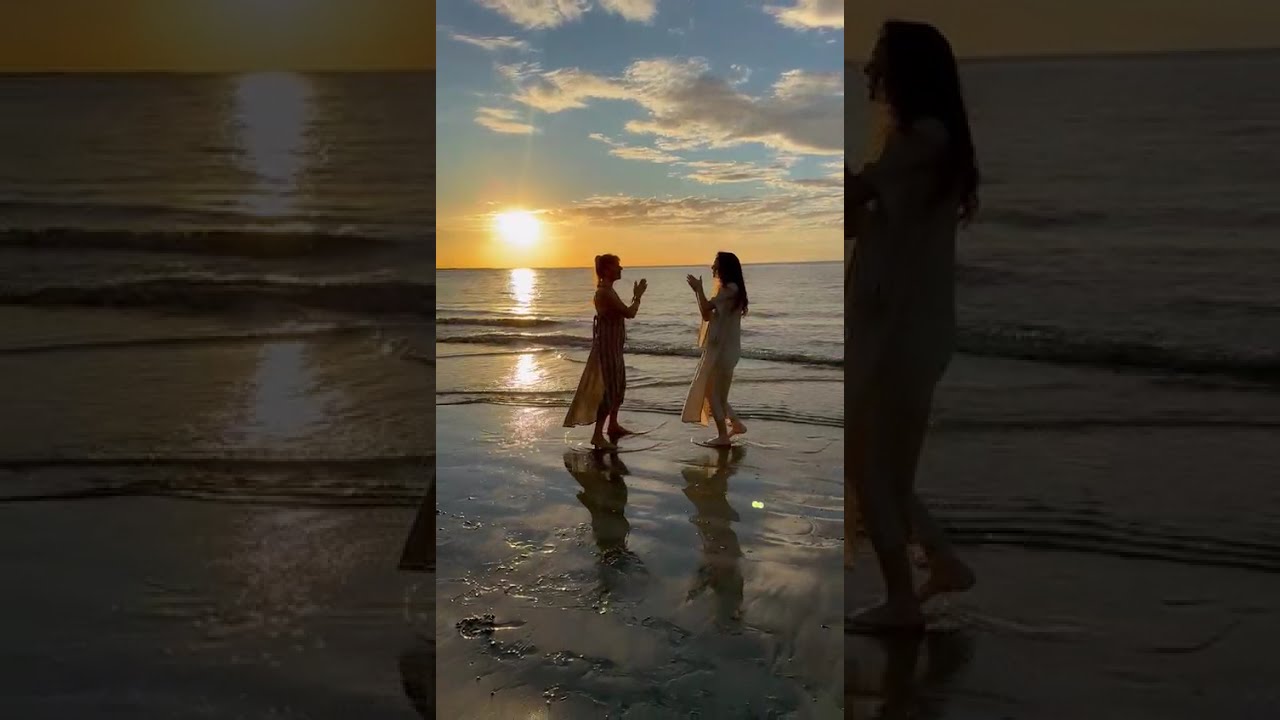
If you watch closely at your own experience, you will find that certain situations naturally interrupt the stream of thinking and open access to spaciousness. A sunset is one of the most common examples. You stand before an extraordinary vista of color and light, and you give it your complete attention. In that moment, you are not thinking about yourself, your problems, your history, or your anxious projections about the future. The incessant stream of thinking subsides. There is just this—the vastness and beauty in front of you. What you felt in that moment was not merely appreciation of external beauty, though that was present. What you felt was something deeper: a heightened aliveness, a sense of connectedness, and a profound peace. These came from the temporary cessation of the thinking mind.

But notice what happens afterwards. You move back into thinking and reflect on the moment: "That was so beautiful. Why did it touch me so deeply?" You try to explain it by attributing it solely to the external object—the sunset must have been particularly beautiful, the light was just right, the colors were vivid. This is partially true, but it misses the essential point. The true reason the moment felt so good is that, for those seconds, you were freed from the incessant stream of thinking. A dimension of consciousness opened that is not the thinking mind.

There is another common experience that illustrates this equally well: looking into the eyes of a baby, perhaps one year old. The baby is not yet thinking in the way adults think. Words have not accumulated. The conceptual mind has not yet fully formed. And yet there is consciousness there—an intense consciousness looking through those eyes, unmediated by judgment or fear or agenda. In that moment when you lock eyes with the baby, something in you recognizes something in the baby that transcends thought. Your stream of thinking pauses. The baby is not thinking about you, and in that moment, you stop thinking about yourself. For a few seconds, both of you are in that dimension of pure being, of presence without commentary. And in those seconds, you feel profoundly good. This too is not an accident. The baby has temporarily liberated you from your own mind.

Why Do Most People Not Recognize These Moments as Spiritual?

Most people experience these flashes—in nature, with children, in moments of beauty or danger when the thinking mind goes quiet—but they do not recognize them as spiritual experiences. They attribute them to the external circumstance or to a momentary pleasant feeling, without understanding that these are glimpses into a dimension of consciousness that transcends the thinking mind. And yet, even without understanding them intellectually, these moments serve a vital function: they keep people sane. They provide enough contact with a deeper dimension of existence to sustain hope that life is worth living.

For some people, the cumulative burden of mental noise becomes so dense that even these natural gateways are blocked. Their minds are so relentlessly active, so full of judgment and interpretation, that they cannot truly perceive a baby without labeling it. They see the baby and think "that's a cute baby" rather than truly seeing the baby—the direct consciousness present before the mind's categorization. They cannot be present with beauty because their mind is always narrating, comparing, assessing. The veil between themselves and direct experience becomes total.

Where to Go From Here

The beginning of spiritual awakening is simple: notice the voice. Notice that there is a stream of thinking, and notice that in the very moment of noticing, something else is there—something that is not a thought, not a feeling, not the voice itself, but the awareness of the voice. Do not try to quiet the mind or achieve some special state. Simply be aware that the awareness observing the thoughts is not itself a thought. Allow yourself to recognize the spaciousness that has always been underneath the mental activity. You need not wait for a sunset or a baby to access this. It is available now, in this moment, in the very gap between one thought and the next, in the awareness that is aware of reading these words. The most important realization in life is not what you achieve in worldly terms—your success or failure, gain or loss—but the recognition of this spacious dimension of consciousness that exists in you, waiting to be noticed.

Transcript

[0:00] Let's say you see this vast this

[0:03] incredible sunset or whatever and for a

[0:05] moment you give give it your complete

[0:08] attention and for a moment you're not

[0:11] thinking about

[0:12] yourself your problems your problematic

[0:16] life history or your even more

[0:18] problematic future. You're actually

[0:21] you're not thinking about anything for a

[0:23] moment. The stream of thinking subsides

[0:25] and you and it goes

[0:36] And for many the beginning of spiritual

[0:39] awakening is to realize that there is

[0:42] this stream of continuous commentary in

[0:45] their minds and that is to think oh

[0:51] that's interesting that's a thought of

[0:54] course but before the thought that's

[0:55] interesting there's the the recognition

[0:58] It's the it's the voice in the head and

[1:01] the recognition is not the voice in the

[1:03] head. Although you might say it after

[1:05] the recognition but in the moment of

[1:07] recognizing there's a voice in the head

[1:09] that's not a thought. The recognition of

[1:12] the recognition of thought is not a

[1:14] thought. The recognition of thought

[1:16] comes through awareness or presence. And

[1:18] awareness or presence is

[1:21] the higher consciousness, the arising

[1:24] new consciousness.

[1:27] Wow. So that's

[1:30] that is really the meaning of spiritual

[1:32] awakening. There's the voice in the

[1:34] head. And people say things like

[1:40] I think

[1:42] they don't think because thinking is not

[1:44] a voluntary action for them. So it's a

[1:47] delusion to even say I think.

[1:51] You don't think you are being thought by

[1:52] thought.

[1:55] You are created by thought.

[1:58] This that energy field.

[2:02] It's amazing.

[2:04] So the master said, "How can I teach you

[2:07] then unless you first empty your cup?"

[2:09] Now that's a huge demand. If if I'm full

[2:12] of clutter, mental clutter, how am I

[2:15] going to empty my cup? I would be

[2:16] immediately be enlightened if I could

[2:18] empty my cup.

[2:22] But the the teaching points to

[2:24] something. It points to this the word

[2:26] empty and that's interesting that is an

[2:29] important word in Buddhism

[2:32] and I don't think it's a good

[2:34] translation. It sounds like a something

[2:38] missing or something like that. So I

[2:40] have an alternative translation for the

[2:42] Buddhist term emptiness. So that empty

[2:45] is an important word. So remember the

[2:47] Zen master said, "How can I teach you

[2:50] Zen unless you first empty your cup

[2:53] empty?"

[2:55] Emptiness,

[2:57] my alternative translation for that is

[2:59] spaciousness.

[3:01] Spaciousness is a dimension of

[3:04] consciousness

[3:06] in you.

[3:09] And that is what we could call the

[3:12] spiritual dimension of consciousness.

[3:15] the deeper or the higher consciousness.

[3:18] Just words doesn't matter.

[3:21] And that is

[3:25] in every human. It's there.

[3:29] Many don't know that it's there because

[3:31] the clutter

[3:33] is so dense that they have no

[3:37] realization of the underlying

[3:39] spaciousness.

[3:40] And that is why I say in millions of

[3:44] humans that is still a dormant faculty

[3:47] so to speak.

[3:49] So the most important realization in

[3:51] your life

[3:53] much more important than what you have

[3:55] achieved

[3:56] on the level of the world

[3:59] whether your life in worldly terms is

[4:02] regarded as a huge success

[4:06] or a dismal failure or for most of you

[4:10] probably something in between.

[4:13] That's normal. Sometimes you fail,

[4:16] sometimes you succeed. And then you move

[4:19] from gaining, losing, high, low, up and

[4:23] down.

[4:25] That's the

[4:28] identity for most.

[4:31] So

[4:34] the clutter of your mind

[4:38] is there

[4:40] but there are moments

[4:43] in your life when

[4:47] you become aware of something

[4:51] spacious underneath it. But you may not

[4:54] call it like call it that. You may not

[4:57] call it anything.

[4:59] It may arise for example in and oh I for

[5:05] in many humans who may not never have

[5:08] heard of anything spiritual they're

[5:11] still they're out there they don't know

[5:14] that the little bit of that is in them

[5:19] so but they don't know it there little

[5:21] little glances come occasionally into

[5:23] their lives of that dimension it's not

[5:26] enough to actually say that the

[5:29] spiritual dimension has awakened in

[5:30] them. But little

[5:34] flashes come up

[5:36] now and then into their lives and that

[5:39] is enough. Those little flashes from the

[5:42] that dimension come into their lives and

[5:45] that is enough to keep many people sane.

[5:51] And those lashes can come when they

[5:55] you might think when you go out into

[5:57] nature and you see something

[5:58] extraordinarily beautiful like a sunset

[6:02] for a moment you go ah

[6:06] or the vastness of the ocean or the sky

[6:11] or the elements the wind the storm and

[6:16] for a moment you go

[6:18] and it's a moment of intense aliveness.

[6:21] And you feel

[6:23] and then you may remember that moment a

[6:25] little later. That was such a beautiful

[6:27] moment. Why was it? Yes, maybe what you

[6:31] perceived was beautiful, but you felt

[6:33] something in that moment. You felt a

[6:36] heightened sense of aliveness and a deep

[6:39] peace and connectedness with being so to

[6:41] speak. You see

[6:44] why? Because

[6:46] that moment of sense perception of

[6:49] something vast or beautiful freed you

[6:54] for a moment from the incessant stream

[6:57] of thinking. So the incessant stream of

[6:59] thinking you let's say you see this vast

[7:02] this incredible sunset or whatever and

[7:04] for a moment you give give it your

[7:07] complete attention and for a moment

[7:10] you're not thinking about

[7:12] yourself your problems your problematic

[7:15] life history or your even more

[7:18] problematic future

[7:20] actually you're not thinking about

[7:21] anything for a moment the stream of

[7:23] thinking subsides and you and it goes

[7:31] And that is without knowing it. You have

[7:34] a little flash has come up from that

[7:37] dimension. And is and then the next

[7:40] moment it may come up a few days later

[7:42] again when you look into the eyes of a

[7:45] baby one year old maybe just

[7:49] in the street or in a cafe and baby

[7:53] looks at you and the baby's one year old

[7:56] and the eyes are like the baby's

[8:09] And you know instinctively that the baby

[8:12] is not thinking about you

[8:15] because thinking hasn't started yet. The

[8:18] words have not accumulated yet. The

[8:20] thoughts haven't started yet. And yet

[8:22] there's a consciousness there. And you

[8:24] can see very clearly there's an intense

[8:25] consciousness that looking through those

[8:27] eyes at you without judging you in any

[8:30] way. And in that moment for just a few

[8:34] seconds you feel so good. And you said

[8:40] why do you feel so good? Because at that

[8:43] moment the baby liberated you from your

[8:47] stream of thinking. And again a little

[8:49] bit of spaciousness opened up inside

[8:52] you. And so this the

[8:55] for those few seconds when you looked

[8:56] into the eyes of the baby you were not

[8:58] thinking and the baby wasn't thinking.

[9:01] So the b through the baby you you are

[9:04] able to be in that dimension and it felt

[9:08] so good

[9:10] spontaneously they can arise. They're

[9:12] not recognized by people as ultimately

[9:16] spiritual but they are. And so many

[9:19] people there are millions of people who

[9:20] experience those things briefly but

[9:23] that's enough to give you sense still of

[9:26] life is worth living. And then there are

[9:28] others who are so burdened by their

[9:31] minds they cannot even communicate with

[9:33] a baby. They cannot even perceive the

[9:35] beauty of nature anymore because their

[9:37] mind is so noisy that they never there's

[9:40] a total veil. So they they don't look at

[9:43] the baby like

[9:46] they they look at the baby, oh that's a

[9:48] nice baby. They don't really see the

[9:50] baby

[9:52] immediately. It's labeled.

Eckhart Tolle
AuthorEckhart Tolle

German-born spiritual teacher whose 1997 book The Power of Now became one of the most widely read spiritual works of the 21st century. After a profound transformation at 29 — movin…

View profileWebsite
Explore Topics
ConsciousnessAwarenessEgo-mindPresenceSpiritual-awakening

Got Questions?

Frequently Asked Questions

No. Spiritual awakening is not about achieving something new, but recognizing what is already present. It begins the moment you notice there is a constant voice in your head and realize that the awareness observing that voice is not itself a thought. The spaciousness underneath the mind has always been there; awakening is simply noticing it.
Because thinking is so constant and automatic that you have been thoroughly identified with it since childhood. You believe you think, when actually you are being thought by thought. The mind generates itself involuntarily, not under your conscious control, yet you experience it as your identity because there has been no clear recognition of the awareness that observes the thinking.
When you notice that a thought is occurring—when you observe a thought without getting swept into it—that observation itself is not a thought. The recognition of thinking is fundamentally different from thinking itself. This recognition comes from a dimension of consciousness called presence or awareness, which exists prior to and independent of the thinking mind.
You already access it briefly in moments when thinking stops naturally—sunsets, looking at a baby, moments of beauty or danger. But you can also notice it directly by recognizing the awareness that observes your thoughts right now, without trying to change anything. The spaciousness exists in the gap between one thought and the next and in the very moment of awareness observing mental activity.
In these moments, the incessant stream of thinking temporarily stops. When your mind is quiet, you naturally access a deeper dimension of consciousness characterized by aliveness, peace, and connectedness. The external beauty or the baby's innocent presence are not the source of the good feeling—they are simply what triggered your mind to pause long enough to access the underlying spaciousness.
You do not need to escape or fight your thoughts. Simply recognize that there is a difference between the thoughts and the awareness that observes them. You are not the voice in your head; you are the awareness aware of the voice. This recognition happens not through more thinking, but through a direct noticing that is available to you right now.
The Buddhist term often translated as emptiness is better understood as spaciousness—a quality of consciousness, not a lacking. It is a dimension of awareness in every human being that exists underneath the mental clutter. It is not empty of consciousness; rather, it is the infinite openness of consciousness itself, free from the limitation of conceptual thinking.

Continue Reading

More from Eckhart

View All
God Beyond the Sky: Rethinking Divine Nature
Featured

God Beyond the Sky: Rethinking Divine Nature

God is not an external judge deciding human suffering. Suffering itself becomes the mechanism through which consciousness awakens to itself.…

1 min read
God, Suffering, and the One Life Across Traditions
Featured

God, Suffering, and the One Life Across Traditions

Eckhart Tolle explores how Islam, Buddhism, and Greek philosophy all point to the same ultimate reality—and why the problem of suffering dis…

1 min read
Why Humanity Cannot Sit in Silence: Disconnection from Being
Featured

Why Humanity Cannot Sit in Silence: Disconnection from Being

The root of human conflict lies in disconnection from the being dimension—the inability to find peace when alone. When disconnected from bei…

1 min read
Who You Really Are Beyond Surface Identity
Featured

Who You Really Are Beyond Surface Identity

You are not your body, name, or conditioned mind. Eckhart Tolle reveals the distinction between surface identity and deeper being.…

1 min read

Keep exploring

Continue your journey

More wisdom and gatherings from across the BrightStar directory.

More Articles

Browse the full library of teachings, interviews, and guides.

Back to all articles →

Teachers & Artists

Explore the lineages, musicians, and guides of the conscious world.

Explore artists →

Find an Event

Kirtan, retreats, sound baths, breathwork, festivals — happening soon.

Browse events →
Read more from BrightStarCreate Free Account
Host your own gatherings?Try the Demo