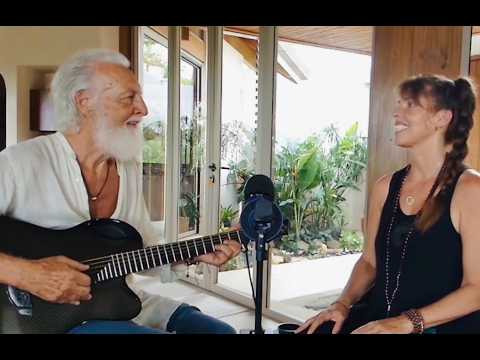
This video presents a performance of Sri Nanda-Nandanastakam, a classical Sanskrit devotional hymn, filmed in the grounds of Maharishi Mahesh Yogi's Transcendental Meditation ashram in Rishikesh where the Beatles studied in the 1960s. The piece serves as both a musical expression and a spiritual practice rooted in Hindu devotional tradition, specifically honoring Krishna through the veneration of his mother Nanda and the joy of his divine play (lila).
What is Sri Nanda-Nandanastakam?
Sri Nanda-Nandanastakam is a classical Sanskrit devotional hymn that forms part of the wider tradition of Krishna bhakti (devotional worship). The title itself breaks down into several Sanskrit components: "Sri" (auspicious or divine), "Nanda" (the name of Krishna's adoptive father), "Nandana" (the son of Nanda, referring to Krishna), and "stakam" (an eight-verse prayer or hymn). The chant specifically celebrates Krishna as the divine child and the embodiment of playful cosmic energy.
This particular hymn tradition belongs to the Bhakti movement, a Hindu devotional approach that emphasizes direct emotional connection with the divine through singing, chanting, and personal devotion. Unlike more austere or intellectual paths to spiritual realization, bhakti explicitly values the heart's engagement with divinity, seeing the relationship between devotee and deity as central to spiritual practice.
The Sacred Context: Rishikesh and the TM Ashram
The video was filmed in the grounds of the Transcendental Meditation ashram in Rishikesh, the same ashram where the Beatles stayed in 1968 to study with Maharishi Mahesh Yogi. This historical setting adds multiple layers of significance: Rishikesh itself is one of Hinduism's holiest cities, located on the banks of the Ganges River and traditionally considered a center of spiritual pilgrimage and learning. The ashram grounds, now described as "overgrown and derelict," serve as a living archive of both Eastern spiritual teaching and Western cultural history.
The choice to film this chant in such a location is not incidental. Rishikesh has been a seat of Vedic learning and spiritual practice for centuries. By performing Sri Nanda-Nandanastakam in these grounds, the artists are connecting contemporary spiritual practice with both the classical Hindu tradition the hymn originates from and the more recent cross-cultural spiritual experiments of the 1960s counterculture. The mention of the "White Album floating through the trees" points to the cultural collision that occurred when Western musicians came to India seeking transcendence through Eastern philosophy.
Krishna, Nanda, and Divine Playfulness
Central to understanding this chant is the figure of Krishna as portrayed in Hindu sacred literature, particularly the Bhagavata Purana. In that text, Krishna is born to Devaki but raised by Nanda and his wife Yasoda in the rural village of Vrindavan. This childhood becomes the focus of intense devotional meditation—Krishna's playfulness, his pranks, his flute-playing, and his relationships with the cowherd girls (gopis) form a rich symbolic vocabulary in Hindu spirituality.
The chant honors Nanda and celebrates Krishna as Nanda's son, using this family relationship as a doorway into understanding divine love and cosmic play (lila). In this framework, the universe itself is understood not as a machine or a burden but as the divine's spontaneous creative expression and playful performance. By chanting this hymn, practitioners attune themselves to this understanding of existence as infused with divine joy and purpose.
How Does Chanting Function as Spiritual Practice?
In the Hindu and yogic traditions, chanting (japa) serves multiple functions simultaneously. On the surface level, it is an act of devotion and praise. Deeper, it is understood as a form of meditation—the repetition of sacred syllables, words, and phrases anchors the mind and heart to a single focus, quieting the ordinary mental chatter that obscures spiritual awareness. The vibrational quality of Sanskrit itself is considered significant in these traditions; Sanskrit syllables are thought to contain specific energetic or consciousness-related properties.
Group chanting, as performed in this video, adds communal and resonant dimensions. The coordination of voices, the shared intention, and the collective energy generated through synchronized sound are understood to amplify the practice's effects. For those trained in these traditions, chanting is not merely emotional expression but a structured technology for consciousness development.
The Bhakti Tradition and Heart-Centered Spirituality
Sri Nanda-Nandanastakam belongs to a broader bhakti framework that diverges significantly from purely ascetic or knowledge-centered (jnana) approaches to spirituality. Rather than seeking liberation through renunciation, harsh discipline, or intellectual realization, bhakti practitioners cultivate devotion, surrender, and love as the primary means of spiritual transformation. This approach has deep roots in medieval Indian poetry and philosophy, and it remains vibrant today.
In bhakti practice, the relationship with the divine is often understood in terms borrowed from human relationships—as lover and beloved, parent and child, servant and master. Krishna, in particular, is often meditated upon as the ultimate beloved, and the emotional intensity directed toward this meditation is understood not as sentimental but as spiritually transformative. This is why a chant like Sri Nanda-Nandanastakam can function simultaneously as prayer, meditation, art, and philosophy.
Sanskrit and Sacred Sound
The use of Sanskrit in this chant is not arbitrary. Sanskrit is the classical language of Hindu scriptures, and within the yogic and Vedantic traditions, it is understood that Sanskrit mantras and hymns carry specific vibrational properties. Each syllable (aksara) is thought to correspond to particular frequencies and consciousness states. The tradition teaches that correctly pronounced Sanskrit carries transformative power beyond its literal meaning.
For modern practitioners encountering this chant, even without fluency in Sanskrit, the act of engaging with these sounds is understood to be beneficial. The training of the mouth and ears, the focus required for pronunciation, and the intention to connect with a classical spiritual tradition all form part of the practice.
The Modern Context: Spiritual Revival and Cultural Bridge
The fact that this chant is being performed and filmed in the 21st century, in the ruins of an ashram visited by Western seekers decades earlier, speaks to ongoing currents in global spiritual culture. Since the 1960s, Hindu devotional practices, particularly those associated with Krishna, have found audiences well beyond India. The International Society for Krishna Consciousness (ISKCON), founded in 1966, brought these practices to the Western world in a systematic way. Today, kirtan (call-and-response devotional singing) and chanting are thriving in Western cities and retreat centers.
The performance of Sri Nanda-Nandanastakam in this context represents both preservation and living continuation. The artists are honoring a classical tradition while also demonstrating its continued relevance and power for contemporary spiritual seekers.
Where to go from here
If this performance resonates with you, consider exploring the wider world of Krishna bhakti and kirtan. The Bhagavata Purana offers detailed narratives about Krishna and Nanda that provide textual context for devotional practice. For those interested in learning chanting themselves, kirtan communities in most major cities offer open sessions where newcomers can participate without prior knowledge. Teachers like Deva Premal and Miten offer guidance on both the practice and meaning of traditional chants. The broader bhakti tradition also intersects with yoga philosophy, particularly the path of bhakti yoga outlined in the Bhagavad Gita, which can deepen understanding of how devotional practice functions within the larger framework of Hindu spirituality.