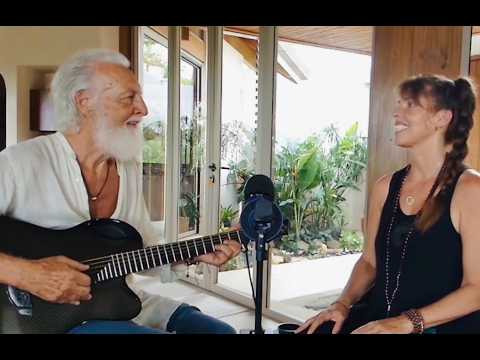
Deva Premal and Miten, accompanied by The Temple Band, perform the Gayatri Mantra—one of Hinduism's most ancient and revered Sanskrit invocations—live in concert at NIDA in Sydney, Australia on February 14th, 2020. The performance invites practitioners to meditate upon the radiant source of all things and awaken to the divine light of pure consciousness through this sacred chant.
What Is the Gayatri Mantra?
The Gayatri Mantra is one of the oldest and most universally respected mantras in Hindu and Vedic traditions, appearing in the Rigveda and forming a core spiritual practice across multiple schools of yoga and meditation. The mantra itself reads:
Om bhur bhuvah swaha
Tat savitur varenyam
Bhargo devasya dhimahi
Dhiyo yonah prachodayat
A widely used English translation describes its purpose: "Meditating upon the adorable, enchanting and radiant source of all things, we awaken to the divine light of pure consciousness." The mantra is addressed to Savitur, the solar deity in Vedic cosmology, though modern interpretations understand it as an invocation of universal creative consciousness rather than a literal sun god. Each line carries specific layers of meaning—from the realms of being (bhur, bhuvah, swaha representing earth, atmosphere, and heavens) to the qualities of the divine source (radiant, enchanting, worthy of worship).
How Does Mantra Chanting Awaken Consciousness?
Mantra practice operates on multiple levels simultaneously. At the surface level, the Sanskrit syllables contain specific vibrational frequencies believed to attune the nervous system toward higher states of awareness. When chanted, particularly in group settings or with musical accompaniment as in this live performance, the sound vibrations create a resonant field that can quiet the thinking mind and allow direct experience of what the mantra describes—the divine light of pure consciousness.
The cognitive dimension of mantra involves meditation upon meaning. By repeatedly reflecting on the mantra's intention—awakening to the radiant source of all things—the practitioner gradually internalizes this truth. The mind stops fixating on its habitual concerns and aligns with the universal consciousness the mantra points toward. This is why traditional teachers recommend both pronunciation practice and contemplation of the mantra's significance.
The Role of Live Performance in Mantra Practice
Group chanting of mantras amplifies their effect beyond solitary practice. When multiple voices merge in unison, the individual ego-boundaries that normally separate us dissolve into a shared sonic and spiritual field. A live concert performance with professional musicians—in this case, featuring The Temple Band with bass, piano, and drums—brings additional layers of harmonic support that both aesthetically enhance the experience and deepen the meditative quality.
The setting at NIDA (National Institute of Dramatic Art) in Sydney in February 2020 created a structured container for this collective practice. Rather than casual listening, attendees gathered with the conscious intention to participate in a sacred chant, creating a community of practitioners temporarily unified in purpose. This amplification is one reason why mantras have been transmitted through live performance and in group settings for thousands of years—the power multiplies when consciousness aligns together.
Understanding the Gayatri's Structure and Meaning
The mantra is composed in a specific meter called Gayatri Chandas (the meter itself is named after this mantra due to its supreme importance). Breaking down the meaning: "Tat savitur varenyam" means "that source worthy of meditation." Savitur refers to the solar principle of illumination and consciousness in Vedic thought—not the physical sun alone, but consciousness itself, the light that illuminates all existence. "Bhargo devasya dhimahi" translates approximately to "the radiance of the divine we meditate upon." "Dhiyo yonah prachodayat" can be understood as "awaken our intellect" or "illuminate our discernment."
The opening "Om bhur bhuvah swaha" invokes three dimensions of reality. Bhur represents the physical world, bhuvah the subtle realm of mind and energy, and swaha the causal realm of pure consciousness. By beginning here, the mantra acknowledges all dimensions of existence before directing attention toward their ultimate source.
Why This Mantra Endures Across Traditions
The Gayatri Mantra's longevity across millennia and its adoption across different schools of Hinduism, Buddhism, and contemporary spiritual practice suggests it touches something universal. Unlike mantras tied to specific deities or traditions, the Gayatri addresses consciousness itself—the radiant, illuminating principle underlying all existence. A secular practitioner might understand "Savitur" as universal consciousness or creative intelligence; a devotional practitioner might experience it as the divine radiance of God; a yogi might recognize it as pure awareness itself. This flexibility without compromise of depth is why the mantra remains relevant.
Modern neuroscience has begun validating what traditional practitioners have always known: repetitive chanting of Sanskrit mantras creates measurable changes in brain wave patterns, reducing activity in the default mode network (the mind's habitual thinking patterns) and increasing coherence in areas associated with focused attention and interoception. When performed in group settings with musical accompaniment, these effects amplify further.
The Experience of Chanting the Gayatri
Those who practice the Gayatri regularly report several consistent experiences. First is the stilling of the mind—the mantra's rhythm and repetition naturally interrupt compulsive thinking. Second is an experience of expanded awareness or connection to something larger than individual identity. Third is a subtle but real shift in how one perceives reality, with increased clarity and brightness in perception. Some practitioners describe it as "tuning the instrument of consciousness" to frequencies naturally aligned with peace, clarity, and compassion.
The live concert format adds another dimension: the experience of shared consciousness. When practiced with others, especially with skilled musicians providing harmonic and rhythmic support, many report feeling held or enveloped by the collective field, a dissolution of the boundary between self and other that points directly to the mantra's intended realization.
Where to Go From Here
If this introduction to the Gayatri Mantra resonates, begin with simple daily practice. Set aside 5-10 minutes to chant the mantra slowly and mindfully, either silently or aloud. Many practitioners find it effective to chant 108 repetitions (a sacred number in Hindu practice), using a mala (prayer bead necklace) to count. As you practice, allow your attention to rest lightly on the meaning—meditating upon the radiant, divine source of all things. Over weeks and months, notice subtle shifts in your clarity, peace, and sense of connection to something larger than yourself. For deeper study, explore translations and commentaries on the Rigveda; for further practice with musical accompaniment, seek out recordings of the mantra by skilled practitioners like Deva Premal and Miten. Consider joining group chanting circles or attending kirtan events where the mantra is sung collectively—the power of shared practice cannot be overstated.