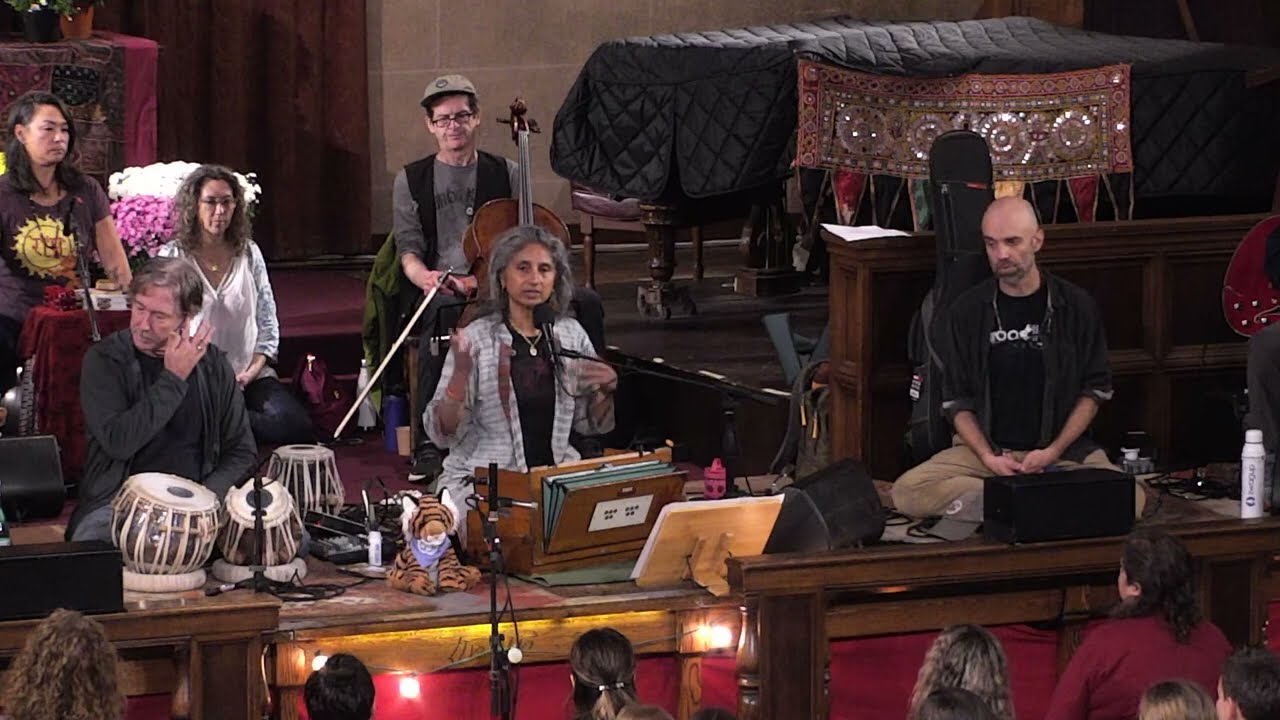
Dúlamán is a traditional Irish song about seaweed harvesting that has been reimagined as a kirtan chant by musician Ajeet. The piece, released on the album Indigo Sea, demonstrates how ancient cultural songs can be adapted into contemporary spiritual practice, preserving linguistic and cultural heritage while creating space for meditative engagement with melody, rhythm, and communal participation.
What Is Dúlamán?
Dúlamán is a traditional Irish song whose title refers to dulse, a type of edible seaweed harvested along the Irish coast. The word itself carries the history of Irish maritime communities, where seaweed harvesting was both a practical livelihood and a source of folk song tradition. The original song documents the work of those who gathered and processed this resource, with lyrics that tell stories of coastal life, labor, and the relationship between people and the sea.
The traditional melody has been passed down through Irish folk music for generations, existing in various versions across different regions of Ireland. Like many folk songs, it carries within it the accumulated experience of a community and serves as a vessel for cultural memory.
How Does Kirtan Transform Traditional Folk Music?
Kirtan, a Sanskrit term meaning "to praise" or "to describe," refers to call-and-response chanting often accompanied by musical instruments. It originates in Hindu and yogic traditions as a devotional practice meant to engage the mind and heart in spiritual contemplation. When a traditional song like Dúlamán is adapted into kirtan form, the musical and cultural elements undergo a transformation in context and purpose.
The adaptation typically involves:
- Repetition and rhythm: Kirtan emphasizes cyclical patterns that allow the mind to settle into a meditative state rather than follow a linear narrative arc.
- Call-and-response structure: The format invites participation from listeners, breaking down the boundary between performer and audience.
- Instrumental accompaniment: Harmonium, drums, and other instruments create a supportive sonic environment for sustained engagement.
- Integration with breath and body: The practice is often performed while sitting, with awareness on breathing and physical sensation, grounding the experience in embodied presence.
This approach does not erase the original song's cultural identity but rather creates a bridge between folk tradition and contemporary contemplative practice. The Irish language and melodic contours remain, while the context shifts from storytelling to shared spiritual participation.
What Is the Cultural Significance of Adapting Irish Tradition Into Kirtan?
The decision to transform Dúlamán into kirtan reflects an important contemporary conversation about cultural exchange and spiritual practice. Irish language and music have historically faced suppression and marginalization. Bringing an Irish-language song into the contemporary kirtan movement—which has largely been dominated by Sanskrit and Hindu musical traditions—can serve as an act of cultural preservation and recognition.
At the same time, the adaptation raises questions worth considering: How does changing the context of a song affect its meaning? Does the meditative, repetitive framework honor the original song's function as a narrative of labor and community, or does it abstract those meanings in service of a different spiritual agenda?
What seems clear from artistic choices like Ajeet's is that cultural boundaries in spiritual music are becoming more fluid. Musicians are drawing on diverse traditions not to dilute them but to find resonance across different ways of knowing and being. An Irish seaweed-harvesting song, sung in its original language, becomes a vehicle for people from many backgrounds to practice presence and connection.
How Does the Album Indigo Sea Frame This Piece?
Dúlamán appears on the album Indigo Sea, released in 2018 under Ajeet Music, with production by Siobhán Moore. The album title itself evokes the ocean—the same waters referenced in the song's original context. This naming suggests an intentional thematic cohesion: the project is not simply collecting chants but exploring the relationship between water, tradition, and spiritual practice.
The presence of a traditional Irish song on a kirtan album in 2018 reflects the broader trajectory of global spiritual music at that time. Artists were increasingly drawing on local and indigenous traditions, recognizing that kirtan and chant traditions exist not only in Hindu and Sanskrit contexts but across many cultures. Irish, Celtic, and other European musical traditions have long contained elements of repetition, trance, and spiritual intention—elements that align naturally with kirtan's structure.
What Makes Dúlamán Accessible to Kirtan Practitioners?
One of the practical reasons Dúlamán works well as a kirtan is its melodic simplicity and the natural way it sits in the voice. The song's folk origins mean it was designed to be sung by ordinary people, not specialists. This accessibility is central to kirtan practice: the goal is not virtuosic performance but sincere participation. A song that can be learned quickly and sung without great technical demands invites more people into the practice.
Additionally, the song's subject matter—seaweed, the sea, harvest, abundance—contains elemental imagery that translates readily into spiritual metaphor. Water and growth are universal symbols across many contemplative traditions. The Irish language itself, with its particular phonetic qualities, creates a sonic texture that feels both grounded and mysterious to ears unfamiliar with it, potentially enhancing the meditative quality of the chant.
Where to Go From Here
If you are interested in exploring Dúlamán further, listen to the full album Indigo Sea to understand how Ajeet frames the piece within a larger musical and thematic context. Seek out both the traditional Irish versions of the song and Ajeet's kirtan adaptation—comparing them will deepen your understanding of how context shapes meaning in music.
Consider investigating other examples of cultural adaptation in contemporary kirtan and spiritual music. How do other artists honor source traditions while transforming them? What happens to a song when it moves from one cultural and spiritual framework to another? These questions are increasingly relevant as global spiritual communities draw more intentionally on diverse traditions.
If you practice kirtan, chanting, or meditation, Dúlamán offers a particular invitation: to experience how the music of one's own cultural heritage—or the heritage of those around you—can become a doorway into shared contemplative practice. The song invites us to ask whether spiritual traditions must remain bounded by their origins or whether they can flow, like the seawater in the song, across many shores.