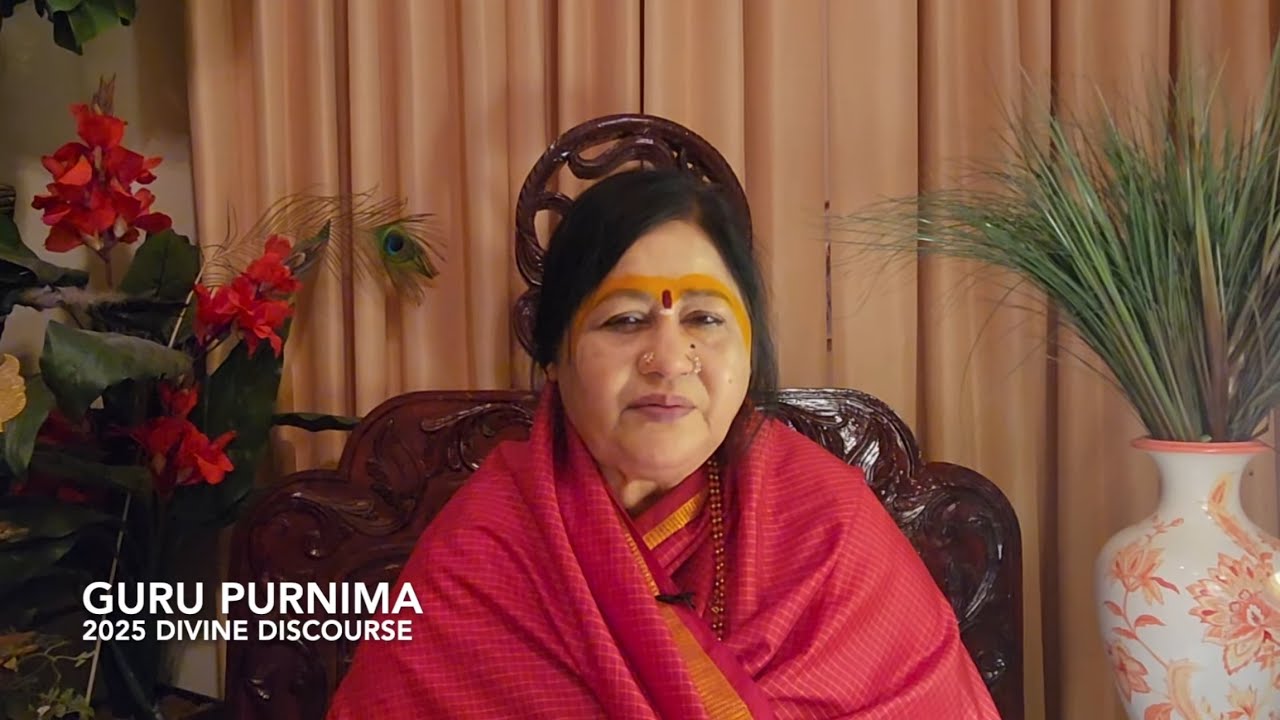
Sri Karunamayi Amma performs a devotional song dedicated to Sri Lalita Bhavani Devi, invoking the Divine Mother as the eternal source of creation, the womb of the three cosmic principles (Brahma, Vishnu, and Maheshwara), and the supreme consciousness underlying all existence. The kirtan celebrates Bhavani as Bhuvaneswari (Empress of the Earth), the benevolent force that sustains all beings and bestows peace and grace upon creation.
Who Is Sri Lalita Bhavani Devi in Hindu Tradition?
Sri Lalita Bhavani Devi represents one of the highest expressions of the Divine Mother in Hindu tantra and devotional practice. In this song, Sri Karunamayi honors Bhavani as the ultimate source from which all cosmic functions emerge. Bhavani—a name meaning "the Mother"—is understood not merely as a personal goddess but as the supreme feminine principle (Shakti) that contains and animates the entire universe.
The invocation of Bhavani as the "janani" (mother) of Brahma, Vishnu, and Maheshwara points to a profound theological principle: the three male deities responsible for creation, maintenance, and dissolution are themselves expressions of her power. She is not subordinate to them but the primordial consciousness from which their functions arise. This inversion of conventional hierarchy reflects the tantric and Shakta traditions, which emphasize the feminine divine as the fundamental reality.
What Does "Brahma Vishnu Maheshwara Janani" Mean?
The central phrase of the song—"Brahma Vishnu Maheshwara Janani"—identifies Bhavani as the mother of the cosmic trinity. Each of these three deities embodies a distinct cosmic function: Brahma governs creation, Vishnu preserves and maintains order, and Maheshwara (Shiva) dissolves and transforms. Yet the song asserts that Bhavani is their source and sustainer, the womb from which all cosmic activity flows.
This theological framing dissolves any sense of hierarchy or separation. Rather than viewing these powers as independent agents, the devotional perspective recognizes them as manifestations of a single, all-pervading feminine consciousness. The repetition of this phrase throughout the song—establishing it as a refrain—anchors the listener's awareness in this fundamental truth about the nature of reality and divinity.
What Is the Significance of Bhuvaneswari in This Devotional Context?
The song also invokes Bhavani as Bhuvaneswari, which translates literally as "the Empress of the Earth" or "Sovereign of the worlds." This title appears in the tantric canon as one of the ten Mahavidyas, the great wisdom goddesses. Bhuvaneswari represents the divine principle by which all manifest worlds are ruled and sustained. She is not distant or transcendent alone but actively engaged in the governance and care of creation.
By invoking Bhuvaneswari, Sri Karunamayi emphasizes that the Divine Mother is not abstract or removed from daily existence. Rather, she is the living intelligence that animates nature, bestows grace, and guides all beings toward their highest unfoldment. This invocation connects the infinite principle to the finite, material world, affirming that the sacred and the mundane are ultimately inseparable.
How Does Kirtan Function as a Spiritual Practice?
The song itself is performed as kirtan—a devotional chanting practice that uses melody, rhythm, and repetition to invoke the presence of the divine within and around the practitioner. Through kirtan, the boundaries between singer, listener, and deity gradually dissolve. The repeated phrases and musical patterns create a hypnotic effect that stills the mind and opens the heart to direct experience of the sacred.
Sri Karunamayi's delivery emphasizes the emotional and relational dimension of the practice. Rather than treating the divine names as abstract philosophical concepts, the kirtan invites a direct, personal encounter with the goddess. The musical phrasing and the devotional tone of her voice communicate reverence, intimacy, and surrender—qualities essential to the tantric and Bhakti traditions from which this practice emerges.
What Does the Song Communicate About Divine Grace and Protection?
Throughout the kirtan, references to shanti (peace) and divine protection appear, affirming that Bhavani's primary concern is the welfare and liberation of her children. The invocation of her blessing—"may she grant us peace and protection"—reflects the devotee's understanding that alignment with the Divine Mother brings not merely intellectual understanding but tangible grace and spiritual maturation.
This grace is not earned through merit or virtue alone but flows freely from her compassion. The song celebrates her as inherently benevolent, moved by the sincere invocation of her devotees. In this framework, spiritual practice is not a grim struggle but a joyful dance of recognition—acknowledging the Divine Mother who has never been separate from us and who delights in revealing herself through sincere devotion.
How Does This Practice Relate to Sri Karunamayi's Teaching Lineage?
Sri Karunamayi comes from a lineage of devotional and tantric practice in South India, particularly associated with Kashmir Shaivism and Devi worship. Her offerings of kirtan are not merely artistic performances but integral expressions of her spiritual mission to awaken consciousness in others. By singing these sacred invocations, she transmits the vibrational essence of the teachings and creates an energetic field conducive to spiritual opening.
The simplicity and directness of her approach—invoking the Mother through her names and attributes—reflects the principle that the Divine can be approached through sincere heart-devotion rather than complex philosophical study alone. This democratization of spiritual access has made her teachings and kirtans widely beloved across cultures and spiritual backgrounds.
Where to Go From Here
For those wishing to deepen engagement with this practice, consider exploring other kirtans and devotional songs dedicated to the Divine Mother in various Hindu traditions. Studying the Devi Mahatmya (the sacred narrative of the Goddess) and the Lalita Sahasranama (the thousand names of Lalita) will provide textual context for understanding the theological depth underlying this song.
Practicing the kirtan yourself—singing or chanting the phrases repeatedly—allows the teaching to move from intellectual understanding into direct embodied experience. Many practitioners find that regular practice of goddess-focused kirtans naturally opens devotional feeling, clarifies intention, and deepens connection to the feminine divine both within and without. Sri Karunamayi's recordings serve as guides and invitations to join a living tradition of divine love that spans millennia.