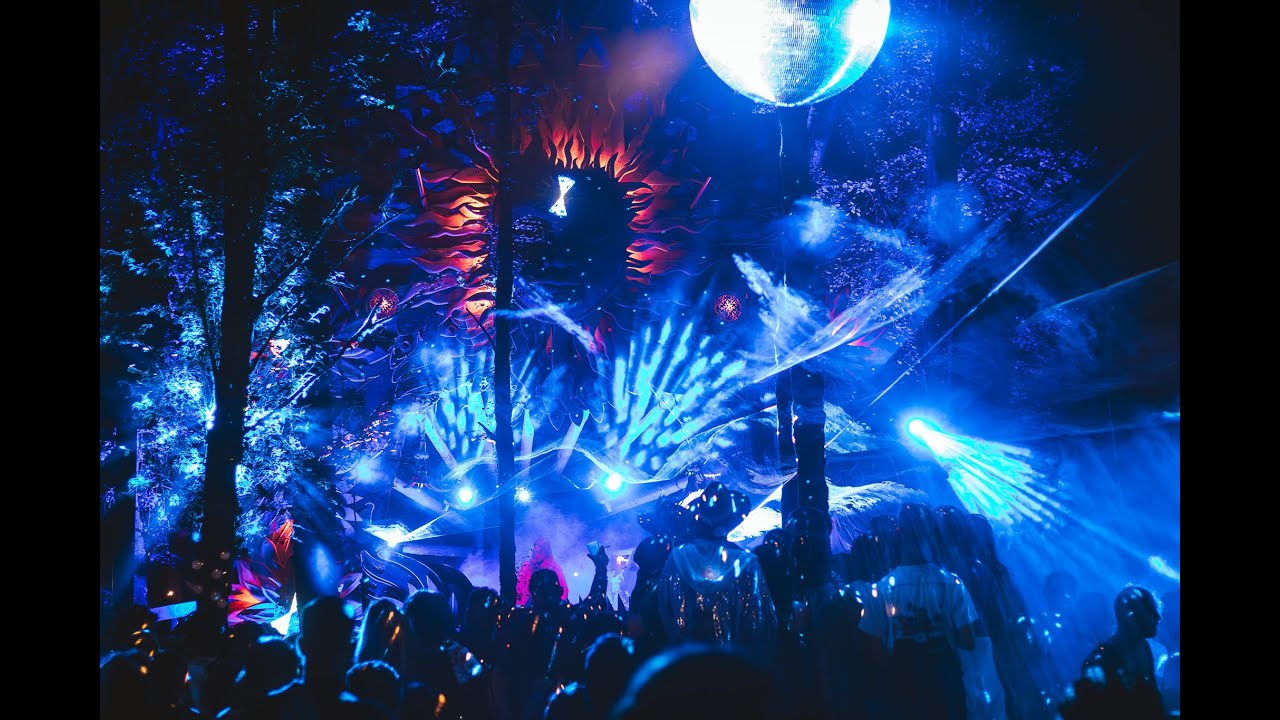
The GOAT Community Intimate Festival is an annual gathering in the Magic Mountains of São Pedro do Sul, Portugal, designed as a laboratory for collective awakening and inward return. Rather than a conventional music festival, it functions as a ritual space where participants explore the intersection of community, creative expression, nature immersion, and spiritual practice—using sound, movement, art, and contemplative silence to activate transformation at both individual and collective levels.
What is the GOAT Community Intimate Festival?
The GOAT Community Intimate Festival operates as an invitation to step beyond the noise and masks of daily life and return to what lies beneath the surface. Held annually in Portugal's Magic Mountains, the festival is not primarily designed as entertainment but as a structured container for deep community connection and spiritual exploration. The official 2025 after-movie frames the event through language of stillness, roots, layering, and awakening—metaphors that point to the festival's core philosophy: that authentic connection and growth require moving inward first.
The festival's design philosophy emphasizes that "in the quiet of stillness, we return not forward, but inward we find ourselves" (0:02–0:07). This inward turn is not individual isolation but collective practice: "Together we rise and we move as one" (0:14–0:17). The event creates a liminal space where the ordinary boundaries of self dissolve into shared rhythm, shared silence, and shared purpose.
How does the festival structure sensory and spiritual experience?
The GOAT Community Festival engages participants through immersive sensory activation. Attendees experience music across multiple genres—downtempo, organic house, afro house, deep house—but curated intentionally to support specific states of consciousness rather than purely to entertain. Live music and dance become vehicles for moving energy through the body and synchronizing individual nervous systems into collective rhythm.
Beyond sound and movement, the festival incorporates:
- Art installations that engage sight and create visual narrative across the landscape
- Wellness workshops addressing healing, bodywork, and somatic practice
- Food experiences engaging taste and communal nourishment
- Nature immersion in the Magic Mountains, activating connection to soil, plants, and the non-human world
- Contemplative silence and what the festival calls "the garden of knowing"—spaces for integration and inner listening
This multisensory design recognizes that awakening and belonging are not purely intellectual but require the entire organism—all five senses—to participate in the transformation.
What does "rooting" mean in the festival's spiritual language?
The festival's core metaphor is botanical and ancestral: "Beneath the surface where soul meets soil, we find the truth we forgot. Roots whisper ancient songs, stories carried in blood and breath" (0:37–0:57). This language points to the idea that authentic belonging and awakening require connecting to what is ancient, embodied, and often forgotten in modern life.
"We are not lost. We are layered. Fragments waiting to be gathered to bloom again in the garden of knowing" (0:75–0:82). Rather than viewing disconnection or fragmentation as pathology, the festival reframes it as a natural condition that can be healed through gathering and integration. The metaphor suggests that each person carries multiple dimensions—fragments of ancestry, of self, of potential—and the festival creates the conditions for those fragments to recognize each other and cohere.
To "root deep" is to establish connection to what is foundational: the body, the earth, ancestral memory, and the collective. To "rise home" is then to integrate that rooting into upright presence and belonging within community.
How do stillness and rhythm work together at the festival?
A key innovation in the festival's design is its refusal to separate meditation from movement. "Where stillness becomes rhythm" (0:23) names the threshold where inner quietude and outer expression merge. Rather than offering either/or—either contemplative silence or dance floor energy—the festival creates a spectrum where participants move fluidly between states.
This reflects a somatic understanding: that stillness is not the absence of movement but its ground. Meditation and dance, silence and sound, are not opposites but expressions of the same underlying aliveness. "In every silence a calling" (0:113) and "In every shadow light" (0:118) suggest that within apparent emptiness or darkness lies activation and illumination waiting to be recognized.
What role does community play in individual awakening?
The festival's design is fundamentally non-individualist. Awakening is not framed as a solitary journey but as a process that occurs in relation. "Together we rise and we move as one" is not metaphorical unity but an actual practice: synchronized breathing, collective dance, shared meals, and the simple presence of bodies in a field together.
This collective container activates what neurobiology would recognize as synchronization—the attuning of nervous systems, the coordination of breath and heartbeat, the resonance of group singing. When 200 or 500 people move, sing, and sit in silence together, individual shame, isolation, and fragmentation become harder to maintain. The collective field holds what the individual cannot.
"Come home to the depth of your being. Remember, reclaim. Root deep. Rise home" (0:148–0:156) is an invitation to move from isolation into authentic community presence. The phrase "come home" suggests that belonging to a conscious community is a return, not an acquisition—a remembering of what humans actually need.
What does the festival aim to catalyze in participants?
The festival's language of "awakening," "roots," and "home" points to specific outcomes: participants leave with renewed connection to their bodies, to each other, to the earth, and to ancestral/spiritual dimensions of existence. The festival is designed to create what might be called ritual literacy—the embodied understanding that humans thrive when gathered intentionally with shared purpose.
By activating all five senses, holding space for both ecstasy (dance, music) and stillness (silence, meditation), and rooting the entire experience in relationship—to earth, to body, to community—the festival addresses a specific hunger in contemporary life: the hunger to be fully alive and fully belonging.
Where to go from here
If the GOAT Community Festival speaks to you, consider exploring other annual pilgrimage events and sacred gatherings that explicitly use community, music, and nature as containers for spiritual practice. Research embodied spirituality practices—somatic yoga, ecstatic dance, group meditation—that activate the nervous system toward collective coherence. Explore the language of rooting and ancestral connection in traditions like African diaspora spirituality, indigenous plant medicine work, and earth-based contemplative practice. If you cannot attend in person, study how GOAT Community documents and shares their vision through film and online platforms—their aesthetic and values are intentionally designed to transmit even through a screen.