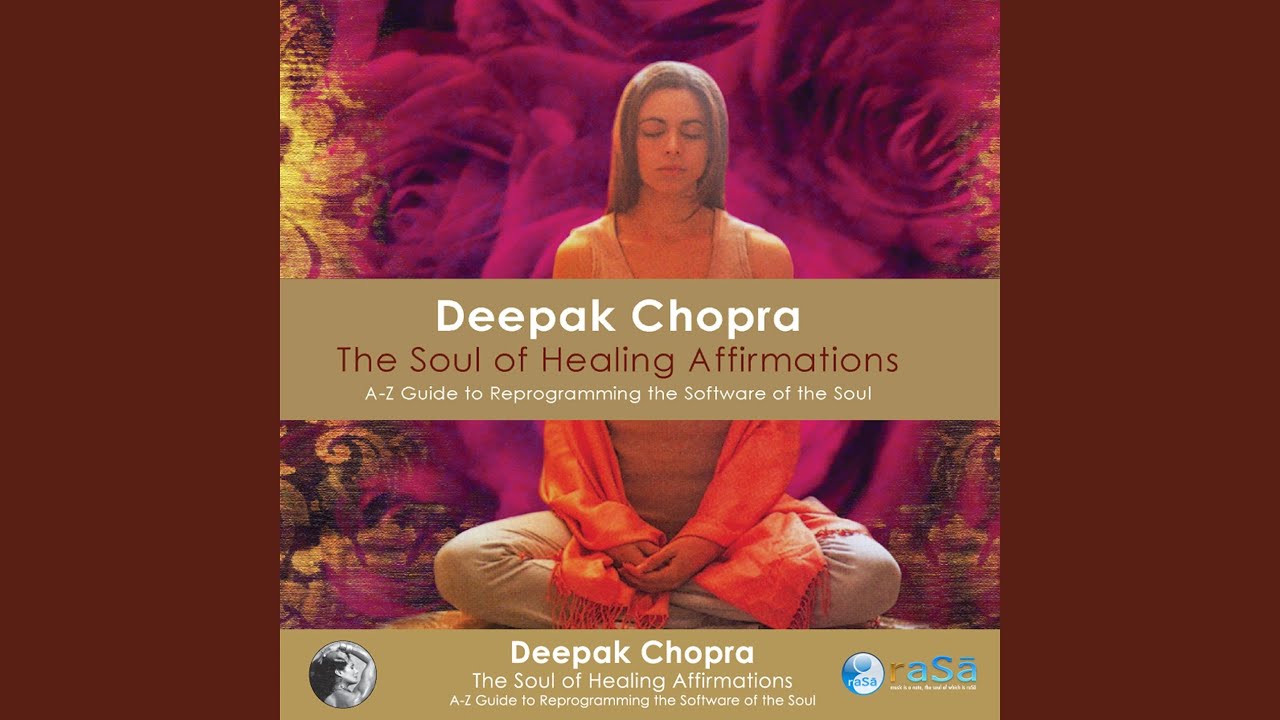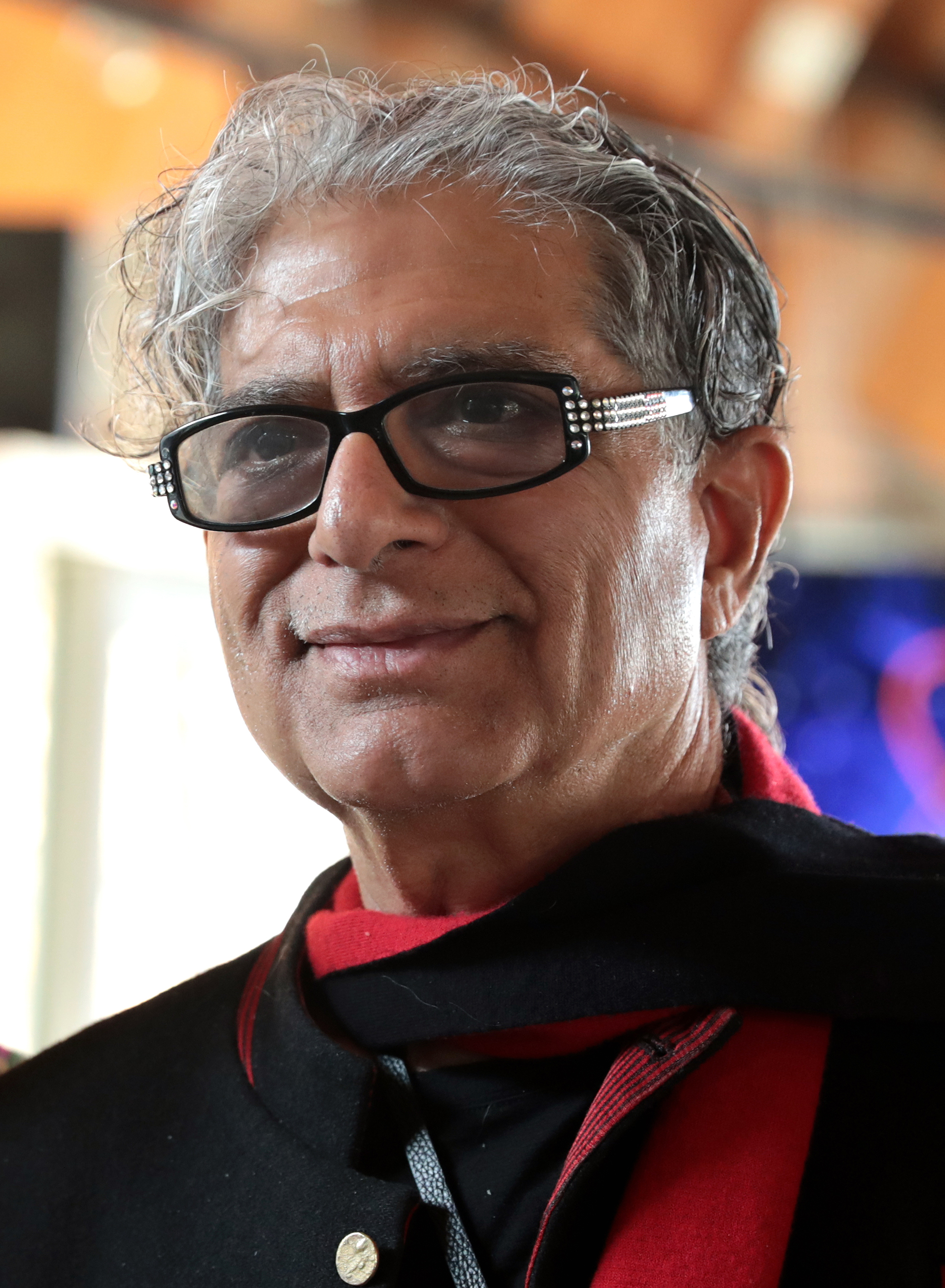
Opposition is not merely a conflict between opposing forces but a fundamental feature of consciousness and existence. In this teaching, Deepak Chopra examines how duality shapes human experience, the role resistance plays in suffering, and how understanding opposition leads to integration rather than rejection. The talk invites listeners to move beyond the impulse to eliminate or overcome what we oppose, instead recognizing opposition as a mirror for self-awareness and a gateway to wholeness.
What Is Opposition in the Context of Consciousness?
Opposition forms the basis of how consciousness experiences itself. Without contrast—light and dark, pleasure and pain, self and other—there would be no discernible reality, no sensation, no awareness. Deepak Chopra teaches that opposition is not a flaw in the universe but its structural principle. Every object, thought, and emotion exists in relationship to its opposite, and this polarity allows consciousness to know itself through differentiation.
When we speak of opposition, we typically think of conflict: the struggle between desire and aversion, will and circumstance, ego and truth. Yet Chopra's teaching reframes opposition as a dynamic interplay rather than a battle. The opposing forces—thesis and antithesis—are not enemies seeking destruction but complementary aspects of a larger whole seeking integration. This reframing has profound implications for how we approach our inner struggles and external conflicts.
Why Does the Mind Resist Opposition?
The human mind has a natural tendency to favor one pole while rejecting its opposite. We want happiness without sadness, success without failure, love without loss. This preference, rooted in our survival instincts, creates what Chopra calls "opposition" in the psychological sense—an internal stance of resistance against what we deem unacceptable or unwanted.
This resistance is the true source of suffering. When we oppose our experience—fighting against pain, denying fear, rejecting anger—we create a secondary layer of distress. The pain itself becomes compounded by our judgment that it shouldn't be there. This is where the insight becomes therapeutic: suffering arises not from opposition in the cosmic sense but from our resistance to opposition. We suffer when we oppose what is actually occurring.
The ego's survival strategy is built on this binary thinking: safe and unsafe, right and wrong, worthy and unworthy. Yet this either-or mindset locks us into endless internal conflict. Chopra teaches that liberation begins when we recognize that the mind's resistance to opposition is itself the obstacle to peace.
How Does Opposition Reveal the Self?
Opposition serves as a mirror. When we encounter something we oppose—a quality in another person, a circumstance we despise, an emotion we reject—we are seeing a reflected aspect of our own consciousness. The Sanskrit concept of projection appears here: we cannot oppose something unless it first registers in our awareness, and awareness only registers what already exists in consciousness in some form.
This means that every opposition in our life points back to an internal conflict we have not yet integrated. If we are intensely opposed to someone's arrogance, we may be encountering our own unacknowledged capacity for arrogance. If we oppose weakness, we are rejecting our own vulnerability. This is not moral blame—it is recognition. The opposition reveals what we have dissociated or repressed.
By becoming conscious of this dynamic, we reclaim the energy bound up in resistance. Instead of exiling parts of ourselves, we create the conditions for wholeness. Opposition, then, becomes a teaching tool, a map of where consciousness is fragmenting and where integration is needed.
Can Opposition Transform Into Integration?
Chopra's core insight is that opposition does not need to be overcome through force; it needs to be understood. When we stop fighting what opposes us—externally or internally—something shifts. The tension itself becomes workable. Instead of imagining that we must defeat one pole to access the other, we can hold both simultaneously in awareness.
This is the essence of non-dual philosophy: the idea that apparent opposites are expressions of a singular reality. Night and day are one rotation of the Earth. Yin and yang together form a whole. Masculine and feminine energies exist within every person. When the mind can hold this paradox—that opposition is real and, simultaneously, that opposites are one—a new freedom emerges.
Integration does not mean that opposites merge into blandness or indifference. Rather, it means we develop the capacity to navigate between poles without being enslaved to either one. A person who has integrated fear does not become fearless (a suppression) but rather fearless, meaning they can feel fear without it controlling them. They can respond to genuine danger while not conjuring threat in safe situations.
What Is the Spiritual Significance of Opposition?
From a contemplative perspective, opposition is inseparable from incarnation and embodiment. To have a body is to exist in time, space, and duality. Every spiritual path recognizes this: the goal is not to escape opposition but to transcend identification with it. The Bhagavad Gita speaks of the yogi who remains "unshaken" while all opposites—victory and defeat, heat and cold, praise and blame—play out around them. This equanimity is not indifference but a refined awareness that includes opposition without being claimed by it.
Chopra's teaching aligns with this: spiritual maturity is measured not by the absence of opposition in life but by the presence of non-resistance to opposition. The Buddha taught the Middle Way, not as a compromise between extremes but as a path that moves through and beyond duality. The Christian mystic finds God in suffering as much as in joy. The Sufi uses the ego's own opposition as friction for transformation.
Opposition, then, becomes a doorway. It signals the places where consciousness is still contracting, still believing in separation, still resisting reality. And where there is contraction, there is possibility for expansion.
How Can We Practice Non-Resistance to Opposition?
The practice begins with awareness. Instead of automatically resisting what appears opposed to us, we pause and observe: What am I opposing right now? What quality, person, or circumstance is triggering me? Then, rather than fighting it, we ask: What does this opposition show me about myself?
This inquiry is not about achieving a particular answer but about shifting the stance from combat to curiosity. Even in that shift, the nervous system settles. The belief that we must fight to survive, win, or be right can begin to soften.
As we practice this over time, something remarkable happens. We develop what Chopra calls "witness consciousness"—the capacity to observe the play of opposites without being pulled into the game. We can feel sadness without believing we are sad. We can encounter someone's anger without absorbing it as a threat. This is not dissociation but discrimination—the ability to participate in life while not being colonized by its dramas.
Where to go from here
To deepen this work, begin noticing where you resist in your daily life. What situations, emotions, or people trigger an impulse to push away or overcome? Journal about these oppositions without trying to fix them. Notice whether resistance itself creates additional suffering. Explore practices that develop equanimity—meditation, conscious breathing, or contemplative inquiry—that train the mind to hold paradox. Read philosophical texts on non-duality (Advaita Vedanta, the Tao Te Ching, the Upanishads) to understand opposition as a gateway rather than a trap. Finally, consider working with a therapist, spiritual director, or teacher who can help you identify the parts of yourself you have been projecting onto your oppositions, reclaiming your wholeness in the process.