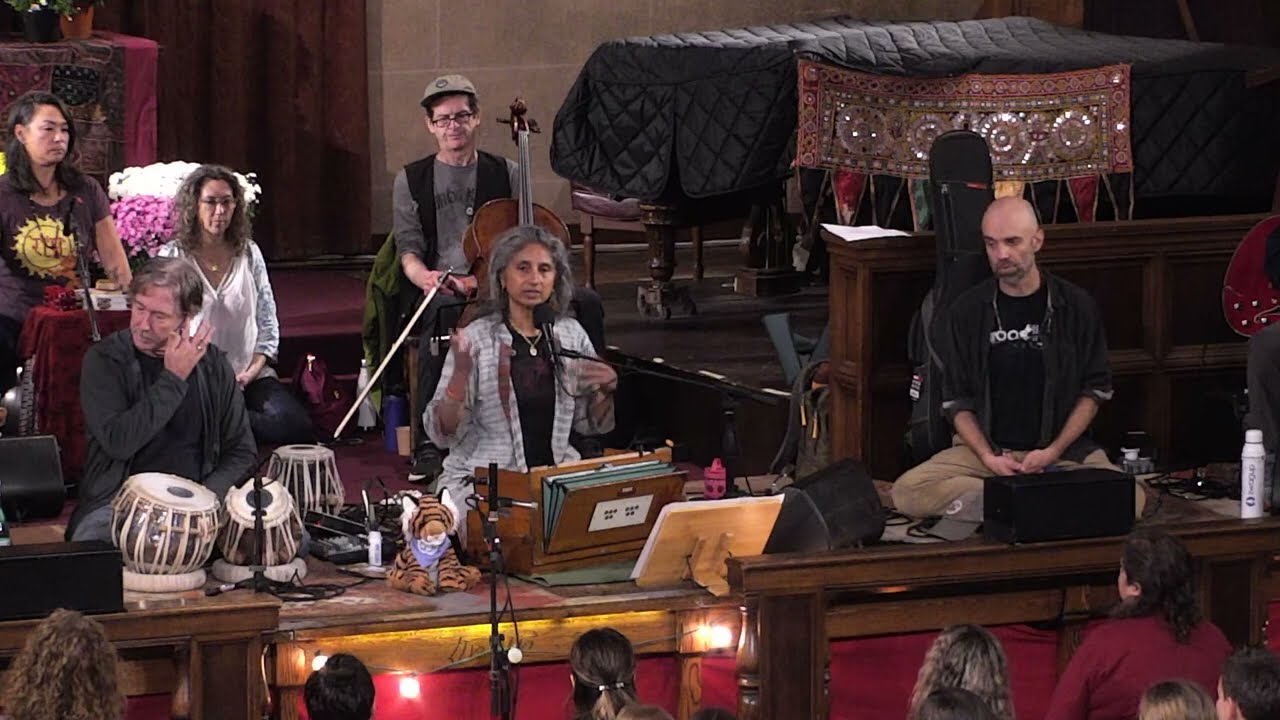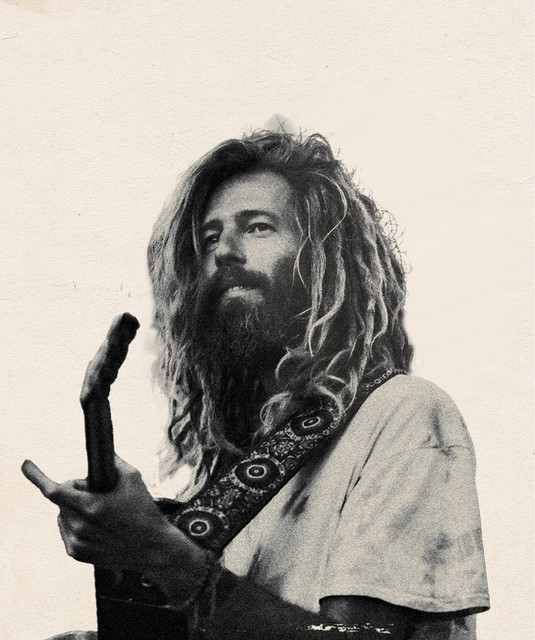
This acoustic performance presents a meditation on perseverance and emotional resilience expressed through song. The artist explores how to move forward when feeling down, how to process pain without losing direction, and how love and courage function as practical tools for navigating uncertainty. The song weaves together themes of healing, faith in the future, and the importance of kindness, offering listeners a framework for understanding their own difficult moments as temporary phases within a larger unfolding.
What Does It Mean to Keep Moving When Everything Feels Stopped?
The opening refrain establishes the song's central invitation: "when you're feeling down just know that there is healing." This isn't a dismissal of difficulty—it's a recognition that downward emotional states are not permanent. The artist acknowledges the weight of the present moment while simultaneously pointing toward a horizon where things shift. The phrase "just know that I will be there" (around 0:45) introduces a relational dimension: the presence of another, or perhaps an inner witnessing presence that doesn't abandon us when we're struggling.
The repeated declaration "I'm on my way" functions as both statement and mantra. It asserts forward motion not as a destination already reached, but as a continuous process—an orientation toward movement even when circumstances feel static. This is crucial: the song doesn't promise that difficulty will vanish, but that motion itself—the act of continuing—is possible and real.
How Can We Hold Both Pain and Possibility at the Same Time?
A later section addresses the apparent contradiction between acknowledging hardship and maintaining hope: "I know these times are strange but it'll all be okay / and it's hard the things we have to face but everything must have its place" (around 0:82-0:95). Rather than toxic positivity that denies struggle, this formulation creates space for both realities. The times are genuinely strange; the difficulty is genuinely hard. Simultaneously, resolution is possible and things have their proper place in a larger pattern.
The phrase "everything must have its place" suggests that even painful experiences are part of a comprehensible whole, not random or meaningless. This doesn't explain away suffering, but it does propose that suffering can be integrated rather than seen as a cosmic mistake. When paired with "and when it's over we shall play," the song locates difficulty within a cycle—it comes, it has its season, and it passes. What follows isn't just survival but actual joy.
What Role Does Love Play in Staying on Course?
The artist explicitly names love as a navigational tool: "love is what is great oh seek and find and celebrate" (around 0:112-0:117). This isn't romantic love specifically, but love as a force that orients us toward what matters. Immediately before this, the song warns against allowing external pressure to "make you lose your way," suggesting that love is what protects our internal compass when the world tries to shift it.
This teaching appears again in the instruction "be kind to all and give don't take / you'll get it all anyway" (around 0:121-0:128). The logic here is that generosity and kindness aren't sacrifices made against one's self-interest—they're aligned with how life actually works. When you give and remain kind, "you'll get it all anyway," implying both a spiritual law of reciprocity and a deeper truth that generosity doesn't deplete you.
How Do We Access Courage When It Feels Impossible?
The song acknowledges the real barrier: "sometimes it hurts and it gets hard to take" (around 0:176-0:179). But rather than denying this, it moves directly to a prescription: "fill up on courage and I give you strength / it's more than words could ever come come" (around 0:189-0:195). The artist here is offering something beyond intellectual reassurance—a transmission of strength that operates at a level beyond language.
This is significant because the song itself is that transmission. By singing these words, the artist embodies the very presence being invoked. The listener isn't receiving abstract advice but is being held by a voice that speaks from within the same difficulty, offering what it has found to be true from lived experience.
What Does It Mean That Life Will Guide Us?
Late in the performance, the artist states: "but life will guide us and we'll find a way" (around 0:181-0:185). This introduces a subtle but important shift from willpower to trust. The suggestion isn't that we must force our way through by sheer determination, but that life itself contains an intelligence that can guide us if we align with it. "Finding a way" becomes less about personal heroism and more about recognizing pathways that already exist within the unfolding of events.
This connects to the song's opening metaphor about what is lost being found—not through frantic searching, but through "seek[ing] the courage to believe it" (around 0:37). The finding happens when we develop the internal orientation that allows us to perceive what was already present.
How Does the Acoustic Setting Change the Message?
Recorded live in Florianópolis, Brasil, this acoustic version strips away production flourishes. What remains is voice, instrument, and the direct communication between artist and listener. In this sparse setting, each phrase carries weight. There's nowhere to hide in the production; the message lives or dies on the clarity of its expression and the authenticity of its delivery.
The acoustic approach mirrors the song's philosophy: when everything else falls away, what remains is the fundamental truth that we are moving forward, we are held, and love is our greatest resource. No arrangement is needed to communicate this—only presence and intention.
Where to Go From Here
Listeners moved by this performance might explore other acoustic meditations on resilience and embodied faith. The artist maintains an active touring schedule across North America, Europe, Australia, and Asia in 2025, offering opportunities to experience this material in live settings where the transmission of presence becomes even more direct. For those seeking to deepen their own relationship with forward motion and courage, the song functions as both mirror and medicine—reflecting back our own capacity to keep going while simultaneously strengthening that capacity through listening.