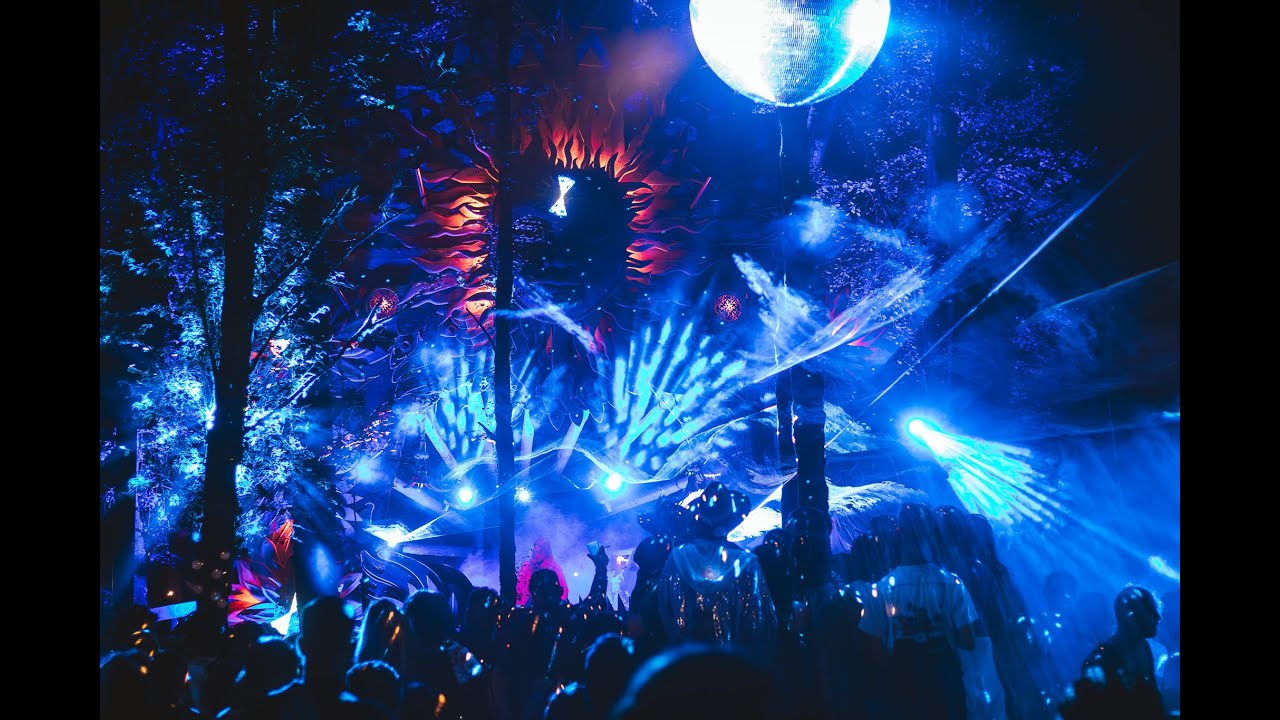
TRILOGY is an exclusive multi-location festival collaboration uniting three distinct brands—GOAT Community from São Pedro do Sul (Portugal), ODYS Experience from Lake Geneva (Switzerland), and Summerian Ibiza (Spain)—into a single immersive journey. The event combines cutting-edge performances, large-scale art installations, curated music programming, and live performances across three sacred geographic sites, positioning itself not merely as a festival but as a cultural movement that fuses contemplative space design, electronic music curation, and participatory art experiences.
What is TRILOGY and why does the three-location model matter?
TRILOGY represents a strategic shift in how festival experiences are conceptualized and delivered. Rather than confining an event to a single location, the collaboration leverages three culturally and geographically distinct sites, each bringing its own aesthetic and energetic signature. GOAT Community's base in the mountainous region of São Pedro do Sul offers a grounded, earth-connected atmosphere rooted in Portugal's natural landscape. ODYS Experience's location near Lake Geneva brings the alpine contemplative tradition of Switzerland, known for its precision and immersive design ethics. Summerian Ibiza grounds the experience in the White Isle's decades-long legacy of electronic music and nocturnal culture.
This three-point architecture allows participants to experience what the organizers frame as a "collision of three worlds"—not as fragmented separate events, but as iterations of a unified artistic vision across different terrains. Each location functions as both a distinct experience and a node within a larger movement, giving attendees multiple entry points and reinforcing the idea that TRILOGY operates at a scale beyond conventional festival parameters.
How do cutting-edge performances and art installations define the TRILOGY aesthetic?
The festival prioritizes visual and sonic innovation as core components of its identity. "Cutting-edge performances" suggests both live musicians and potentially electronic/digital performers working at the technical frontier of their disciplines, rather than established touring acts. This commitment to forward-thinking artistic practice aligns with the ethos of venues like Ibiza, where electronic music and visual experimentation have historically advanced in tandem.
Art installations are specifically highlighted as integral to the participant experience, indicating that TRILOGY positions itself within the broader tradition of transformative festivals (like Burning Man or Awakenings) where the environment itself is sculpted as art. Rather than simply providing stages and sound systems, the organizers commit to "stunning art installations" that shape how participants move through and perceive each space. These installations likely serve dual functions: as aesthetic interventions that enhance the sensory experience and as touchstones for communal gathering and contemplation.
The promise of "surprises around every corner" signals a design philosophy that values discovery and spontaneity, preventing attendees from falling into passive consumption patterns and instead encouraging active exploration and engagement with the physical and artistic landscape.
What role does music curation play in TRILOGY's identity?
The event explicitly commits to "only the best music selections and live performances," a statement that implies rigorous editorial control over the sonic experience. This is not an open-call festival where any musician can apply; instead, TRILOGY operates as a curatorial project where musical choice directly reflects the organizers' aesthetic values.
The mention of "music selections" (recorded or mixed) alongside "live performances" (real-time musician engagement) suggests a hybrid approach that accommodates both DJs working with existing material and live instrumentalists or electronic musicians performing in real time. This mix typically serves different psychological functions: selected music can create continuous ambient or dance-oriented atmospheres, while live performances generate presence and spontaneity.
Given the Ibiza connection and the multi-location model, the music programming likely spans electronic and acoustic traditions, possibly incorporating world music, ambient, and dance genres. The emphasis on curation rather than celebrity booking suggests TRILOGY prioritizes musical coherence and journey architecture over marquee names.
How does TRILOGY position itself as a movement rather than a transactional event?
The distinction between "event" and "movement" is explicit and intentional in the festival's framing. An event is temporally bounded—it begins, runs, and concludes. A movement, by contrast, carries ideological and community-building dimensions that extend beyond any single gathering. By claiming movement status, TRILOGY signals that it operates as both a festival (a specific experience you attend) and a platform for values and practices that persist in participants' lives afterward.
This framing aligns with how transformative festivals increasingly market themselves: not simply as entertainment venues but as spaces where participants access new perspectives, meet like-minded communities, and potentially integrate insights or practices into their everyday lives. The three-location structure supports this movement-building function by creating multiple touchpoints across a geographic and temporal span, allowing participants to deepen involvement progressively rather than experiencing TRILOGY as a single one-off consumption event.
The collaboration structure itself—three separate organizations uniting under a single banner—models the kind of alliance-building and collective vision that movements typically require. Rather than a single promoter or brand expanding its offerings, TRILOGY emerges from genuine partnership among distinct entities, suggesting that participants are joining a broader coalition rather than attending a branded experience.
What makes a location-based festival experience different from virtual or traditional single-venue models?
Location specificity matters profoundly in experiential design. São Pedro do Sul's mountainous terrain creates natural acoustic properties and physical challenges (elevation, terrain) that shape how participants move and gather. Lake Geneva's alpine landscape carries historical and cultural associations with Swiss precision, neutrality, and contemplative traditions. Ibiza's White Isle carries decades of electronic music culture, nocturnal operating norms, and established infrastructure for large-scale music events.
Rather than homogenizing these distinct geographies into a standardized festival template, TRILOGY appears designed to amplify each location's inherent qualities. A participant attending multiple legs of TRILOGY would experience not three identical iterations of a concept but three distinctly flavored expressions of the same artistic vision. This honors what environmental psychologists call "sense of place"—the unique psychological and cultural qualities that emerge from specific geographies.
The multi-location model also distributes access. Rather than requiring international travel to a single remote location (which creates barriers), TRILOGY positions itself across three European regions with existing transportation infrastructure and communities. This increases accessibility while maintaining the sense that TRILOGY operates at a meaningful scale beyond any single metropolitan center.
Where to go from here
If TRILOGY's multi-location, movement-oriented approach resonates with you, explore the individual organizations behind the collaboration: GOAT Community, ODYS Experience, and Summerian Ibiza each maintain their own year-round programming and community spaces. Investigate how the specific geographies—the Portuguese mountains, Swiss lakes, and Ibiza's electronic music scene—shape their distinct aesthetic philosophies. Consider attending one or multiple legs of TRILOGY not as a consumer checking off a festival bucket list, but as a participant in an emerging cultural movement that prioritizes curation, collaboration, and the intersection of natural geography with artistic vision. Track how the experience translates into your post-festival engagement with music, art, and community.