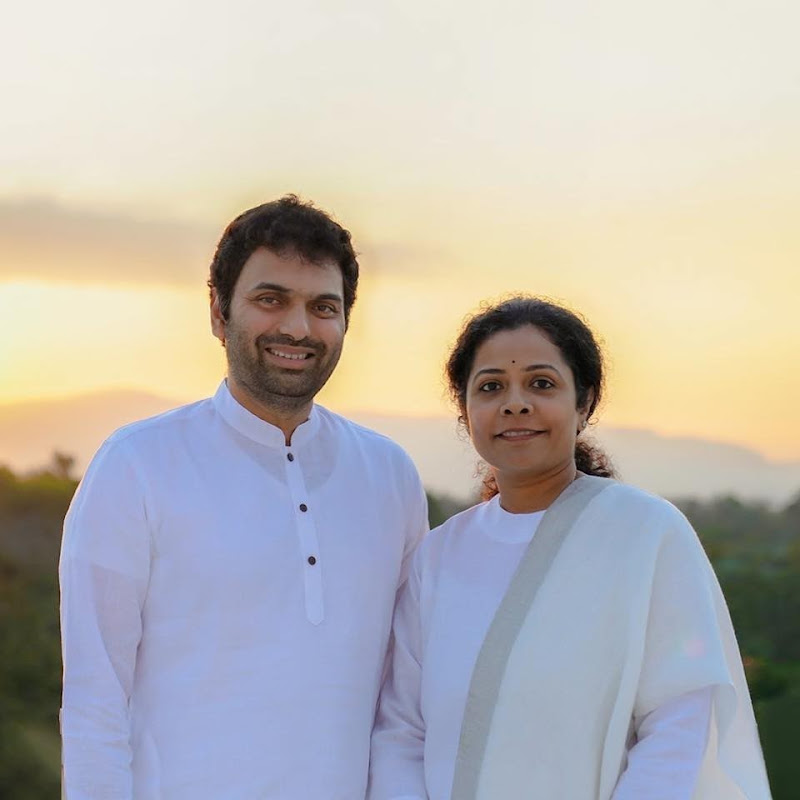
TL;DR: Living between two worlds—maintaining success in a foreign country while honoring one's Indian roots—creates a unique psychological and spiritual tension for the diaspora. Sri Krishnaji and Sri Preethaji address this through the lens of Oneness consciousness and modern spiritual practice, offering tools to dissolve cultural stress, heal fragmented relationships with one's heritage, and access abundance that honors both identities simultaneously. The path involves reconnecting with essence, understanding the deeper purpose of living abroad, and using consciousness practices to integrate rather than compartmentalize one's cultural self.
What Does It Mean to Live Between Two Worlds?
For Indians living abroad, the immigrant experience is rarely framed as a simple success story. Yes, there is often professional achievement, financial stability, and material comfort. Yet beneath this outward accomplishment lies a quieter struggle: the gap between where the body lives and where the heart feels rooted. The mind carries multiple allegiances—loyalty to family still in India, responsibility to build a life in a foreign land, the pressure to preserve culture while adapting to a new one, and the deep question of belonging.
This duality is not weakness; it is the lived reality of millions. Sri Krishnaji and Sri Preethaji recognize this specific pain point. The teaching addresses not the immigrant's failure to integrate, but rather the unnecessary suffering created by the fragmentation of identity. When someone splits themselves into "Indian self" and "foreign self," treating each as separate compartments that must never touch, they create internal conflict. The nervous system tenses. Relationships back home feel strained. Success feels hollow because it is not anchored to something deeper.
The invitation is to move beyond fragmentation into integration—to understand that one can be fully rooted in one's heritage while fully engaged in one's current home. This is not assimilation (erasing origins) nor is it isolation (refusing to adapt). It is wholeness.
How Does Cultural Stress Show Up in the Body and Mind?
The stress of living between cultures operates on multiple levels. At the psychological level, there is cognitive load: the constant mental code-switching between languages, values, and behavioral expectations. At the emotional level, there is guilt—guilt for not visiting home enough, guilt for adopting foreign customs, guilt for changing in ways that make you feel like a stranger when you return to India. At the relational level, there is misunderstanding: family members may interpret choices (career decisions, marriage partners, lifestyle) through a cultural lens that differs sharply from the lens you have adopted abroad.
What Sri Krishnaji and Sri Preethaji emphasize is that this stress does not belong only in the mind. It lodges itself in the body as tension, as a subtle contraction of the nervous system, as a low-level anxiety that never fully lifts. Many diaspora Indians report feeling perpetually "on edge," unable to fully relax even when surrounded by comfort and success. This is the price of internal division.
Furthermore, this fragmentation blocks access to what the teaching calls "authentic abundance." When you are split, your energy is divided. You cannot pour your full presence into your relationships, your work, or your creative pursuits because part of you is always elsewhere, defending the other part. True prosperity—material, relational, and spiritual—requires coherence.
What Is the Role of Spiritual Heritage in Healing Diaspora Identity?
Sri Krishnaji and Sri Preethaji ground their approach in the recognition that Indian spiritual traditions offer unique resources for exactly this kind of integration. These traditions have long held that a human being is not fragmented but fundamentally whole—that all of life, including the movement between places and cultures, serves the evolution of consciousness.
Rather than treating Indian culture as a nostalgic reference point or a museum artifact to preserve in amber, the teaching invites diaspora members to engage with their heritage as a living spiritual technology. This includes ancient wisdom about interconnection, practices that calm the nervous system, and philosophical frameworks that make sense of suffering and transition.
For example, concepts like karma yoga (the yoga of action and duty) offer a non-dualistic way to understand why one finds oneself living abroad: it is not by accident but as part of one's spiritual unfolding. Similarly, practices rooted in Hindu and yogic philosophy directly address the psychological fragmentation that results from cultural dislocation. When approached this way, one's heritage becomes not a burden to manage but a source of strength.
How Can Emotional Bonds Be Healed When Separated by Geography?
One of the most tender wounds for diaspora Indians is the strained relationship with family members still living in India. Distance, different life choices, and the rapid way in which the emigrant may change can create a sense of emotional distance even in relationships that were once warm.
Sri Krishnaji and Sri Preethaji address this through the framework of consciousness. Healing does not require physical proximity; it requires a shift in how one relates to the people and places left behind. This includes honest acknowledgment of the grief (yes, there is grief in leaving), forgiveness of misunderstandings, and a willingness to hold multiple perspectives at once—understanding both why your parents made the choices they did in India and why you made the choices you did abroad.
The practice involves reconnecting with a deeper level of relationship beyond the roles (dutiful son or daughter, successful professional) that often organize interactions. What Sri Krishnaji and Sri Preethaji call "essence-to-essence" contact can happen even across continents. This means relating to family not as an obligation or as carriers of cultural expectations, but as fellow human beings on their own spiritual journey. From this place, old patterns of guilt and defensiveness begin to dissolve naturally.
What Does Prosperity Mean When You Are Living Between Two Worlds?
The teaching distinguishes between two kinds of success. The first is external: the job, the house, the status symbols. The second is internal: peace, belonging, the sense that one's life is coherent and aligned with one's values. For many diaspora Indians, the first kind of success is within reach, but the second remains elusive—until the internal fragmentation is addressed.
True prosperity, according to Sri Krishnaji and Sri Preethaji, means having access to your full energy, your full creativity, your full capacity for love. It means that when you achieve something, you can actually enjoy it because you are not split between celebrating and feeling guilty. It means that your relationships feel genuine because you are not performing a role. It means that your connection to your heritage feels alive and nourishing rather than obligatory.
This kind of prosperity cannot be purchased. It emerges when the internal house is put in order—when the divided self recognizes its own unity and relaxes into it.
What Practices Support Integration and Healing for the Diaspora?
The Oneness movement, as taught by Sri Krishnaji and Sri Preethaji, offers specific consciousness practices designed to address the particular wounds of diaspora living. These are not abstract meditation techniques; they are targeted interventions that work directly with the nervous system's sense of division and threat.
The three days of the summit (January 23–25, 2026) are structured to move through three phases: first, the dissolution of cultural stress itself (not through suppression but through conscious presence with it); second, the active healing of emotional bonds and the reconnection with one's sense of rootedness; and third, the unlocking of abundance by removing the energetic blocks that division creates.
These practices often involve guided experiences that allow the body and mind to directly encounter and release the tension held around belonging, identity, and the sense of being "between." They also include frameworks for understanding one's life abroad not as exile but as a form of spiritual service or growth.
How Does Reconnecting with Essence Change the Diaspora Experience?
At the heart of Sri Krishnaji and Sri Preethaji's teaching is an invitation to move below the level of cultural identity to what they call "essence"—the core of consciousness that is not Indian or foreign, not bound to any location or role, but fundamentally alive and aware. When someone reconnects with this essence, the relationship to culture shifts dramatically.
Instead of culture being experienced as a constraint or a burden to manage, it becomes an expression of essence. One can honor one's roots not out of guilt but out of genuine love. One can adapt to a new home not out of survival desperation but out of authentic engagement. The Indian identity and the global identity no longer feel like competitors for allegiance; they are simply different expressions of the same aliveness.
This is not a loss of Indian identity but rather the liberation of it—the difference between identity that is defensive (trying to preserve something out of fear) and identity that is open (expressing something out of joy).
Where to Go from Here
If you are an Indian living abroad and have felt the particular strain described here, the invitation from Sri Krishnaji and Sri Preethaji is concrete: the Oneness Global Summit (January 23–25, 2026) is designed specifically for this. Three hours per day over three days, entirely online, and offered free of cost, the summit provides both the conceptual framework and the direct experience necessary for integration.
The first step is registering at theonenessmovement.org/ogs-2026. From there, you will be guided through a structured experience of dissolution (of old stress patterns), healing (of fractured relationships and sense of self), and unlocking (of the abundance that was always there, waiting for the internal barriers to dissolve).
Begin with honest acknowledgment: Where do you feel most fragmented? In which relationships do you carry guilt or misunderstanding? Where is your energy divided because you have not fully claimed both parts of who you are? These questions are not meant to create shame; they are meant to illuminate the terrain you are ready to heal.