EveryEvent Madrid

Parcourir tous les Events

Find every event in Madrid

events

Concerts & Live Music
Festivals
Sports & Recreation
Food & Drink
Arts & Culture
Community
Family & Kids
Nightlife
Comedy
Theater
Destinations populaires
BaliSedonaLos AngelesCosta RicaNew YorkSan FranciscoAustinMiamiJoshua TreeTulum
Voir toutes les catégoriesVoir toutes les destinations

Explorer toutes les fonctionnalités

Des outils puissants pour développer tes événements

Fonctionnalités de la plateforme

Tarification dynamique intelligente
Catégories de billets
Places assignées
Récupération des paniers abandonnés
Récupération des visiteurs
Dons & Prix variables
Système d'affiliation
Scanner de billets
Codes promo
Questions personnalisées
Partage de billets
Ventes additionnelles & Options
Analyses & Rapports
Séquences d'emails
Liste d'attente / Notifier / Rappeler
Explorer
Discovery HubArtists & PerformersVenuesKnowledge Base
Voir toutes les fonctionnalitésÀ propos
TarifsBlog
Language
Saved events
Parcourir tous les événements

events

Concerts & Live MusicFestivalsSports & RecreationFood & DrinkArts & CultureCommunityFamily & KidsNightlife

Destinations populaires

BaliSedonaLos AngelesCosta RicaNew YorkSan Francisco

Explorer

Discovery HubArtists & PerformersVenuesKnowledge Base

Fonctionnalités de la plateforme

Tarification dynamique intelligenteCatégories de billetsPlaces assignéesRécupération des paniers abandonnésRécupération des visiteursDons & Prix variablesSystème d'affiliationScanner de billetsCodes promoQuestions personnaliséesPartage de billetsVentes additionnelles & OptionsAnalyses & RapportsSéquences d'emailsListe d'attente / Notifier / Rappeler
Voir toutes les fonctionnalitésÀ propos
TarifsBlog
ConnexionS'inscrireOrganisateurs d'événements
  • Browse All Events
  • Concerts & Live Music
  • Festivals
  • Sports & Recreation
  • Food & Drink
  • Arts & Culture
  • Community
  • Family & Kids
  • Nightlife
  • Toutes les catégories →
  • All Destinations →
  • For Promoters
  • For Artists
  • For Venues
  • For Festivals
  • For Event Spaces
  • For Nonprofits
  • For Bloggers
  • For Speakers
  • Brand Ambassador
  • Case Studies
  • Réseau de 350K+ acheteurs
  • Récupération des paniers abandonnés
  • Tarification dynamique intelligente
  • Catégories de billets
  • Événements récurrents
  • Places assignées
  • Système d'affiliation
  • Liste d'attente / Notifier
  • Scanner de billets
  • Widget intégrable
  • Diffusion d'événements
  • Messagerie
  • Intégrations
  • Rapports
  • Toutes les fonctionnalités →
  • À propos
  • L'écosystème
  • Blog
  • Glossaire
  • Inspiration
  • Centre d'aide
  • Contact
  • Documentation API
  • Ressources de marque
  • Carrières
  • Presse
  • Conditions d'utilisation
  • Politique de confidentialité

Events

  • Browse All Events
  • Concerts & Live Music
  • Festivals
  • Sports & Recreation
  • Food & Drink
  • Arts & Culture
  • Community
  • Family & Kids
  • Nightlife
  • Toutes les catégories →

Getaways

  • All Destinations →

For Organizers

  • For Promoters
  • For Artists
  • For Venues
  • For Festivals
  • For Event Spaces
  • For Nonprofits
  • For Bloggers
  • For Speakers
  • Brand Ambassador
  • Case Studies

Fonctionnalités

  • Réseau de 350K+ acheteurs
  • Récupération des paniers abandonnés
  • Tarification dynamique intelligente
  • Catégories de billets
  • Événements récurrents
  • Places assignées
  • Système d'affiliation
  • Liste d'attente / Notifier
  • Scanner de billets
  • Widget intégrable
  • Diffusion d'événements
  • Messagerie
  • Intégrations
  • Rapports
  • Toutes les fonctionnalités →

Entreprise

  • À propos
  • L'écosystème
  • Blog
  • Glossaire
  • Inspiration
  • Centre d'aide
  • Contact
  • Documentation API
  • Ressources de marque
  • Carrières
  • Presse
  • Conditions d'utilisation
  • Politique de confidentialité
EveryEvent
© 2026 EveryEvent Madrid. Tous droits réservés.
Inspiration

Fungi as Teachers: Mycelium, Nature'sIntelligence & Ecological Survival

Paul Stamets
Paul Stamets
Jan 24, 2012
7 min de lecture
À regarder · 6
In this brief but urgent address, mycologist Paul Stamets articulates fungi—specifically mycelium networks—not as passive organisms but as active communicators and life-givers. He frames the primary task of our time as learning the "language of nature" embodied by fungal ecosystems, arguing that our survival depends on recognizing nature's intelligence and shifting our consciousness to align with the organisms that sustain us. Stamets positions the spirit of goodness itself as inseparable from ecological intelligence.

Lecture · 8 sections

What does mycelium represent in nature?

Stamets opens with a poetic declaration: "Mushroom mycelium represents rebirth, rejuvenation, regeneration" (0:31). This is not metaphor alone—it describes a biological reality. Mycelium, the thread-like underground network of fungi, literally rebuilds soil. "Fungi generates soil that gives life" (0:39). Without fungal networks breaking down organic matter, sequestering nutrients, and creating the substrate upon which plants grow, terrestrial ecosystems collapse. The visual language of rebirth is apt because fungi are nature's primary recyclers, transforming death into growth. Stamets locates the foundational truth of regeneration not in an abstract philosophy but in the visible, measurable work of fungal organisms—a grounding that runs through his entire argument.

Why is understanding nature's language central to human survival?

"The task that we face today is to understand the language of nature" (0:51). Stamets frames this not as an intellectual luxury but as the essential task of the present moment. His mission, he states, is to "discover the language of nature of the fungal networks that communicate with the ecosystem" (0:58). This articulation is deliberate: he treats communication as already happening, independent of human recognition. The gap is not in nature's ability to speak but in humanity's capacity to listen.

Stamets confronts a common objection directly: "The fact that we lack the language skills to communicate with nature does not impugn the concept that nature's intelligent; it speaks to our inadequacy of our skill set for communication" (0:67, 0:70, 0:74). This is a crucial epistemological move. He refuses to allow human incompetence to become grounds for denying nature's intelligence. We do not judge an infant's cognitive capacity by its inability to parse advanced mathematics; similarly, the fact that we have not yet developed the tools or sensitivity to read nature's signals does not mean those signals are absent. Instead, our ignorance is a problem we must solve—through study, observation, and humility.

How do fungi communicate within ecosystems?

"We have now learned that there are these languages that are occurring and communication between each organism" (0:82, 0:86). Stamets is referring to the emerging science of fungal networks as information highways. Mycelium connects plant root systems in what some researchers have called the "wood wide web"—allowing transfer not just of water and nutrients but of chemical signals and even carbon compounds between trees and plants that may be geographically distant. This is not conscious communication in the human sense, but it is structured, information-rich exchange that affects survival and growth patterns across an ecosystem.

The implication is stark: organisms do not exist in isolation. Every living thing is embedded in a communicative matrix. To understand nature is to recognize oneself as a node in this network, not as a separate observer.

What happens if humanity fails to align with the organisms that sustain us?

"If we don't get our act together, and come in commonality and understanding with the organisms that sustain us today, not only will we destroy those organisms, but we will destroy ourselves" (0:89, 0:91, 0:94). This is not hyperbole in Stamets' framing—it is a straightforward ecological statement. Fungi are foundational. Fungi generate soil. Remove them, degrade them, poison them, and the substrate of terrestrial life begins to crumble. Humanity depends on the health of fungal networks in ways most of us have never considered. When we treat ecosystems as resources to extract from rather than as communities to participate in, we are severing the mycelial threads that hold us alive.

Stamets locates the root cause not in malice but in ignorance and misalignment: "We need to have a paradigm shift in our consciousness" (0:100). This is a call not for guilt or self-flagellation but for a fundamental reorientation of how we understand our place in the world. Consciousness, in his language, is not separate from ecological reality—it is the capacity to recognize and honor our dependence on other life forms.

What does personal commitment look like in the face of uncertainty?

Stamets then moves into deeply personal territory. "What will it take to achieve that?" he asks (0:103). And then, strikingly, he pivots: "If I die trying, but I'm inadequate to the task to make a course change in the evolution of life on this planet—Ok, I tried. The fact is—I tried" (0:105, 0:108, 0:112, 0:113). This is an extraordinary statement of commitment despite acknowledged limitation. Stamets does not claim to have the answer to the crisis he describes. He may fail. But he commits to the effort anyway, to bearing witness and doing what he can within the scope of his knowledge and capacity.

He then redirects this personal commitment outward: "How many people are not trying?" (0:115). The implication is cutting—it is easier to claim helplessness than to begin the work of learning, shifting perspective, and aligning action with new understanding. Stamets is asking not "How many people agree with me?" but "How many people are taking responsibility for understanding?" Those are different questions. The first invites agreement; the second invites action.

What is the cost of remaining ignorant about our connection to nature?

"If you knew that every breath you took could save hundreds of lives in the future had you walked down this path of knowledge, wouldn't you run down that path of knowledge as fast as you could?" (0:117, 0:120, 0:124). Stamets presents a hypothetical that is arguably not hypothetical at all. Learning to live in alignment with fungal networks—and the broader ecosystems they anchor—does preserve futures, does prevent suffering. The cost of not knowing is incalculable: accelerated species loss, soil degradation, crop failures, cascading ecological collapse. Yet many people remain ignorant not because knowledge is unavailable but because the incentive structures of modern life do not reward ecological literacy. Stamets is asking: what would change if we truly grasped the stakes?

Is goodness a concept or a living force?

"I believe nature is a force of good. Good is not only a concept—it is a spirit" (0:128, 0:132). This is Stamets' final and perhaps most radical claim. In Western intellectual tradition, goodness is often treated as a human projection, an ideal we impose on an indifferent universe. Stamets rejects this split. For him, the regenerative capacity of fungi, the life-giving work of soil-building, the communicative networks that sustain entire ecosystems—these are not concepts but manifestations of good as a fundamental force. Good is not something we invent; it is something we recognize and align with or resist.

He closes: "And so hopefully, the spirit of goodness will survive" (0:136). The phrase "will survive" carries weight. It is not guaranteed. The spirit of goodness—understood as the intelligence, regenerative capacity, and interconnection evident in nature—could be extinguished through human negligence and destructive practice. Survival depends on whether enough people recognize what Stamets sees and reorient their consciousness and action accordingly.

Where to go from here

Stamets offers a framework rather than a prescription. Begin by recognizing that you are embedded in networks of communication and dependence you likely don't fully understand. Study mycology, soil biology, and ecology—not as abstract subjects but as paths to understanding the language nature is already speaking. Notice where fungi appear in your life: in the food you eat, in the decomposition of organic matter in your yard, in the health of forests and farmland. Ask yourself what it would mean to move from extraction to participation, from viewing nature as a resource to viewing it as a community you belong to. The work is both intellectual (learning new frameworks) and spiritual (shifting how you understand your place in existence). Stamets' example suggests that commitment to the work, even in the face of uncertainty, is itself the practice—not certainty of outcome, but clarity of direction.

]]>
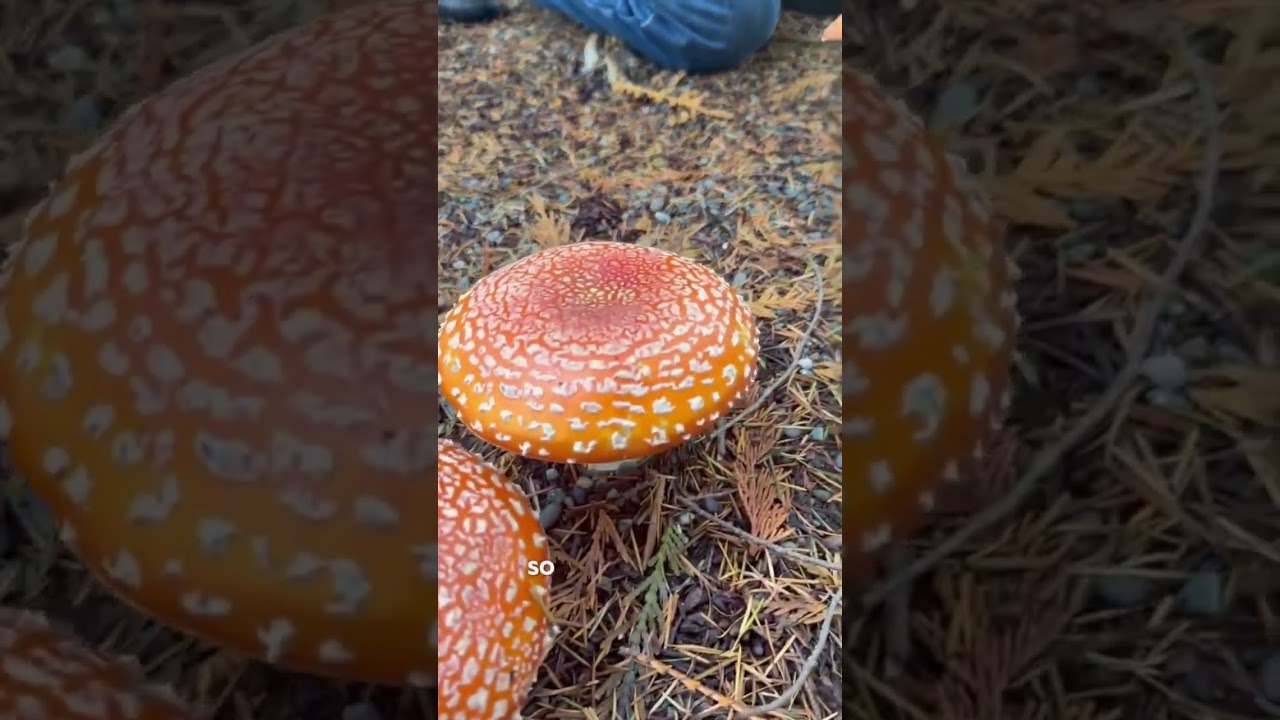
Transcript

[0:13] ♪ music ♪

[0:31] Mushroom mycelium represents rebirth, rejuvenation, regeneration.

[0:39] Fungi generates soil that gives life.

[0:51] The task that we face today is to understand the language of nature.

[0:58] My mission is to discover the language of nature of the fungal networks that communicate with the ecosystem.

[1:03] And I in particular believe nature is intelligent.

[1:07] The fact that we lack the language skills to communicate with nature

[1:10] does not impugn the concept that nature's intelligent;

[1:14] it speaks to our inadequacy of our skill set for communication.

[1:22] We have now learned that there are these languages that are occurring

[1:26] and communication between each organism.

[1:29] If we don't get our act together,

[1:31] and come in commonality and understanding with the organisms that sustain us today,

[1:34] not only will we destroy those organisms, but we will destroy ourselves.

[1:40] We need to have a paradigm shift in our consciousness.

[1:43] What will it take to achieve that?

[1:45] If I die trying, but I'm inadequate to the task

[1:48] to make a course change in the evolution of life on this planet-

[1:52] Ok, I tried.

[1:53] The fact is- I tried.

[1:55] How many people are not trying?

[1:57] If you knew that every breath you took could save

[2:00] hundreds of lives in the future had you walked down this path of knowledge,

[2:04] wouldn't you run down that path of knowledge as fast as you could?

[2:08] I believe nature is a force of good.

[2:12] Good is not only a concept- it is a spirit.

[2:16] And so hopefully, the spirit of goodness will survive.

Paul Stamets
AuteurPaul Stamets

Mycologist and advocate who has dedicated his life to studying mushrooms and their transformative potential to heal people and restore the planet through medicine, agriculture, and…

Voir le profilSite web
Explorer les thèmes
Fungi-myceliumNature-intelligenceEcological-consciousnessSoil-regenerationParadigm-shift

Des questions ?

Questions fréquemment posées

Mycelium is the thread-like underground network of fungi that breaks down organic matter and generates soil, which is essential for plant growth and terrestrial life. Fungal networks also connect plant roots in what scientists call the 'wood wide web,' allowing transfer of water, nutrients, and chemical signals between organisms.
Stamets explains that mycelial networks occur in direct communication with plants and other organisms, exchanging nutrients, water, and chemical signals. This communication is structured and information-rich, creating an interconnected system where organisms share resources and information across the ecosystem.
If humanity destroys fungal ecosystems through neglect or poisoning, we destroy the soil-building capacity that sustains all terrestrial life—including food crops and forests. Stamets argues that aligning human consciousness and action with fungal networks is essential to preventing ecological collapse and ensuring our own survival.
Stamets argues that nature possesses intelligence evidenced by fungal communication networks, soil regeneration, and ecosystem balance. Our lack of language skills to understand nature does not deny its intelligence; it reflects humanity's inadequacy in communication, not nature's lack of wisdom.
Stamets frames goodness not as a human concept but as a living force in nature—visible in regeneration, interconnection, and life-giving capacity of ecosystems. He argues that recognizing and aligning with this 'spirit of goodness' is essential to human and ecological survival.
He calls for a shift in human consciousness that moves from viewing nature as a resource to extract to recognizing ourselves as embedded participants in communicative, living ecosystems. This requires learning the language of nature and aligning our action with ecological intelligence.

Continuer la lecture

More from Paul

Voir tout
Amanita Muscaria: History, Identification & Safety of Fly Agaric
Featured

Amanita Muscaria: History, Identification & Safety of Fly Agaric

Amanita muscaria, the fly agaric, has ancient roots in pest control and cultural mythology. Despite its striking beauty, this mushroom poses…

1 min read
Lactarius Deliciosus: Identifying & Foraging the Saffron Cap
Featured

Lactarius Deliciosus: Identifying & Foraging the Saffron Cap

The saffron milk cap (Lactarius deliciosus) is an easy-to-identify edible mushroom with striking green staining and orange milk. Learn how t…

1 min read
Eye Contact as Consciousness Meeting Itself
Featured

Eye Contact as Consciousness Meeting Itself

When you meet another's gaze without thought, you encounter consciousness recognizing itself. Eckhart Tolle explores how authentic eye conta…

1 min read
Mindful Breathing Practice: Connect With Earth and Self
Featured

Mindful Breathing Practice: Connect With Earth and Self

Sister Don Hanh guides a foundational meditation linking breath awareness with Earth connection, using simple body scans and gratitude pract…

1 min read

Continue d’explorer

Poursuis ton chemin

Plus de sagesse et de rassemblements dans tout l’annuaire BrightStar.

Plus d’articles

Parcours toute la bibliothèque d’enseignements, d’entretiens et de guides.

Retour à tous les articles →

Enseignants et artistes

Découvre les lignées, les musiciens et les guides du monde conscient.

Explorer les artistes →

Trouver un événement

Kirtan, retraites, bains sonores, breathwork, festivals — bientôt près de chez toi.

Parcourir les événements →