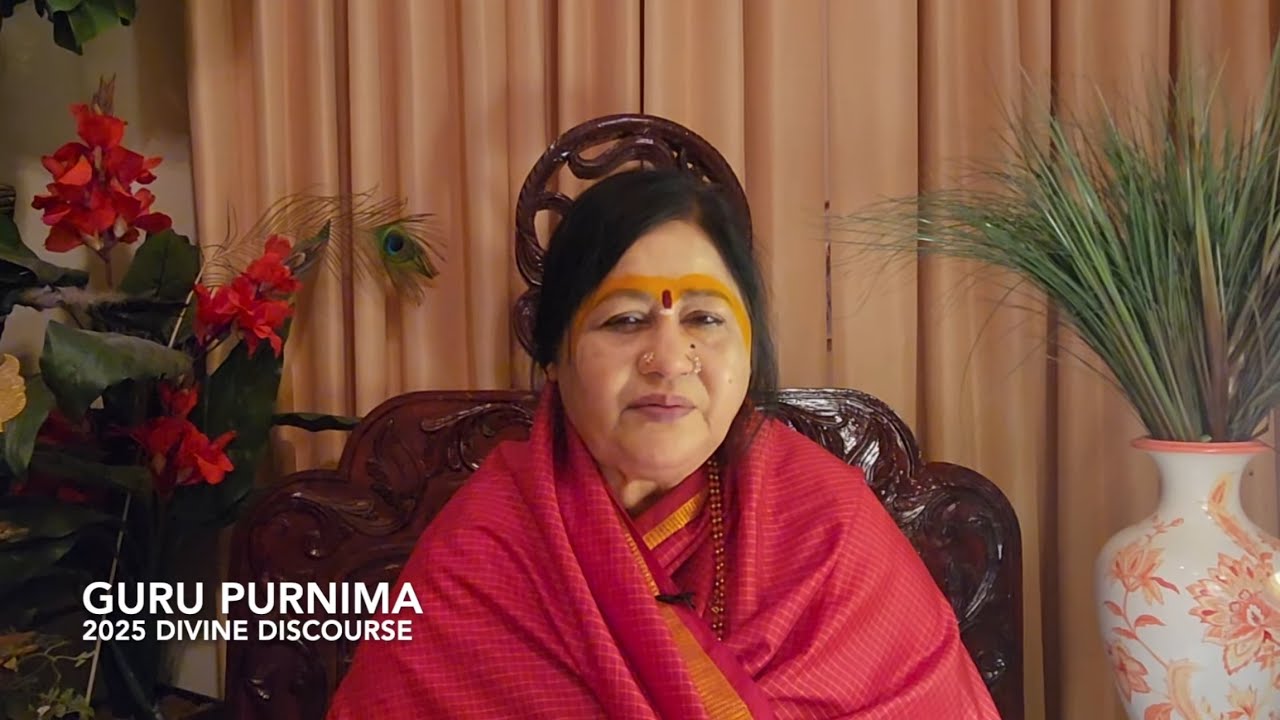
This is a five-minute devotional kirtan by Sri Karunamayi honoring Jagdambika Lalitha Devi, one of the principal forms of the Divine Mother in Hindu tantra and Shaktism. The song weaves Sanskrit mantras, invocations to Devi's multiple aspects (including her names as cosmic creatrix, enchantress, and liberator), and melodic devotion into a practice of surrender and grace. The refrain "Devi Charanam Saranam Saranam" (Goddess, I take shelter in your feet) grounds the entire piece in the bhakti (devotional) path of seeking protection and liberation through relationship with the Divine Feminine.
What is Jagdambika Lalitha Devi?
Jagdambika Lalitha Devi represents a particular expression of Shakti—the cosmic feminine principle and primordial creative force in Hindu philosophy. The term "Jagdambika" literally means "Mother of the Universe" (jagat = world, ambika = mother), identifying her as the creatrix from whom all existence flows. In Tantric and Shaktist traditions, she is understood not as separate from ultimate reality but as its dynamic, generative aspect. Lalitha (also spelled Lalita) specifically emphasizes her playful, graceful nature; the name suggests divine play (lila) and sweetness.
Sri Karunamayi's song positions Devi as both transcendent—infinite, eternal, the basis of all worlds—and intimately accessible through devotion. This is a core principle in Hindu and tantric practice: the ultimate is not remote but present, responsive to sincere invocation and surrender.
How does the kirtan structure devotion?
The song's central mantra, "Devi Charanam Saranam Saranam" (repeated throughout), anchors the practice in the feet of the Goddess. In Hindu devotional culture, the feet of the divine are not merely symbolic; they represent the point of access, the tangible form through which one approaches transcendence. Charanam (feet) and saranam (refuge/shelter) together create a prayer of surrender: "I seek shelter at your feet." This repetition is essential to kirtan practice—it moves consciousness from conceptual understanding into felt experience through sound, rhythm, and intention.
The structure alternates between naming Devi's attributes and returning to the refrain. This pattern deepens the devotee's relationship with each aspect of the Divine Feminine as it is invoked, then immediately reasserts the fundamental gesture of taking shelter. It is not intellectual theology but relational practice.
What names and attributes does the song invoke?
Throughout the kirtan, multiple names and descriptions of Devi appear, each pointing to different dimensions of her power and nature:
- Jagdambika: Mother of the universe, the cosmic creatrix from whose being all forms arise.
- Mohinee Chakrini: The enchantress who spins the wheel of illusion and manifestation. In mythology, Mohini is Vishnu's female avatar, representing divine allure and the power to bewitch—not in a negative sense, but as the irresistible magnetism by which consciousness is drawn into form and play.
- Mañjula Vasini: She whose residence is sweetness, or she who dwells in loveliness. This emphasizes grace, beauty, and benevolence as divine attributes.
- Lalitha: The playful one, reminding the devotee that creation is divine play (lila), not a grim or mechanical process but an expression of bliss and freedom.
Each name is not merely a label but an invitation to recognize and revere a specific facet of divine power. In tantra and Shaktism, naming is a form of knowledge—to know the names is to know the essence, at least partially.
How does the song connect birth, death, and liberation?
The text references "janm janm" (birth birth, or lifetime after lifetime), reflecting the Hindu understanding of samsara—the cycle of rebirth driven by karma and ignorance. By invoking Devi's protection across lifetimes, the song asks: how can the soul find liberation (moksha) from this wheel?
The answer lies in surrender to Devi's feet. In Hindu philosophy, liberation does not require earning merit across countless lives alone; it requires grace. Grace flows when the individual ego surrenders its isolation and recognizes itself as already held within divine consciousness. The refrain "Saranam" (refuge) is thus not passive resignation but active opening to transformation. To take shelter is to stop resisting, to allow divine intelligence to work.
The song also alludes to Devi's role in sustaining the cosmic order and, implicitly, her role in dissolution and regeneration. The manifest universe arises from her, is sustained by her, and returns to her in the cycle of cosmic time. Individual human birth and death are microcosms of this macrocosmic process.
Why is kirtan a spiritual practice, not just singing?
Kirtan operates on multiple levels simultaneously. On the surface, it is song—melody, rhythm, and the human voice in community. But in yogic and bhakti philosophy, sound (shabda) is itself a manifestation of divine consciousness. The vibration of mantras and sacred names carries power beyond their literal meaning.
When Sri Karunamayi sings "Devi Charanam Saranam," the repetition, the pitch, the breath, and the intention of surrender all align to shift consciousness. This is not superstition but a practical technology. Modern neuroscience has begun to document how repetitive chanting affects the nervous system, reducing cortisol, lowering heart rate, and activating parasympathetic (calming) responses. But the traditional understanding goes deeper: mantra is a vehicle for direct communion with the aspect of reality it invokes.
Kirtan is also a social practice. Sung in groups, it creates a field of shared intention and resonance. Sri Karunamayi has often taught that singing the names of God together dissolves the boundaries of individual ego and aligns multiple consciousnesses toward the same sacred focus.
What is the significance of Devi worship in contemporary practice?
The resurgence of Devi-centered spirituality—whether through Shaktism, tantra, or eclectic devotional practice—reflects a broader recognition that the Divine is not exclusively masculine or transcendent but also feminine and immanent. The Goddess is not consort but source. She is not passive but actively creative and protective.
For contemporary practitioners, songs like "Devi Charanam Saranam" offer a counterbalance to spiritual traditions that emphasize detachment, rejection of the body, or transcendence only. Here, the Divine Feminine is celebrated as the intelligence within matter, the energy behind all becoming, the one who loves and protects her children through the cycles of existence.
Sri Karunamayi herself, recognized by followers as a living embodiment of Devi's compassion, uses kirtan as both a teaching tool and a direct transmission. In her presence and through her voice, the invocation of Devi is not historical or mythological but present and alive.
Where to go from here
To deepen engagement with this practice, begin by listening to the kirtan repeatedly, allowing the melody and rhythm to become familiar. Notice the effect on your nervous system and mood. If you are drawn to the text, explore translations of the names and attributes of Devi in classical Hindu and tantric sources—texts like the Devi Mahatmya or the Lalita Sahasranama (Thousand Names of Lalita) provide rich context.
If you feel called to practice, learn the basic refrain "Devi Charanam Saranam Saranam" and repeat it during meditation or daily activity. The goal is not perfection of pitch but sincerity of intention. Many practitioners find that regular engagement with Devi mantra opens the heart, cultivates trust in a benevolent cosmos, and gradually shifts the sense of "I" from isolated ego to a participatory aspect of a larger consciousness.
If you have access to a kirtan group or satsang (spiritual gathering), joining others in singing these names can accelerate the opening. And if you are studying Hindu tantra, Shaktism, or goddess-centered spirituality more formally, this kirtan can serve as a living reference point—theory made sonic and embodied.