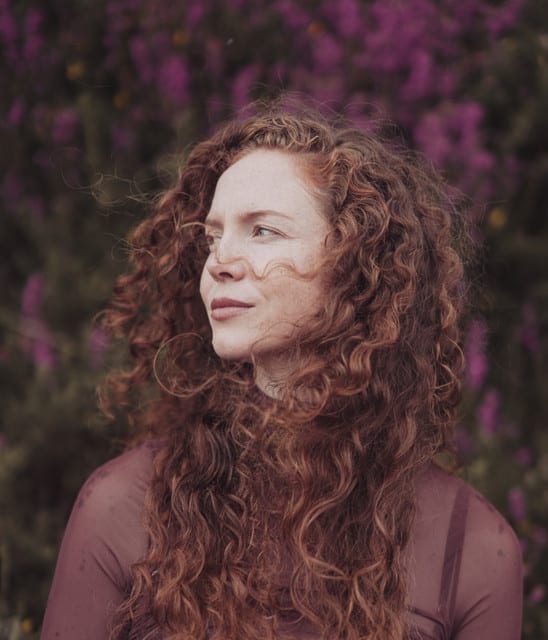

By the time Let It Breathe arrived on October 14, 2022, Ajeet had spent nearly a decade moving through distinct chapters. Her first two albums, Sacred Waters (2013) and At The Temple Door (2014), were built around mantra, the first holding music for Kundalini Yoga meditations, the second weaving songs and mantras with harmonies from Snatam Kaur. Darshan (2015) was recorded in Bali, Haseya (2016) took its title from the Diné for "she rises," and Shuniya and Indigo Sea followed in 2018. The LUNAR EP (2020) traced the phases of the moon, and the live album Voices Like Rain captured her 2019 European tour.
Let It Breathe comes after her 2020 return to Ireland, where she works from a home studio. It is an eight-track album, compact by the standards of a discography this varied, and it sits between the mantra-centered early work and Slánú (2026). Her music moves from traditional Irish folk to mystical, meditative soundscapes, and this record belongs to that long arc of moving between song and stillness.
Ajeet is a multi-instrumentalist, producer and songwriter who writes, produces and engineers her own records. On this one she sings and plays harmonium and bodhrán, and the album credits list Aisling Urwin on vocals and harp, David Howley on bouzouki, Sam Killeen on electric guitar, Scott Mulvahill on upright bass and Sukhmani Rayat on percussion. Her music is rooted in the folk traditions of her Irish background and carries layers of folklore, dream images and myth, and those are good things to listen for here.
The title itself is a useful instruction. Let It Breathe suggests space, and with eight tracks the album invites you to settle into a slower rhythm of attention. Expect devotional intent more than pop structure: songs that unfold rather than announce themselves.
The album runs from "Blooming" to "Softly." Three places to begin:
- "Blooming." The opening track and the first single. It shares its name with the seven-week Blooming Tour through Europe that she and her band played while the album's singles were coming out. It sets the breathing pace, so notice how quickly, or slowly, it lets you arrive.
- "Alive." Peia and Nessi Gomes join her here, three voices woven together. Harmonies are a hallmark of Ajeet's work, from the Snatam Kaur harmonies on At The Temple Door to the layered vocals of Voices Like Rain. Listen for the moment where a single voice becomes several.
- "Water and Sky." A duet with the English singer-songwriter Sam Garrett, which press coverage described as her tribute to her late grandmother. After it, let the closing track, "Softly," carry the album to its resolution, and notice whether it lingers or simply releases.
Ajeet's work sits where several streams meet: devotional and world music, the mantra tradition of Kundalini Yoga that shaped her early albums, and the folk traditions of her Irish background. Her retreats combine yoga, meditation, songs and stories. Let It Breathe belongs to that practice-oriented side of her work, music meant to be used as well as admired. At the same time, her love of story, especially the stories cultures pass down, keeps it tied to folk tradition rather than only to chant.
This album will meet you best if you are in a transition: finishing something, recovering from a busy stretch, or learning to sit with quiet. Listeners who already know Ajeet's mantra-based albums will find a familiar devotional spirit, while those who come from Irish folk or ambient music may find it an accessible way into the meditative side of her catalog. If you want driving rhythm or constant novelty, it may feel too still. If you are tired and want room, the title is the promise.
Give it one uninterrupted sitting of the whole album, since eight tracks suit a single session. Evening works well, with the lights low and your phone away. Headphones will help you hear the layered vocals and the space between sounds, which matters on a record named for breath. If you have a meditation or yoga practice, play it as the frame for that practice rather than as background. Then listen once more with no agenda, and notice what changes when you stop trying to do anything with it.