Why Do People Bow at Indian Funerals?
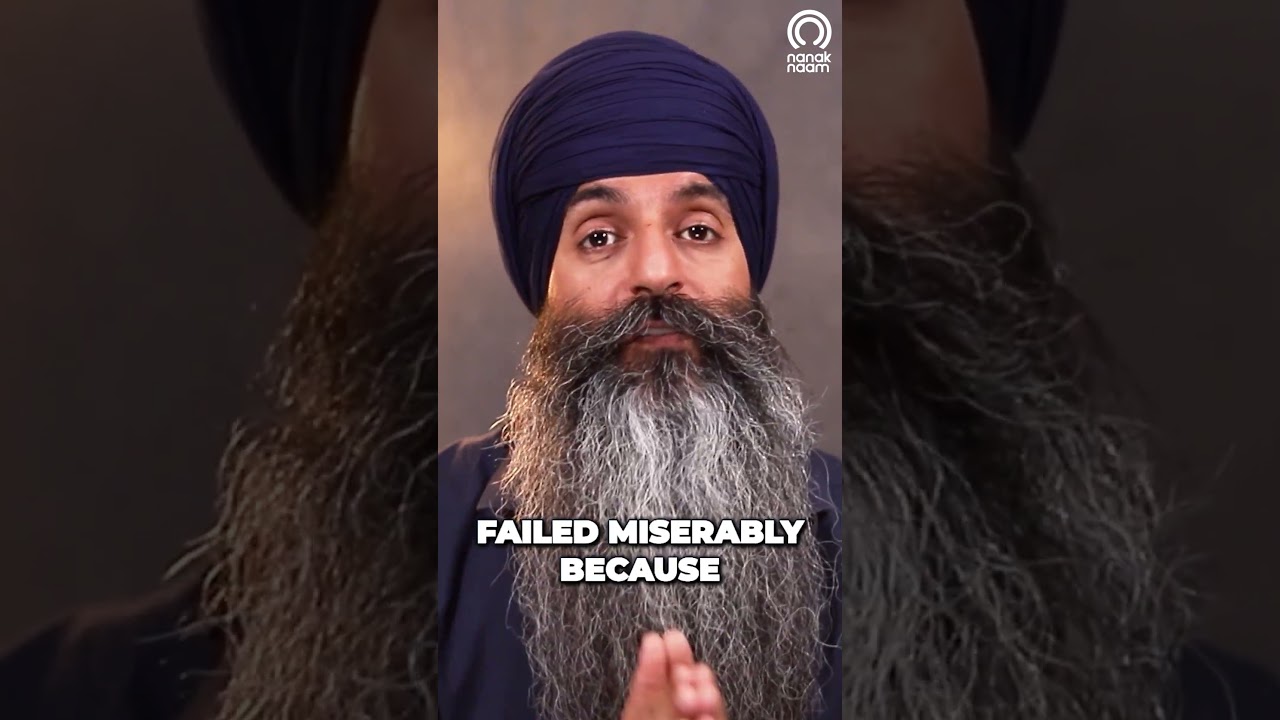
When witnessing an Indian funeral, observers often notice a striking ritual: family members and mourners bow their heads toward the deceased. Western observers might assume this is a sign of respect directed toward the loved one themselves. But there is something deeper happening in that moment. According to Nanak Naam, the bow is not actually directed at the person who has died. Instead, it is a response to encountering the raw, undeniable power of death itself.
When people bow their heads in the presence of death, they are acknowledging something far more profound than individual loss. They are being confronted with a force that transcends personal relationships—a force that has the power to level all human distinctions. In that moment of confrontation with death's reality, there is no adequate response except humility. The bow is an expression of that humility in the face of an overwhelming, universal power.
What Is Death as a Master?
Nanak Naam describes death as "a master that has the strength to overpower all of us." This is not metaphorical language—it is a description of death's actual function in human life. A master, in the traditional sense, is someone who has power over others, who cannot be resisted or negotiated with. Death operates precisely in this way. No amount of wealth, achievement, or social position can buy exemption from death's authority.
The teaching here centers on a crucial recognition: "no matter who you thought you were, whether you are rich or poor, whether you're successful or famous all around the world, there is a master that powers us all." This master does not discriminate. A billionaire and a beggar both face the same inevitable force. A person celebrated across the globe and someone unknown beyond their neighborhood both submit to death's power. This absolute equality before death is what creates the conditions for genuine humility.
The Sacredness of Death in Ancient Wisdom
Rather than treating death as something to be hidden, denied, or feared into silence, ancient cultures—from which Nanak Naam draws—recognized that "there's a sacredness to death." This is not the sacredness of something beautiful or desirable, but the sacredness of something so powerful, so fundamental to existence, that it commands reverence.
In many spiritual traditions, the sacred refers to that which is set apart, that which carries weight and significance beyond ordinary understanding. Death is sacred in this sense because it is the boundary condition of human existence. Everything we do, build, accumulate, and achieve exists within the frame of our mortality. To encounter death—whether at a funeral or in meditation—is to encounter the context in which all of life unfolds. That encounter itself is sacred because it reveals ultimate truth.
Why Humility Before Death Teaches Us How Life Works
The practice of bowing in the presence of death—of acknowledging death's supreme power—is not an exercise in morbidity or despair. Rather, it is a teaching method. When Nanak Naam concludes that "you can only bow your head in front of this supreme power in absolute humility and say, 'This is how life works,'" the implication is clear: understanding death's supremacy is understanding how existence actually functions.
Most people live as though they have unlimited time. They act as though their accumulations, their status, their projects will persist indefinitely. This illusion creates anxiety, attachment, and a constant scramble for security that can never be achieved. But when you truly grasp that death is master—when you bow before that reality—something shifts. You begin to see that life is not about accumulating and defending, but about moving through time with awareness of its preciousness and its brevity.
The humility that death produces is therefore not a diminishment but a clarification. It clarifies priorities. It clarifies what matters. It clarifies the actual structure of existence: we are not in control; we are participants in a process much larger than ourselves. Recognizing this does not make life meaningless—it makes life sacred because it becomes finite, fragile, and therefore worthy of full attention and presence.
The Universal Equalizer
Death is the only truly universal human experience that makes no distinction based on merit, achievement, or circumstance. Unlike success, which is distributed unequally; unlike wealth, which some accumulate more than others; unlike fame, which is granted to a few—death comes to everyone equally. This equality is what makes death such a powerful teacher of humility.
In a world that constantly ranks people, that celebrates some and marginalizes others, that measures worth through external metrics, death offers a counternarrative. At the point of death, none of those rankings matter. The supreme power reduces all to the same condition: finite, temporary, dissolved. To contemplate this is to contemplate the ultimate insignificance of all the metrics by which we usually measure ourselves and others.
Yet paradoxically, this insignificance is freeing. If my worth is not determined by my wealth or fame—because death will take those anyway—then what is my worth? The question itself can lead toward deeper sources of meaning that have nothing to do with external validation. This is how the humility before death becomes spiritually generative rather than spiritually deadening.
Where to Go From Here
This teaching invites reflection on your own relationship with mortality. Rather than avoiding thoughts of death, Nanak Naam's approach suggests contemplating death deliberately as a spiritual practice. What would shift in your daily life if you genuinely accepted that death is master? What would you stop worrying about? What would you start paying attention to? What would you do differently with your time?
Nanak Naam offers further resources for deepening this wisdom through Guru Nanak's teachings: explore the full lesson "Grieving With Wisdom" to understand how this humility extends into the grief process itself. Engage with meditation practices that help embody these insights rather than merely intellectualizing them. The bow before death is not just a physical gesture or a conceptual understanding—it is a posture of the entire being, cultivated through practice and presence.
]]>