EveryEvent Madrid

Ver Todos los Events

Find every event in Madrid

events

Concerts & Live Music
Festivals
Sports & Recreation
Food & Drink
Arts & Culture
Community
Family & Kids
Nightlife
Comedy
Theater
Destinos Populares
BaliSedonaLos AngelesCosta RicaNew YorkSan FranciscoAustinMiamiJoshua TreeTulum
Ver Todas las CategoríasVer Todos los Destinos

Explorar Todas las Características

Herramientas poderosas para hacer crecer tus eventos

Características de la Plataforma

Precios Dinámicos Inteligentes
Categorías de Entradas
Asientos Asignados
Recuperación de Carritos
Recuperación de Visitantes
Donaciones y Escala Móvil
Motor de Afiliados
Escáner de Entradas
Códigos de Cupón
Preguntas Personalizadas
Compartir Entradas
Ventas Adicionales
Análisis e Informes
Secuencias de Email
Lista de Espera / Notificar / Recordar
Explorar
Discovery HubArtists & PerformersVenuesKnowledge Base
Ver Todas las CaracterísticasSobre Nosotros
PreciosBlog
Language
Saved events
Ver Todos los Eventos

events

Concerts & Live MusicFestivalsSports & RecreationFood & DrinkArts & CultureCommunityFamily & KidsNightlife

Destinos Populares

BaliSedonaLos AngelesCosta RicaNew YorkSan Francisco

Explorar

Discovery HubArtists & PerformersVenuesKnowledge Base

Características de la Plataforma

Precios Dinámicos InteligentesCategorías de EntradasAsientos AsignadosRecuperación de CarritosRecuperación de VisitantesDonaciones y Escala MóvilMotor de AfiliadosEscáner de EntradasCódigos de CupónPreguntas PersonalizadasCompartir EntradasVentas AdicionalesAnálisis e InformesSecuencias de EmailLista de Espera / Notificar / Recordar
Ver Todas las CaracterísticasSobre Nosotros
PreciosBlog
Iniciar sesiónRegistrarseOrganizadores de Eventos
  • Browse All Events
  • Concerts & Live Music
  • Festivals
  • Sports & Recreation
  • Food & Drink
  • Arts & Culture
  • Community
  • Family & Kids
  • Nightlife
  • Todas las Categorías →
  • All Destinations →
  • For Promoters
  • For Artists
  • For Venues
  • For Festivals
  • For Event Spaces
  • For Nonprofits
  • For Bloggers
  • For Speakers
  • Brand Ambassador
  • Case Studies
  • Red de +350K Compradores
  • Recuperación de Carritos
  • Precios Dinámicos Inteligentes
  • Categorías de Entradas
  • Eventos Recurrentes
  • Asientos Asignados
  • Motor de Afiliados
  • Lista de Espera / Notificar
  • Escáner de Entradas
  • Widget Embebido
  • Sindicación de eventos
  • Centro de mensajes
  • Integraciones
  • Reportes
  • Todas las Características →
  • Acerca de
  • El ecosistema
  • Blog
  • Glosario
  • Inspiración
  • Centro de Ayuda
  • Contacto
  • Documentación API
  • Recursos de Marca
  • Carreras
  • Prensa
  • Términos de Servicio
  • Política de Privacidad

Events

  • Browse All Events
  • Concerts & Live Music
  • Festivals
  • Sports & Recreation
  • Food & Drink
  • Arts & Culture
  • Community
  • Family & Kids
  • Nightlife
  • Todas las Categorías →

Getaways

  • All Destinations →

For Organizers

  • For Promoters
  • For Artists
  • For Venues
  • For Festivals
  • For Event Spaces
  • For Nonprofits
  • For Bloggers
  • For Speakers
  • Brand Ambassador
  • Case Studies

Características

  • Red de +350K Compradores
  • Recuperación de Carritos
  • Precios Dinámicos Inteligentes
  • Categorías de Entradas
  • Eventos Recurrentes
  • Asientos Asignados
  • Motor de Afiliados
  • Lista de Espera / Notificar
  • Escáner de Entradas
  • Widget Embebido
  • Sindicación de eventos
  • Centro de mensajes
  • Integraciones
  • Reportes
  • Todas las Características →

Empresa

  • Acerca de
  • El ecosistema
  • Blog
  • Glosario
  • Inspiración
  • Centro de Ayuda
  • Contacto
  • Documentación API
  • Recursos de Marca
  • Carreras
  • Prensa
  • Términos de Servicio
  • Política de Privacidad
EveryEvent
© 2026 EveryEvent Madrid. Todos los derechos reservados.
Inspiration

Mycelium Heat Production andMushroom Thermal Dynamics

Paul Stamets
Paul Stamets
Nov 29, 2016
5 min de lectura
Ver · 4

Mycelium growth operates as an exothermic reaction, releasing heat similar to how a compost pile warms up. When substrate and air temperatures converge within a few degrees, mushroom fruiting is triggered. Yet paradoxically, fruiting mushrooms measure significantly colder than the soil they grow from, suggesting they act as heat sinks or dissipate thermal energy rather than generate it—a thermal property that raises questions about the heat transference mechanics of fungal fruiting bodies.

Leer · 6 secciones

How Does Mycelium Generate Heat?

Mycelium, the vegetative network of fungal threads underground or in substrate, functions as an exothermic system. This means that as mycelium metabolizes nutrients and breaks down organic matter, it actively releases heat into its environment. The energy signature is comparable to a compost pile warming up through microbial and fungal decomposition. This is not merely a side effect—the heat generation is integral to the mycelium's metabolic process as it colonizes and digests its substrate.

The heat release serves several ecological functions. It accelerates decomposition, mobilizes nutrients, and creates warmth that may attract or influence spore germination and hyphal growth. For cultivators working with mycelium in controlled environments, this exothermic property has practical implications: overly insulated containers or dense substrates can become dangerously hot if ventilation is inadequate.

What Triggers the Shift From Mycelium to Fruiting?

A critical threshold appears to govern the transition from mycelial growth to mushroom formation. When the temperature of the substrate and the surrounding air become nearly coincident—converging within a few degrees of each other—mushroom fruiting is triggered. This thermal equilibration signals to the mycelium that conditions are ripe for reproducing via fruiting bodies rather than continuing to colonize the substrate.

In ecological terms, this makes sense: mycelium spreads through substrate when conditions favor growth and nutrient acquisition. Once the environment stabilizes thermally, the mycelium shifts its energy allocation toward reproduction. The thermal equilibration thus acts as a biological cue, communicating resource stability and appropriate conditions for the costly process of forming fruiting bodies.

Are Fruiting Mushrooms Actually Colder Than the Ground?

Field observation using thermal imaging reveals a counterintuitive fact: fruiting mushrooms are consistently colder than the substrate from which they emerge. This is not a theoretical assumption but a measured phenomenon captured on camera. The temperature differential can be significant—mushrooms register noticeably lower on a thermal profile than the soil directly beneath them.

This finding contradicts an initial hypothesis that mushroom fruiting might be endothermic—meaning the fruiting process absorbs heat from the environment. Rather, what the thermal data shows is that mushrooms function as heat sinks. They are much colder than the surrounding environment, suggesting they actively dissipate or transfer thermal energy away from themselves, or else they are drawing heat from the soil into their structure and releasing it into the air.

What Do Mushrooms' Heat-Sinking Properties Tell Us?

The observation that fruiting mushrooms are significantly colder than their substrate raises deeper questions about fungal thermodynamics. The mushroom's cooler temperature is not passively acquired—it suggests active heat transference properties built into the fruiting body's structure and physiology.

One possibility is that the large surface area of a mushroom cap and stem, combined with their moisture-rich composition, facilitates rapid heat dissipation into the air. Evaporation from the mushroom's surface would cool it further, creating a localized temperature gradient. Another consideration: if the mushroom is pulling nutrients and water from warmer substrate, the endothermic process of vaporization within the fruiting body's tissues could lower its temperature relative to the ground.

A third hypothesis, less explored but intriguing, is whether fruiting mushrooms contribute to localized cooling effects in their environment. If mushrooms are indeed heat sinks, they may help moderate microclimate temperatures around them—potentially benefiting other organisms or creating conditions that favor further fungal reproduction.

Why Does This Thermal Mystery Matter?

The thermal dynamics of fungi extend beyond curiosity. Understanding how mycelium generates heat and how fruiting bodies dissipate or transfer it has implications for:

  • Cultivation: Controlling temperature in mushroom farms requires acknowledging both the exothermic heat from colonizing mycelium and the cooling effects of fruiting bodies.
  • Forest ecology: Fruiting mushrooms scattered across a forest floor may collectively influence local temperature and humidity, affecting plant growth and other organisms.
  • Decomposition rates: The thermal signature of fungal colonies tells us how fast mycelium is working and when it is shifting metabolic gears toward reproduction.
  • Organism sensing: Insects, arthropods, and other creatures that orient toward mushrooms may be responding to thermal cues as much as chemical ones.

Where to Go From Here

The thermal behavior of mushrooms invites further investigation. Researchers might ask: How much heat does a fruiting mushroom dissipate relative to its mass? Do different mushroom species exhibit different thermal signatures? Can thermal imaging help identify optimal fruiting conditions in cultivation? And do the cooling properties of mushroom fruiting bodies have ecological consequences—such as localized humidity changes or effects on neighboring organisms?

For mycologists and curious observers, a thermal camera opens new dimensions of understanding. What appears to be simple mushroom growth—mycelium colonizing substrate, then producing fruit bodies—reveals itself as a sophisticated thermal dance: heat generation followed by heat dissipation, each phase communicating information and triggering transitions in the fungal lifecycle.
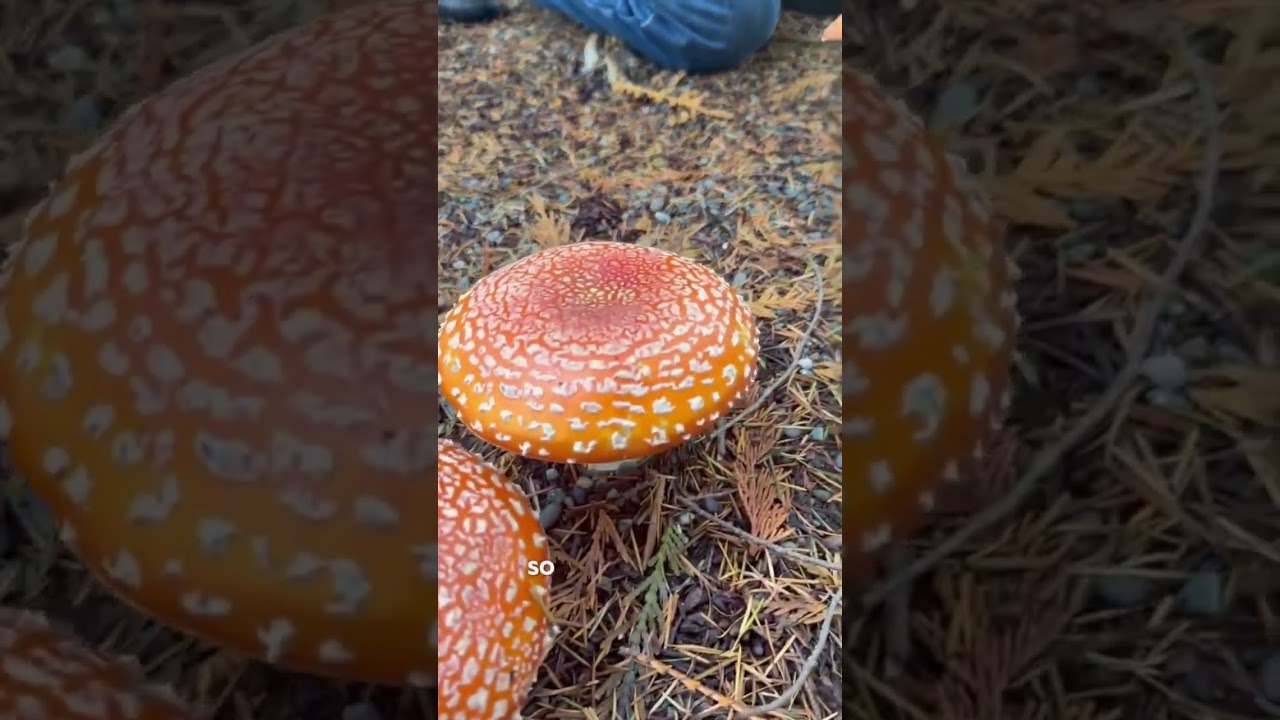
Transcript

[0:05] when the melium grows it's an exothermic

[0:07] reaction it means it releases heat just

[0:09] like a compost pile heats up but then

[0:12] when the temperature of the substrate in

[0:14] the air become nearly coincident within

[0:16] a few degrees it triggers mushroom

[0:17] formation I've long wondered about this

[0:20] question given that Trend are the

[0:23] mushrooms Outdoors classically colder

[0:26] than the substrate from which they grow

[0:28] and here with the thermo profile on

[0:31] camera we can see that indeed this is

[0:33] true the mushrooms are much colder uh

[0:36] than the ground and so it's a heat SN

[0:38] it's not really an endothermic reaction

[0:41] but it really begs the question of um

[0:44] the heat transference properties of

[0:45] mushrooms being much colder than the

[0:47] surrounding environment I just find this

[0:49] interesting

Paul Stamets
AutorPaul Stamets

Mycologist and advocate who has dedicated his life to studying mushrooms and their transformative potential to heal people and restore the planet through medicine, agriculture, and…

Ver perfilSitio web
Explorar temas
Mushroom-biologyMyceliumThermal-dynamicsExothermic-reactionFruiting-bodies

¿Tienes Preguntas?

Preguntas Frecuentes

Mycelium growth is exothermic—it releases heat as it metabolizes nutrients and breaks down organic matter, similar to the way a compost pile heats up. This heat generation is a natural byproduct of fungal metabolism and substrate colonization.
Fruiting is triggered when the temperature of the substrate and surrounding air converge within a few degrees. This thermal equilibration signals that environmental conditions are stable enough for the mycelium to shift energy from growth and colonization to reproduction via mushroom formation.
Mushrooms are not endothermic in the classical sense. Instead, they function as heat sinks—their large surface area, moisture content, and active heat transference properties cause them to be significantly colder than the substrate. This may involve evaporation, water transport, or direct heat dissipation into the air.
The observation that mushrooms act as heat sinks suggests they may contribute to localized cooling effects in their environment. If true, colonies of fruiting mushrooms could influence microclimate temperature and humidity around them, though more research is needed to quantify this effect.
Thermal cameras reveal the heat signature of mycelium colonization and the cooling effects of fruiting bodies, allowing cultivators to monitor conditions more precisely, predict fruiting readiness based on temperature convergence, and optimize growing environments.
Mycelium actively generates heat through metabolism, while fruiting bodies transfer or dissipate heat through their structure and the evaporation of water from their tissues. This difference may reflect different metabolic strategies: growth for mycelium versus reproduction for fruiting bodies.

Seguir leyendo

More from Paul

Ver Todo
Amanita Muscaria: History, Identification & Safety of Fly Agaric
Featured

Amanita Muscaria: History, Identification & Safety of Fly Agaric

Amanita muscaria, the fly agaric, has ancient roots in pest control and cultural mythology. Despite its striking beauty, this mushroom poses…

1 min read
Lactarius Deliciosus: Identifying & Foraging the Saffron Cap
Featured

Lactarius Deliciosus: Identifying & Foraging the Saffron Cap

The saffron milk cap (Lactarius deliciosus) is an easy-to-identify edible mushroom with striking green staining and orange milk. Learn how t…

1 min read
How Sitting Still Proves You're Already Awakening
Featured

How Sitting Still Proves You're Already Awakening

Most people can't sit quietly without discomfort, but if you can, you're already further along spiritually than you realize. Eckhart Tolle e…

1 min read
The Missing Piece: How Real Thinking Creates Real Results
Featured

The Missing Piece: How Real Thinking Creates Real Results

Most vision boards fail because people skip the actual thinking. Eckhart Tolle reveals the rhythm that unlocks insight and the two distinct …

1 min read

Sigue explorando

Continúa tu camino

Más sabiduría y encuentros de todo el directorio de BrightStar.

Más artículos

Recorre la biblioteca completa de enseñanzas, entrevistas y guías.

Ver todos los artículos →

Maestros y artistas

Explora los linajes, músicos y guías del mundo consciente.

Explorar artistas →

Encuentra un evento

Kirtan, retiros, baños de sonido, breathwork, festivales — muy pronto.

Ver eventos →