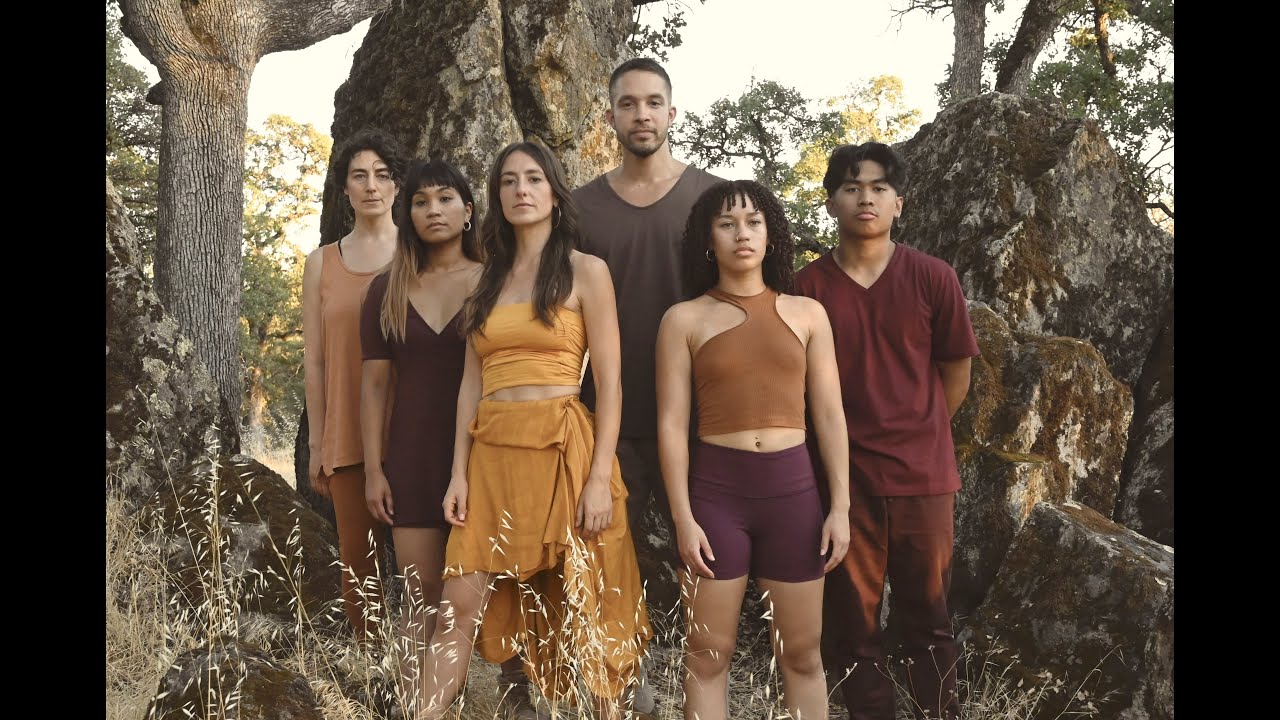
In "Let It In," Ayla Nereo performs a raw, embodied song about releasing resistance to life's fullness and embracing vulnerability as the entry point to genuine connection—both with ourselves and with the natural world. Through poetic language and the metaphor of running to the edges of ourselves, the song invites listeners to stop holding back and surrender to the complete spectrum of human experience, including fear, doubt, and the unknown.
What Does It Mean to "Let It In"?
The central question of Nereo's song is deceptively simple: can you let it in? This isn't an invitation to passivity, but rather an act of radical acceptance. "Ought to be a way from the thinkin'—it won't stop till I let it all in," Nereo sings, pointing to a fundamental paradox of the human condition. We often believe that by resisting, controlling, or thinking our way through difficulty, we'll find peace. Yet the song suggests the opposite: the thinking itself is the obstacle. Only by ceasing resistance—by letting things in—can the mind settle.
This concept echoes contemplative traditions where acceptance precedes transformation. Rather than fighting against what arises, the practice is to open to the full spectrum of experience. Nereo frames this not as weakness but as a necessary capacity: the willingness to be porous, to allow life to move through us rather than against us.
The Calling of the Moon and the Wild Mother
The song's narrative unfolds through encounters with archetypal figures of wisdom: the moon and the wild mother. The moon tells Nereo, "Your feet are heavy, your feet stand deep, deeper than you know, farther than you go." This is a poetic diagnosis of what we might call spiritual constriction—the feeling of being rooted not in presence but in habit, in the weight of accumulated thought and emotion.
The wild mother's voice carries an even more direct call to action: "Child you've got to run on my back farther than you've ever gone before, deeper than you've ever known before. Run right through your edges, right to the edges, right to the edge of your edge." This is the song's most powerful teaching. We each have an edge—a boundary of comfort, control, and familiarity. The instruction is not to respect that edge but to run through it. To move beyond the self as we know it. This language resonates with psychological and spiritual frameworks that recognize growth requires moving into discomfort, into the unknown territories of ourselves.
Vulnerability as Connection
"Jump off that cliff, dive in below," Nereo invites. These aren't metaphors about physical risk but about the existential leap required to connect authentically. She then pivots to a collective voice: "Hey my brothers and sisters, this is we connected at the roots." This shift from singular to plural is crucial. The song doesn't frame vulnerability as an isolated personal journey but as a gateway to recognizing our fundamental interconnection.
The imagery of roots growing trees that "lit these lights, that lit these lights, that lit these lights" suggests that when we access our deepest selves—when we run to the edges and let things in—we contribute to the collective light. Our vulnerability isn't private; it radiates outward. This echoes the ecological and relational wisdom found across many traditions: individual transformation has reverberations. By becoming more whole, more alive, we offer others permission to do the same.
Can You Hear Your Own Soul?
A critical question in the song asks: "If you want the stars to hear you, if you want the stars to hear your soul, you got to go as the stars go, let..." This line acknowledges that authentic voice—the capacity to be heard at the deepest level—isn't about performance or projection. It requires alignment with nature itself, with the way stars move. In other words, it requires living in congruence with our own nature, not in resistance to it.
This speaks to the modern challenge of authentic expression. We inhabit a world saturated with constructed identities, curated selves, and performance. Nereo's teaching suggests that being truly heard means first aligning with our own natural frequency, which demands honesty about what we're experiencing and a willingness to express it without filtering.
Holding Nothing Back
The latter part of the song escalates its invitation: "No more time to hold back, there's no sense in holding it back now, we're all be light, light." This is a call to urgency and permission together. There is no longer time for the careful self-protection we've practiced. Not because these defenses were wrong, but because they no longer serve. The song implies a collective awakening to the fact that our gifts, our full selves, are needed now.
The repetition of "light" and the musical building suggest that when we stop holding back, we don't become less; we become luminous. We become the light we're seeking. This is consistent with many spiritual traditions where the ultimate recognition is that we don't need to find or achieve wholeness—we are already whole. What's required is the removal of barriers to its expression.
The Role of Sound and Embodiment
This is a live performance, and that matters. Nereo's voice carries the message in a way written words cannot fully convey. The raw quality, the breath work, the way certain phrases are stretched or emphasized—these are part of the teaching. The song isn't just information; it's a transmission. In contemplative traditions, this is sometimes called "transmission through presence." The listener doesn't just hear about letting things in; they feel what it might mean through the artist's embodied example of vulnerability on stage.
The musical minimalism also serves the teaching. Without heavy production, without layers of instrumentation, there's nowhere to hide. Both artist and listener are invited into undefended listening and undefended expression.
Where to Go from Here
If you find resonance with "Let It In," the next practice might be simple but not easy: notice where you're holding back—in your voice, your body, your truth. Where are your edges? Not to transcend them prematurely, but to develop friendly curiosity about them. What would it feel like to run toward your own edge rather than away from it? To let in the thoughts and feelings you've been resisting?
Nereo offers courses like "Meeting the Muse" and "Empowered Voice" that provide frameworks for deepening this work. But the song itself is the first teaching: a reminder that acceptance precedes transformation, that vulnerability is the doorway to connection, and that there is no more time to hold back.