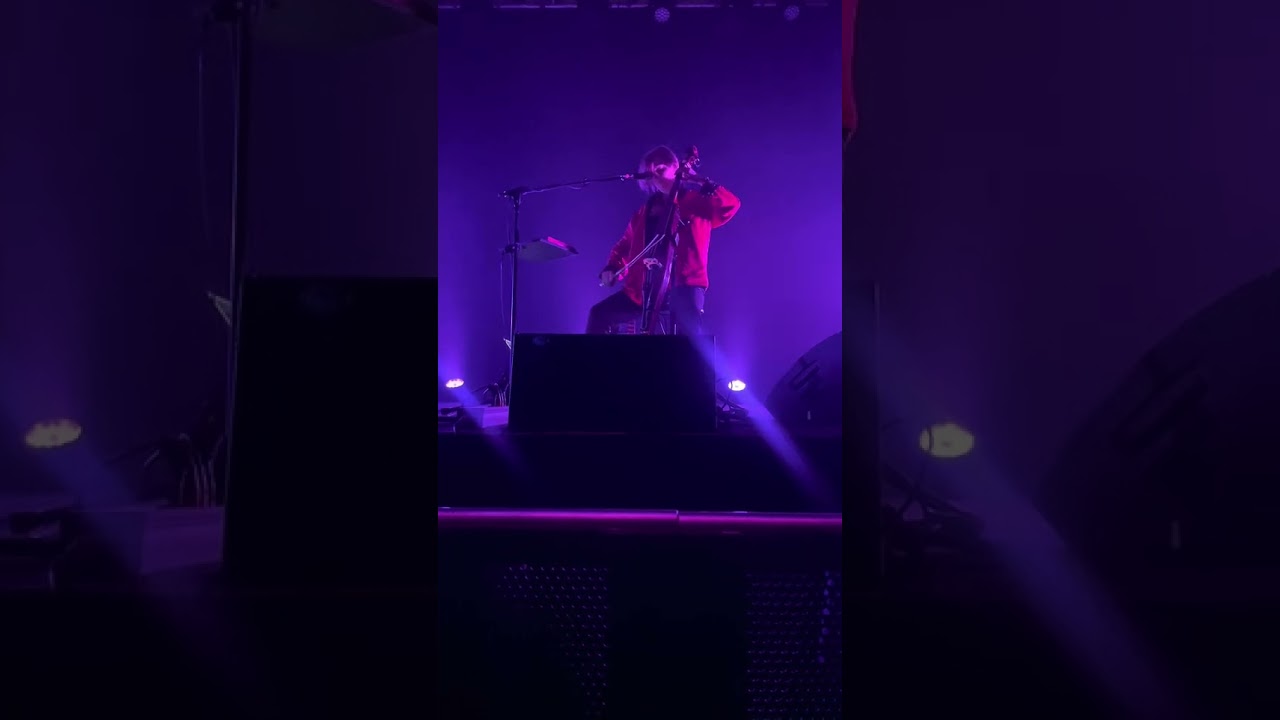
"Aad Such" is a foundational Sikh mantra—literally meaning "Truth from the Beginning"—performed live by vocalist and harmonium player Simrit alongside a contemporary fusion ensemble. This performance captures the mantra's role as a gateway into meditation and devotional practice, blending traditional kirtan with acoustic instrumentation (kora, cello, guitar, bass, drums) to create an accessible entry point into Sikh spiritual practice for modern listeners.
What Is "Aad Such" and Why Does It Matter?
"Aad Such" comes from the opening lines of the Mool Mantar—the foundational invocation in Sikhism that appears at the beginning of the Guru Granth Sahib, the Sikh holy scripture. The phrase translates directly as "Truth from the Beginning," asserting that ultimate reality (Ik Onkar, "One Creator") has existed from the first moment of time. Rather than a poetic flourish, this is a declarative statement: consciousness and truth precede creation itself.
By chanting this mantra, practitioners are not simply reciting words—they are affirming and aligning with a fundamental principle of existence. The practice of kirtan (call-and-response devotional singing) makes this alignment embodied and communal. Simrit's live interpretation brings this ancient invocation into contemporary spaces where listeners may have little prior exposure to Sikh philosophy.
How Does Kirtan Work as a Spiritual Practice?
Kirtan is a call-and-response singing practice rooted in Sikh and Hindu traditions. One singer (or group) vocally initiates a mantra, phrase, or prayer, and the audience or second vocalist echoes or responds. This creates a sonic field where repetition and melody work together to shift mental state. The repetition is not hypnotic in a passive sense; rather, it invites sustained attention on meaning while the body (through breath and vocal engagement) participates in the practice.
The live setting matters. Unlike recorded kirtan, a live performance creates real-time responsiveness between musician and audience. The musicians feed off the energy in the room; listeners feel the vibration of instruments and voices in shared space. Simrit's ensemble approach—with cello, kora, guitar, bass, and drums—modernizes the sonic palette while maintaining the meditative intensity of traditional kirtan practice.
What Is the Role of the Harmonium in Kirtan?
The harmonium is the foundational drone and melodic instrument in North Indian classical music and kirtan. In Simrit's performance, her harmonium work provides both the anchor (root note) and the melodic shape that guides the listener's ear through the mantra. The harmonium's warm, sustained tone creates an emotional container—it does not rush or drive toward a climactic moment the way contemporary music often does.
Instead, the harmonium invites settling. The breath naturally syncs with the opening and closing of the bellows. This synchronicity between breath and instrument is not accidental; it is foundational to how mantra chanting works. When your breath aligns with the sound, your nervous system begins to regulate. This is why kirtan is sometimes described as medicinal, even when the listener has no formal spiritual framework.
How Do Acoustic Instruments Create a Fusion Sound?
Simrit's ensemble includes instruments from multiple traditions: the kora (a West African stringed instrument played by Salif Bamakora), cello and guitar (Shannon Hayden), bass (Jared May), and drums and percussion (Devon Ashley). This is not world music fusion in the surface-level sense—it is a deliberate choice to show that sacred sound transcends cultural and geographical boundaries.
The kora's bright, flowing timbre adds lightness and movement to what could otherwise feel static or overly formal. The cello brings depth and vocal-like phrasing. The guitar offers harmonic support without the mechanical quality of electronic instrumentation. The bass and drums create a subtle rhythmic foundation that anchors without dominating. Together, these instruments honor both the tradition (Sikh kirtan form) and the listener's contemporary context (acoustic, non-religious, accessible sound design).
What Does "Truth from the Beginning" Invite Us to Consider?
The statement "Aad Such"—Truth from the Beginning—raises a philosophical question that has occupied spiritual teachers across traditions: Is there a fundamental reality that precedes and supersedes the created world? Does consciousness or truth exist as a ground from which all phenomena arise?
In Sikh philosophy, the answer is unequivocal: yes. The Mool Mantar asserts that Ik Onkar (One Creator/Unity) is the eternal, unchanging principle. Everything that manifests—all form, time, cause, and effect—emerges from this singular reality. Meditating on "Aad Such" is, in this framework, meditating on the source itself.
For secular listeners or those without a religious frame, the mantra still functions. It invites the contemplative question: What is stable in a world of constant change? What is true before I think, speak, or act? This existential inquiry, held in the sonic field of kirtan, can open subtle shifts in perception.
Why Is Live Performance Important for Kirtan?
A recorded kirtan has value as a meditation anchor or as background for personal practice. But a live performance creates what musicians call "vertical listening"—a shared temporal experience where everyone in the room is present to the same moment. There is no editing, no perfection, only the unfolding of sound and silence.
In this live version, captured on video with cinematography by Akhi Lavoie, we see the musicians' faces, their engagement with the practice, and the physical reality of how sound is made. Simrit's breathing, her hand movements on the harmonium, the way Salif bends over the kora—these visible elements reinforce that kirtan is a full-body practice, not merely an auditory event.
The technical recording and mixing (by Oz Fritz, Paul Mahan Kalpa Mahern, and others) preserves the live energy while ensuring clarity. The lighting design (Marco Ferrero) supports the contemplative mood without theatrical excess. These production choices signal respect for the practice itself: the focus remains on the mantra and the musicians' devotion, not on spectacle.
How Can Listeners Engage With This Performance?
There are several entry points. A listener can simply play the recording and allow the sound to create a meditative background. The repetition and melody will likely calm the nervous system regardless of whether the listener understands the Sanskrit/Punjabi words or the philosophical framework.
Alternatively, a listener can engage with the meaning. Learning that "Aad Such" means "Truth from the Beginning" and holding that concept in mind while listening creates a different quality of attention. The phrase becomes a container for reflection on what is eternal versus what is temporary in one's own experience.
A third path is to learn the call-and-response structure and sing along. This is how kirtan traditionally works—it is participatory. Simrit's melody is accessible and repeatable, even for listeners with no musical training. Once you have heard the phrase a few times, you can join in. This embodied participation is where the practice's power is most directly felt.
Where to Go From Here
If "Aad Such" resonates, explore the full Simrit Live album, which is available on iTunes and other platforms. Attend a live kirtan session if one is available in your community—nothing replaces the direct experience of singing and listening together in person. Study the Mool Mantar itself, available in Sikh texts and increasingly in accessible translations and commentaries. Look into other mantra traditions—Vedic Sanskrit mantras, Buddhist chanting practices, or Sufi devotional forms—to see how repetition and sacred sound work across spiritual traditions. Finally, notice how your body and mind respond to consistent engagement with "Aad Such." Does your breath settle? Does a particular quality of attention arise? These direct experiences are the real teacher, not any explanation.