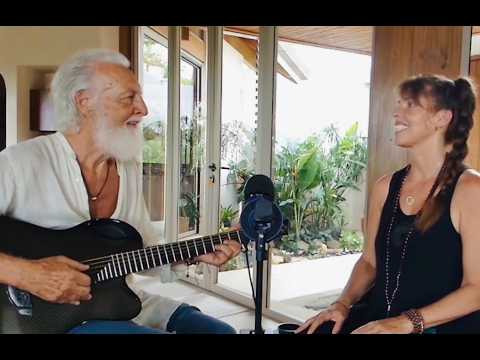
Aad Guray Nameh is a foundational mantra from the Sikh and Kundalini yoga traditions that invokes the primordial guru and the lineage of enlightened masters woven through time. Performed live by Deva Premal and Miten with full orchestral accompaniment, the mantra works as both a devotional chant and a practical tool for shifting consciousness from ignorance (darkness) to knowledge (light). The term "Guru" itself encodes this principle: GU means darkness, RU means light, so a guru is "that which brings us from darkness to light."
What Does Aad Guray Nameh Mean?
The mantra Aad Guray Nameh contains five invocations, each addressing a different dimension of the guru principle:
- Aad Guray Nameh — "I bow to the Primal Guru," the original source of all wisdom and consciousness before time began.
- Jugaad Guray Nameh — "I bow to the Guru woven through time," acknowledging the lineage of masters and teachings that flow across ages.
- Sat Guray Nameh — "I bow to the True Guru, the true identity of the self," pointing to the guru principle that resides within each person as their authentic nature.
- Siri Guru Devay Nameh — "I bow to the Great Guru whose great glory will always be," invoking the eternal, unchanging dimension of enlightened consciousness.
The repetition of these four lines creates a complete map of spiritual understanding: from the absolute, timeless source, through the temporal flow of wisdom, to the inner guru within, and finally to the eternal glory of that principle. This is not abstract philosophy but a practical technology of consciousness encoded in sound and rhythm.
How Does the Mantra Work?
In Kundalini yoga and Sikh tradition, mantras are understood to work through the mechanics of sound frequency and the vibrational patterns they create in the nervous system. When chanted or sung, each syllable resonates with specific energy channels (nadis) and energy centers (chakras) in the body. Aad Guray Nameh, in particular, is known as a protection mantra and a clearing mantra—it is often used at the beginning of practice or meditation to establish a clear, protected space.
The mantra's power lies partly in its intention: the act of bowing (nameh) to the guru principle is an act of humility and opening. By repeatedly invoking the journey from darkness to light, the practitioner aligns their consciousness with that direction. Over time, regular practice attunes the nervous system to respond to these frequencies, making the shift from ignorance to clarity more accessible.
Deva Premal and Miten's live performance, backed by The Temple Band's lush instrumentation, amplifies this effect. The layering of voices, piano, bass, and drums creates a sonic environment that supports both the intellectual understanding of the mantra and the embodied, felt sense of its power. Live performance adds an element of energy transmission that recordings alone cannot fully capture.
What Is the Guru in Spiritual Tradition?
In Eastern philosophy, the guru is not simply a teacher. The guru is understood as an agent of transformation—someone or something that facilitates the movement from ignorance to knowledge. The etymology embedded in the word itself reveals this: GU = darkness (ignorance), RU = light (knowledge). Therefore, "guru" literally means "that which brings us from darkness to light."
This definition applies to many forms of guidance: a human teacher, a deity, the teachings themselves, the lineage of masters, or the inner wisdom of one's own higher self. Aad Guray Nameh acknowledges all of these dimensions. The "primal guru" (Aad Guray) is the original source consciousness from which all teachings flow. The "guru woven through time" (Jugaad Guray) is the lineage of enlightened beings who have transmitted wisdom across generations. The "true guru, the true identity of the self" (Sat Guray) points to the recognition that each being's deepest nature is itself guru—that liberation comes not from external dependency but from alignment with one's true self.
Why Perform This Mantra in Concert?
The choice to perform Aad Guray Nameh in a large concert setting—with a full band and audience participation—reflects a contemporary understanding of kirtan (call-and-response chanting) and mantra practice. Rather than confining these practices to ashrams or small meditation groups, artists like Deva Premal and Miten have brought them into concert halls, making them accessible to thousands.
This approach honors a key principle in Kundalini yoga: that chanting in community amplifies the effect. When many voices unite in the same mantra, the vibrational field becomes stronger, and individual nervous systems can entrain more easily to the frequency. A concert performance also makes the practice joyful—music, rhythm, and beauty are themselves forms of spiritual practice and medicine.
The instrumentation choices matter too. The piano, bass, and drums are not ornamental; they anchor the mantra in a contemporary musical language while preserving its sacred intention. This bridges traditional yoga and Sikh practice with modern listeners' relationship to sound and music.
How Can You Work with This Mantra?
If you are new to Aad Guray Nameh, beginning with Deva Premal and Miten's recording is an accessible entry point. Simply listening with attention—allowing the sound to wash over your nervous system—is a form of practice. Over time, familiarity with the melody and words makes it easier to sing along or to chant independently.
For regular practice, many students chant Aad Guray Nameh once or more daily, often as part of a morning sadhana (spiritual practice) or before meditation. The mantra is typically chanted for 11 minutes, 31 minutes, or 2.5 hours, depending on the depth of practice desired. Even a few minutes daily can produce noticeable shifts in clarity and protection.
The intention with which you engage the mantra matters. Rather than treating it as background music or a performance to passively consume, bring awareness to the meaning of each line. As you hear or chant "I bow to the Primal Guru," feel the quality of humility and openness. As you move through the four invocations, notice the progression from the absolute, timeless source, through history and lineage, into your own being, and into eternity.
Where to Go From Here
If Aad Guray Nameh resonates with you, consider exploring other foundational mantras in the Kundalini yoga tradition, such as Ong Namo Guru Dev Namo (the opening mantra) or the Gayatri Mantra. You might also deepen your understanding by studying the principles of how sound and vibration affect the nervous system, exploring the chakra system, or learning more about the history of Sikhism and its relationship to yoga.
Deva Premal and Miten offer workshops, apps, and continued recorded teachings that can support ongoing learning. Ultimately, the invitation of any mantra is simple: show up, listen, chant if you are moved to, and allow the frequencies to work on your consciousness. The journey from darkness to light is not something you have to achieve through effort alone—the guru principle, invoked through sound and intention, can meet you where you are.