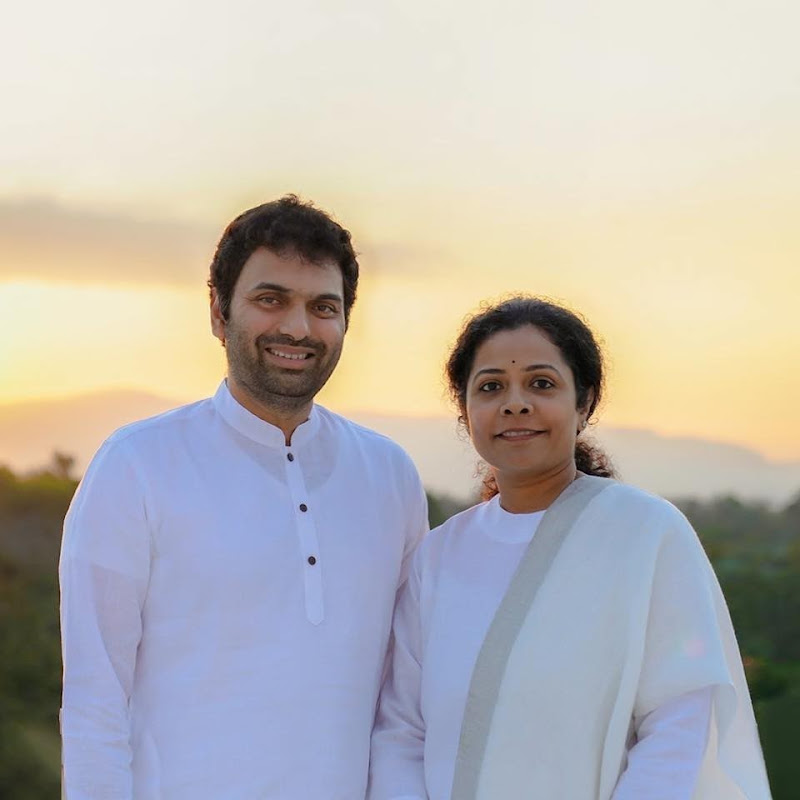
TLDR: When external circumstances feel chaotic and overwhelming, peace can seem unreachable—but it doesn't have to be. The Oneness Global Summit, led by Sri Preethaji and Sri Krishnaji, teaches that calm is not dependent on changing your circumstances, but on shifting your internal relationship to them. By combining meditation, evidence-based wisdom, and contemplative practice, you can dissolve the stress and anxiety that arise from feeling out of control and awaken an inner resilience that allows you to create a life of genuine peace, love, and abundance regardless of external chaos.
Why Chaos and Overwhelm Block Access to Peace
Modern life generates unprecedented sources of overwhelm. Information overload, social fragmentation, economic uncertainty, and the constant expectation to be productive create a state of chronic activation in the nervous system. When the mind perceives threat—whether real or imagined—it contracts. This contraction manifests as anxiety, tension, scattered attention, and a felt sense that peace is impossible.
The fundamental misunderstanding most people carry is that peace must come after problems are solved. If I eliminate stress, then I can be calm. If circumstances improve, then I can relax. If I achieve my goals, then I can rest. This creates a perpetual postponement of peace. Life, however, does not wait for perfect conditions. The ability to find calm in the midst of chaos is therefore not a luxury but a necessary skill for psychological survival.
What Is the Relationship Between Inner Calm and Outer Circumstances?
A core insight from contemplative traditions, supported increasingly by neuroscience, is that your experience of chaos is not the chaos itself—it is your nervous system's interpretation of events. Two people can face identical circumstances and experience vastly different levels of stress based on their internal resources, beliefs, and somatic regulation.
Finding calm in chaos does not mean becoming indifferent or passive. Rather, it means developing the capacity to perceive clearly without reactivity. When you are calm, your prefrontal cortex—the part of the brain responsible for executive function, creativity, and wise decision-making—remains online. When you are stressed and anxious, that region goes offline, and you operate from survival mode. In survival mode, you make reactive, often poor decisions that compound chaos rather than resolve it.
This is why meditation and contemplative practice are practical tools, not luxuries. They literally rewire your nervous system to maintain access to calm even when external demands are high.
How Does Meditation Dissolve Stress and Anxiety?
Meditation is not about forcing your mind to be blank or achieving a special state. It is about training attention and developing observational awareness of your own mind and body. When you meditate regularly, you notice stress and anxiety as they arise, before they solidify into patterns.
Most people live in reactivity. An event happens, the mind interprets it (usually with a layer of fear or judgment), and the body responds with tension. This happens so quickly that it feels automatic and inevitable. Meditation introduces space between stimulus and response. In that space, you have choice. You can notice the thought, the sensation, the contraction—and choose not to amplify it.
Regular practice also down-regulates the amygdala, the brain's alarm bell. Over time, your baseline shifts. You become less reactive to minor triggers. You develop what is sometimes called "stress resilience"—not the absence of stress, but the ability to experience it without it derailing your sense of inner stability.
Can Wisdom Practices Help You Live from Peace?
Beyond formal meditation, wisdom traditions teach that how you relate to difficulty matters more than the difficulty itself. This is not positive thinking or denial. It is a shift in perspective.
For instance, when you are caught in chaos, a common response is to tighten, resist, and try to force control. Paradoxically, this tightening increases your experience of chaos. Wisdom teachings suggest that when you soften, accept what is present (without liking it), and ask "what can I learn here?" your nervous system downshifts. Acceptance is not resignation; it is the foundation for effective action.
Similarly, many wisdom traditions teach that suffering comes not from pain or difficulty itself, but from the story you tell about pain. If you stub your toe, there is pain. But if you then think "why does this always happen to me? I'm so clumsy. This ruins my day," you have added mental suffering on top of physical sensation. By practicing awareness of these mental patterns, you can experience difficulty without the added layer of suffering.
What Role Does Spiritual Awakening Play in Creating a Beautiful Life?
The Oneness Global Summit emphasizes awakening the power within you. This language points to a specific insight: most people operate from a small fraction of their actual capacity. They live from habit, conditioning, and limitation beliefs. "I'm not creative," "I can't change," "I'm fundamentally anxious"—these become self-fulfilling prophecies.
Awakening, in this context, means directly experiencing that these limiting identities are not fixed. You are not your anxiety. You are not your past. You are not the stories your mind tells. Beneath all that, there is a dimension of awareness that is inherently peaceful, inherently whole. When you access this, even briefly, it becomes clear that peace is not something you have to create or earn—it is something you uncover by removing the obstacles to it.
This is why the summit brings together science and spiritual practice. Both point to the same reality: your mind is more plastic than you think. Your emotional patterns are trainable. Your capacity for love, creativity, and peace is far greater than your current circumstance suggests.
How Does Creating Abundance Connect to Inner Calm?
There is a direct relationship between your inner state and what you attract or create in your outer life. When you are anxious and contracted, your perspective narrows. You see fewer possibilities. You make smaller bets. You interact with others from a place of scarcity and defense. This limits opportunity.
When you are calm and resourced, your brain has access to the systems responsible for creativity, social connection, and long-term planning. You see more possibilities. You take more inspired action. You attract people and opportunities because you are operating from wholeness rather than neediness. This is not magical thinking; it is basic neuroscience and psychology.
Moreover, anxiety and chronic stress literally drain your vitality. You have less energy, less motivation, less capacity to build. Calm, by contrast, is energizing. It allows you to direct your full resources toward what matters to you—relationships, creative work, contribution—rather than toward fighting your own nervous system.
Where to Go From Here
If you resonate with these ideas, the Oneness Global Summit (January 23–25, 2026) offers a structured entry point. Three hours per day over three days is a realistic commitment that can introduce you to meditation, wisdom teachings, and community practice. The summit is free, online, and designed to be accessible to complete beginners while offering depth for experienced practitioners.
Beyond the summit, the practices are simple but require consistency: start with even 10 minutes of daily meditation. Notice where you habitually brace against life, and practice softening instead. Pay attention to the stories your mind tells about difficulty, and see if you can observe them without belief. Seek out teachings and teachers that resonate with you. And remember that finding calm in chaos is not a one-time achievement but an ongoing practice—one that gets easier and more stable over time.