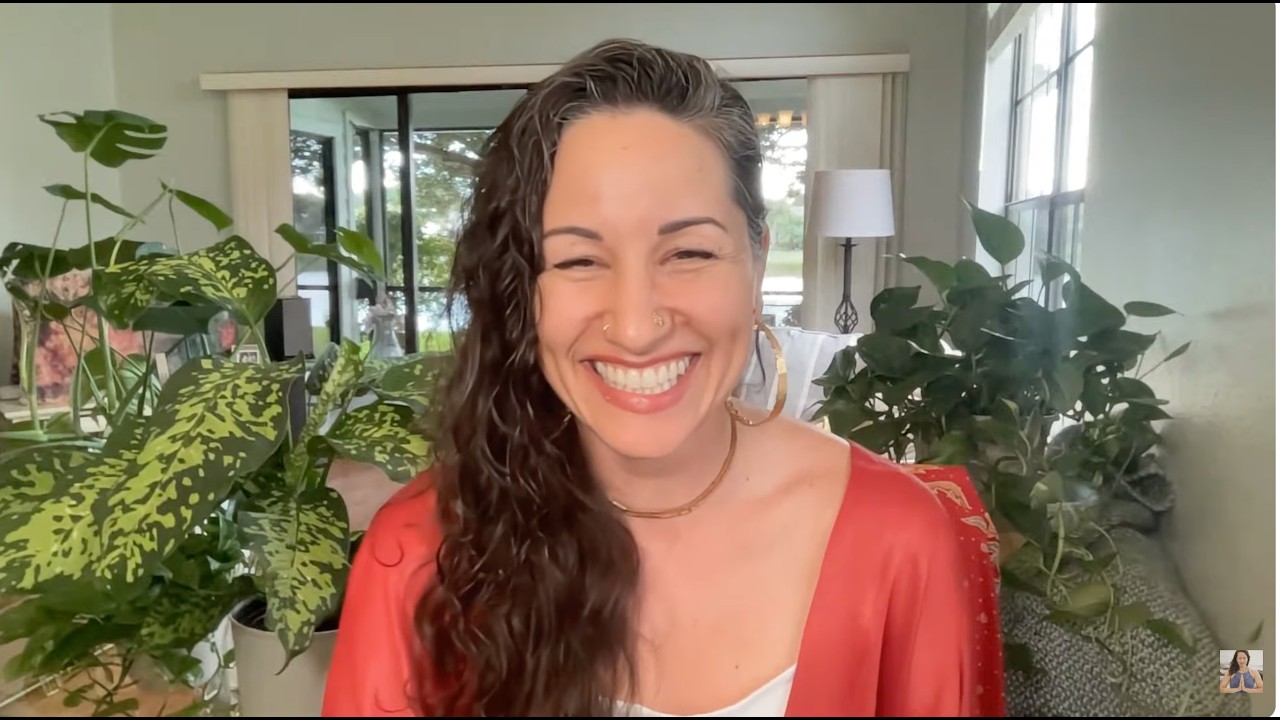
Ayla Nereo's song "Wasted Hours" begins by naming the pain of unfulfilled desire—pining after someone, giving love that goes unacknowledged, speaking truths that fall on deaf ears. But the song's central move is a radical reframing: these hours are not wasted at all. Instead, they are invitations to deeper self-inquiry. The song asks what emptiness really means, why we reach outward instead of inward, and ultimately argues that time spent understanding yourself—your truth, your capacity to love yourself—is never wasted. The track is less a lament about lost love than a meditation on mistaken direction: we look outside ourselves for wholeness when the real work lies in meeting ourselves completely.
What does it mean to call time "wasted"?
The song opens by cataloging familiar experiences of romantic disappointment (2s): "this is a song for all the wasted hours spent pining after someone and all the wasted flowers you wanted just to give them out and all the wasted words trying to prove they were good for you." These lines capture the ache of unrequited or unseen love—time spent wanting someone to return your affection, gifts offered that don't land, words spoken in an attempt to convince another person of your worth.
But Nereo immediately pivots to challenge the premise itself. At (25s), she repeats: "it's not wasted breath" and then states plainly: "cuz all those wasted hours we're trying to show you something more about those wasted flowers to see just what you're giving for." The shift is subtle but crucial. Instead of accepting these hours as losses, she reinterprets them as teaching moments—opportunities to see not what you failed to receive, but what you were trying to give and why.
This reframing rests on a spiritual insight: time spent in any form of reaching, whether toward another person or toward understanding yourself, contains meaning. The waste is not in the longing itself, but in the assumption that longing directed outward is inherently futile while longing directed inward is not.
How does emptiness reveal the need for self-knowledge?
The song's core emotional terrain emerges in the chorus at (77s): "cuz I feel so empty sometimes feels like I need another to fill this hole inside." This is perhaps the most honest line in the song—the recognition that loneliness and a sense of incompleteness naturally lead us to seek completion through another person. The longing is not wrong; it is human.
What follows is a cycling litany of actions: "and I'm reaching I'm searching I'm seeking and I'm wanting I'm asking I'm needing" (82s-87s). The repetition of these words—reaching, searching, seeking, wanting, asking, needing—creates a kind of feverish momentum, an exhaustion that builds as the lines repeat. This is the internal state of someone who feels empty and believes that the solution lies outside themselves.
But then Nereo introduces a turning point through a question at (65s): "then what is my truth and why do I want to say and is my meaning and is my way?" These questions are not rhetorical platitudes. They are genuine inquiries into identity itself: What am I really trying to express? What do I actually mean? Where is my authentic path? These questions assume that emptiness might not be a personal failing or a sign that you lack something crucial, but rather a sign that you haven't yet met yourself fully.
What happens when you look inward instead of outward?
At (108s-126s), the song shifts tone dramatically. Nereo sings: "maybe baby you can go down deep where is that hole maybe baby you can go in deeper what does it sound like baby you can find what you see into the darkness maybe baby you will find much more listen to silence." The shift from "reaching" to "going down deep" marks a movement from external seeking to internal exploration.
The darkness here is not a metaphor for depression or despair. It is the unknown interior space within you that you haven't yet explored. "Listen to silence" suggests that the answer to emptiness is not more stimulation, more connection, or more external validation, but a willingness to sit with yourself in quietude and discover what emerges.
This is a contemplative practice embedded in a song. The implication is that the "hole" you feel may not be a void that another person can fill, but a space that is asking you to meet it with your own awareness and presence.
How does unconditional love relate to self-discovery?
At (140s-176s), Nereo's vocal line becomes almost hypnotic as she repeats: "and I do not want to give anything less than love and I do not want to for anything else in your whole heart." The repetition and slight variations in phrasing create an incantation-like quality. She is refusing compromise, refusing half-measures, refusing to offer anything but full love.
But notice the object of that love shifts as the song progresses. Early on, "love" is directed toward another person—the hope that if you love them well enough, they will see and accept you. By this middle section, the love is becoming more abstract, less attached to a specific recipient. The act of committing to "not give anything less than love" becomes, paradoxically, a declaration of self-love: I will not diminish myself, my heart, or my truth for anything.
The "holiness" that Nereo names at (190s-196s)—"it's holy it's oh holy nothing outside are no exceptions to what is"—suggests that wholeness, holiness, and completeness are not commodities to be obtained through another's approval, but inherent qualities of existence itself. What is, is holy. Nothing outside you determines that.
What is the final reframing of "wasted hours"?
At (226s-292s), the song returns to its opening theme, but with a crucial inversion. Now it says: "it's not wasted hours spent being alone just with yourself and no wasted flowers given just for giving out and no wasted words hard and spoken simply To Be Your Truth simply to be heard and spoken simply To Be Your Truth."
The final verses redefine waste entirely. There are no wasted hours if you spend them alone with yourself. There are no wasted flowers if the act of giving becomes its own purpose rather than a bid for external validation. There are no wasted words if they are simply an expression of your truth.
The last lines (278s-292s) complete the inversion: "it's not wasted hours trying to understand why you love someone and how you want to be loved trying to get to know yourself so you can love yourself that much." The song does not deny love for others; instead, it locates the root of genuine love in self-understanding. You cannot love another truly if you do not know yourself. Time spent in that self-knowledge is the opposite of wasted.
Where to go from here
This song is an invitation to examine where your seeking is directed. Are you looking for wholeness outside yourself, waiting for another person to validate who you are? Or are you willing to "go down deep," to sit with your own emptiness, and to discover what you find there?
Nereo's music and teaching (as outlined in her courses "Meeting the Muse" and "Empowered Voice") are grounded in the practice of using voice—literally, singing—as a tool for self-discovery and authentic expression. In this context, "Wasted Hours" is not just a song to listen to passively; it is a model for how to reframe your own experience. The hours you thought were wasted—the longing, the reaching, the unfulfilled desire—are invitations to know yourself more deeply. That knowledge is the foundation of genuine love, both for others and for yourself.