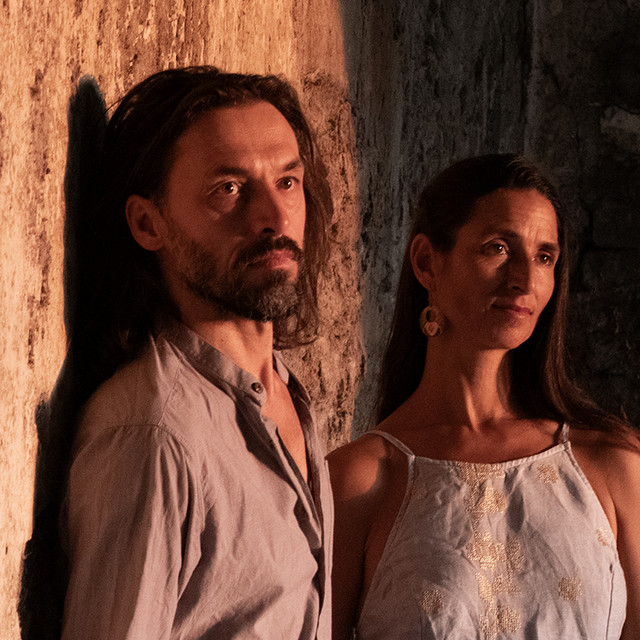
Mirabai Ceiba performs "Claro Lucero del Día" (Clear Morning Star), a Venezuelan milking song (canto de ordeño) composed by Antonio Estevez, recorded live at Union Chapel in London. The piece blends traditional Latin American folk traditions with contemporary world music sensibility, featuring vocal harmonies, acoustic guitar, and violin, drawing from the album Agua de Luna. The performance captures both the devotional intimacy and cultural rootedness of a form traditionally sung while tending cattle.
What Is a Canto de Ordeño and Why Does It Matter?
The canto de ordeño—literally "milking song"—is a folk tradition rooted in Venezuelan and broader Latin American pastoral culture. These songs were historically sung by cattle herders during the daily work of milking, creating rhythmic, meditative accompaniment to labor. Like many work songs across cultures, the canto de ordeño serves multiple purposes: it structures time, soothes both the singer and the animals, and transmits cultural memory through melody and lyric.
Antonio Estevez, a Venezuelan composer and ethnomusicologist, documented and composed within this tradition, recognizing its artistic and cultural significance. "Claro Lucero del Día" translates as "Clear Morning Star," invoking the image of dawn light breaking across pastoral landscapes. The title suggests both a literal reference to the morning star visible during early milking hours and a metaphorical invocation of clarity, awakening, and light emerging from darkness.
What makes this form compelling for contemporary world music is precisely this link between functional, vernacular practice and profound artistic expression. Mirabai Ceiba's interpretation honors both dimensions—the piece remains recognizable as a folk form while becoming a vehicle for sophisticated vocal and instrumental arrangement.
How Does Mirabai Ceiba Arrange This Traditional Song?
The live performance at Union Chapel demonstrates a collaborative approach to traditional material. The ensemble includes Angelika Baumbach on vocals, Markus Sieber on guitar and vocals, and Bogdan Djukic on violin. This combination—voice, strings, and acoustic guitar—creates a sound that is both intimate and resonant, suited to both a chapel setting and the inherent dignity of the source material.
The arrangement choices reflect how contemporary musicians approach world music traditions: with respect for the original form while bringing individual musicianship into dialogue with it. The violin's presence, in particular, adds a layer of emotional depth; it can double vocal lines, create counterpoint, or weave independent melodic material that echoes and expands the primary melody. Acoustic guitar provides harmonic foundation and rhythmic grounding, anchoring the piece in the folk idiom while allowing space for vocal expression.
The vocal harmony between Baumbach and Sieber suggests a call-and-response or antiphonal sensibility—common in both European folk traditions and Latin American forms. This interplay can emphasize the emotional or narrative content of lyrics, or it can highlight the pure musicality of the melody itself, allowing listeners to experience the song as both story and sound.
Why Was Union Chapel the Right Venue for This Performance?
Union Chapel in London is a working chapel with strong roots in world music and interfaith cultural programming. Choosing a sacred space—even one hosting secular performances—for a traditional pastoral song reflects an understanding of the canto de ordeño as spiritually resonant material, not merely entertainment or cultural artifact.
The chapel's acoustics, typically designed for vocal resonance and clarity, naturally complement the stripped-down ensemble. The reverb of sacred architecture enhances vocal tone and allows each instrumental line to be heard with clarity. Performing a milking song in a chapel also creates an interesting cultural and conceptual collision: the everyday labor of pastoral life is elevated to the status of a concert performance in a consecrated space, suggesting that the sacred and the ordinary are not opposed categories.
What Is the Role of Agua de Luna as an Album Context?
Agua de Luna (Moon Water) is the album from which "Claro Lucero del Día" is drawn. The title itself suggests a conceptual coherence: moon water, morning star, nocturnal and diurnal imagery. This points to an album potentially concerned with cycles, transformation, and the meeting of different states of consciousness or being. Water, moon, and star imagery often signal attention to emotional depth, intuitive knowledge, and the passage of time.
Within an album context, "Claro Lucero del Día" is not heard as an isolated folk curiosity but as part of a larger artistic vision. Mirabai Ceiba's catalog frequently engages with traditional music from various cultures—Indian classical, Latin American, European—and the presence of a Venezuelan pastoral form on a world music album suggests commitment to cultural dialogue and to music that bridges vernacular and art music contexts.
How Does This Performance Connect to Broader Mirabai Ceiba Practice?
Mirabai Ceiba is known for vocal mastery, sensitive arrangement, and cross-cultural musical literacy. The group's name references both Mirabai, the 16th-century Indian devotional poet-saint, and Ceiba, the sacred tree of Latin America and the Caribbean. This naming already signals a practice of bringing together different cultural and spiritual traditions into dialogue.
Performing a Venezuelan folk song fits naturally within this framework. It demonstrates that Mirabai Ceiba's engagement with world traditions is not limited to Indian classical or devotional forms, but extends to folk and pastoral traditions across the Americas. The arrangement and performance suggest that meaningful music can emerge from close listening to vernacular forms—not imposing contemporary aesthetics onto them, but allowing the integrity of the original to inform the new interpretation.
The live recording format also matters. A performance capture—filmed, mixed, and mastered for digital distribution—differs from both a field recording of "authentic" folk practice and a studio album track. It occupies a middle ground: the immediacy and human presence of live performance, but with professional production values that make it accessible and sonically clear to a global listening audience.
What Makes This Particular Vocal Performance Distinctive?
In traditional pastoral singing contexts, vocal demands are often specific: the voice must carry across open fields, be audible above animal noise, and sustain over long periods of repetitive work. "Claro Lucero del Día" likely has roots in such functional requirements, which often produce melodies of considerable beauty and emotional power—precisely because the constraints of the form, when engaged with artistry, yield profound results.
Baumbach and Sieber's vocal approach appears to honor these roots while bringing contemporary vocal technique into play. Their tone is clear and direct rather than oversized or dramatized. This restraint allows the melody itself to emerge as the primary focus, and it respects the song's origins in work rather than concert display. Yet the professional vocal production also ensures that every nuance of phrasing, every consonant and vowel, reaches the listener with intention and clarity.
The choice to include vocal harmony rather than perform the song unaccompanied by a single voice suggests that the arrangement interprets the song as dialogical—capable of holding multiple voices in relationship. This might reflect either the historical practice of group singing during pastoral labor, or a creative choice to expand the emotional and harmonic possibilities of the material.
Where to Go From Here
To deepen engagement with this material, listeners might explore the full Agua de Luna album to understand "Claro Lucero del Día" in its complete artistic context. Researching Antonio Estevez's compositions and his role in documenting Venezuelan folk traditions provides historical and cultural grounding. For those interested in the broader practice of pastoral song traditions, comparative listening to milking songs from other cultures—Irish, Alpine, Indian, African traditions—reveals universal patterns in how humans have musically structured the rhythm and emotion of care work with animals.
Mirabai Ceiba's discography offers additional entry points into world music arranged with both scholarly respect and contemporary artistry. The live performance format can also be experienced more fully through their other concert recordings, which similarly capture the group's ability to honor traditional material while bringing professional musicianship and innovative arrangement to bear.


