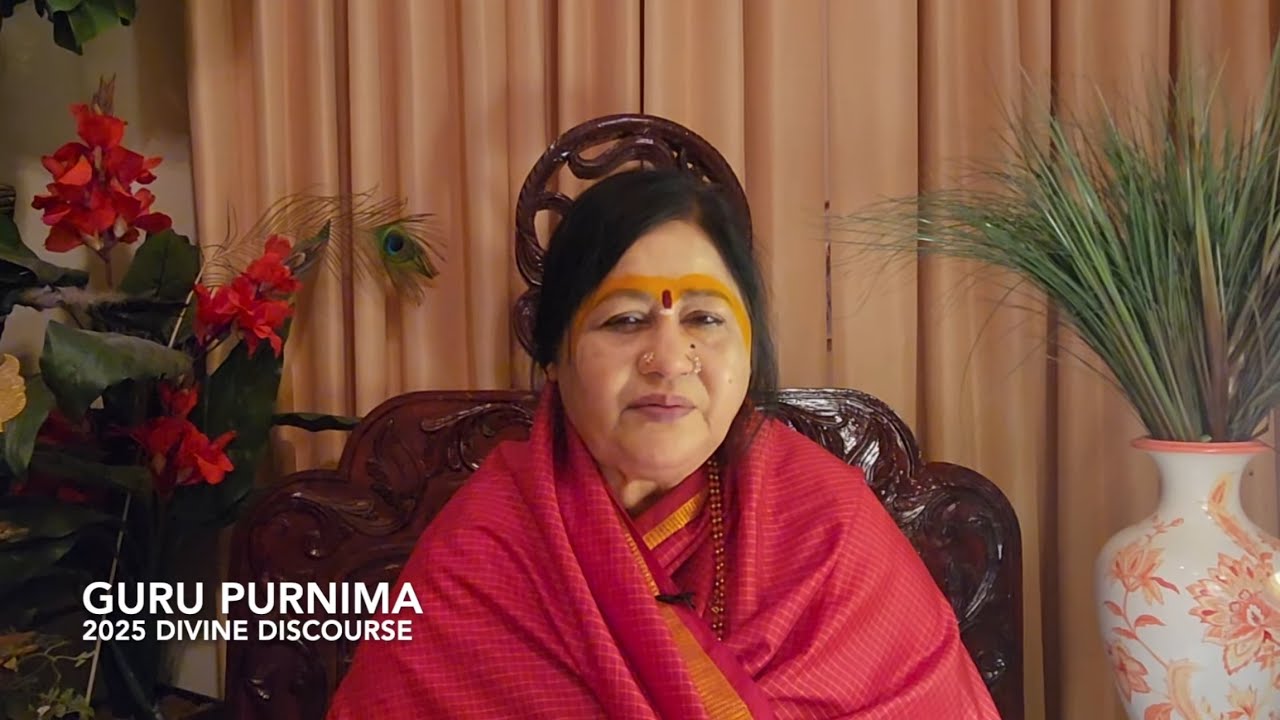
Sri Karunamayi offers Vijayadasami greetings through devotional chanting and sacred invocation, calling upon divine presence (Shiva Shambhu) to dissolve obstacles and grant spiritual victory. The teaching centers on the festival's traditional significance—the triumph of good over evil—translated into daily spiritual practice through mantra, presence, and surrender to divine grace.
What is Vijayadasami and Its Spiritual Significance?
Vijayadasami, also known as Dussehra, marks the victory of divine forces over ignorance and darkness in Hindu sacred tradition. The festival celebrates the triumph of Goddess Durga over the buffalo demon Mahishasura, and more broadly, the victory of consciousness over the ego and unconscious patterns that limit human potential. When Sri Karunamayi offers blessings on this auspicious day, she is not merely commemorating a mythological event—she is invoking and actualizing that victory in the hearts and minds of her devotees.
The name "Vijayadasami" itself points to this teaching: Vijaya means victory, and Dasami refers to the tenth day of the lunar cycle. In the mythological narrative, the tenth day marks the completion of Durga's battle and her ultimate triumph. For contemporary spiritual practitioners, this festival becomes an opportunity to recognize and celebrate the victory of our own higher nature over the lower tendencies of fear, greed, anger, and delusion.
How Does Invocation and Chanting Support Spiritual Practice?
Sri Karunamayi's Vijayadasami blessing employs sacred chanting and invocation, particularly the repeated calling upon "Shiva Shambhu"—one of the divine names pointing to the supreme consciousness that pervades all existence. This is not decorative spirituality; it is a precise technology of consciousness. Through vocal repetition and devotional intention, the chanter aligns their own vibration with the frequency of the divine presence being invoked.
In yogic and Tantric philosophy, sound (shabda) is understood as the vehicle of consciousness itself. When we chant the names of the divine with sincere intention, we are not asking an external force to do something for us—we are tuning our own inner instrument to resonate with the frequency of that reality. The repetition creates a groove in consciousness, gradually dissolving the barriers between the individual self (jiva) and the universal self (Brahman).
Sri Karunamayi's invocation serves several purposes: it establishes a sacred container for the blessing, it orients the devotee's attention toward what is eternal rather than what is temporary, and it activates what might be called the "victory principle"—the recognition that within each person there is an indestructible core of divine light that cannot be defeated by circumstance.
What Does It Mean to Request Divine Blessing on a Festival Day?
When a guru or spiritual teacher offers blessings on an auspicious festival, they are not dispensing something external that the devotee lacks. Rather, they are pointing, activating, and amplifying what is already present but dormant within each person. The blessing is an invitation to recognize one's own divine nature and to align one's will with the will of the universe (which is nothing other than one's truest self).
In this Vijayadasami message, Sri Karunamayi is essentially saying: On this day when the victory of consciousness is traditionally celebrated, I point you back to your own capacity to transcend the obstacles that seem solid and real. The obstacles referenced are not only external—poverty, illness, conflict—but primarily internal: the patterns of thought, the karmic grooves, the false identifications that bind consciousness into small, defended positions.
A blessing offered with genuine spiritual authority carries potency because it is rooted in the giver's own realization. Sri Karunamayi's words and presence are not separate from the truth she is expressing. She speaks from union with what she invokes, which is why her blessing carries the force of direct transmission rather than merely intellectual instruction.
How Can Modern Practitioners Apply Vijayadasami Teachings?
For those practicing contemporary spiritual life, Vijayadasami becomes an opportunity to take stock: Where am I still defeated by my own unconsciousness? Where have I surrendered my power to fear, habit, or false belief? The festival invites a conscious examination of the patterns that operate as demons—the inner forces that consume our time, energy, and attention without serving our highest good.
The practice suggested by Sri Karunamayi's invocation is straightforward but not easy: regularly call upon the source of victory and grace, whether through chanting, prayer, meditation, or conscious remembrance. Create a daily practice that reconnects you to what is eternal. In this way, Vijayadasami is not a one-day event but a principle that can be activated any moment we recognize the need to transcend a limitation.
The blessing also points to the importance of community and transmission. Spiritual festivals are traditionally observed in sangha—spiritual community—because the collective intention and recognition of truth are more powerful than individual effort alone. When many people gather with sincere devotion to celebrate the victory of consciousness, the field is amplified, and each person's capacity to access their own victory is enhanced.
Where to Go From Here
If this teaching resonates, consider establishing a practice around the festival dates or creating a daily invocation practice inspired by Sri Karunamayi's chanting. You might research the deeper mythology of Durga and Mahishasura to understand the inner symbolism—the buffalo demon representing tamas (inertia) and ignorance, and Durga representing the fierce compassion needed to cut through illusion. Investigate your own life for the "demons" that consume energy without serving your growth, and consciously invoke the power to transcend them. Finally, if possible, connect with a spiritual community or teacher who can provide direct transmission and support for your practice.