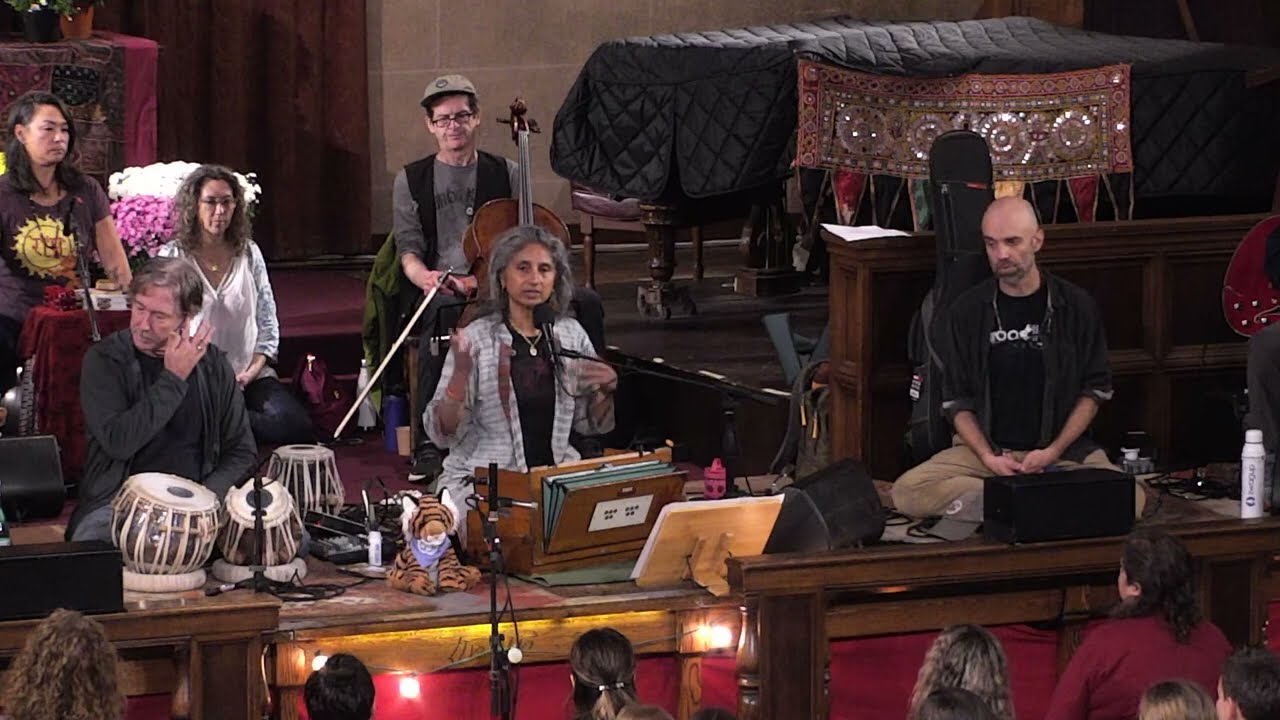
This talk explores the mechanics of the unawakened human condition—how the mind becomes a tool that controls us rather than serving us, how collective consciousness shapes politics and society, and how individual awakening through presence disrupts unconscious patterns. The core argument: by developing conscious awareness and presence, we stop feeding the collective unconsciousness and become catalysts for genuine societal change.
What Is the Unawakened Human Condition?
The unawakened human condition describes a state in which people operate primarily through mechanical patterns of thought and emotion rather than conscious presence. In this condition, the mind—which should function as a tool—becomes a master that controls behavior, perception, and decision-making. The individual is effectively asleep within their own life, reacting rather than responding, moving through the world on autopilot.
This state is not a personal failing but a structural feature of how consciousness operates when it becomes identified with thought. The unawakened person experiences reality through a filter of mental commentary, ego-driven narratives, and conditioned responses. They are fundamentally disconnected from the present moment, which is the only place where actual life occurs and where genuine power exists.
How Does the Mind Control Us Instead of Serving Us?
A fundamental distinction separates the mind as a useful tool from the mind as a controlling force. When we are in the unawakened state, we have delegated our consciousness entirely to the thinking mind. We mistake our thoughts for truth, we take our mental commentary as reality, and we allow the constant stream of mental activity to dictate our emotions, relationships, and choices.
The mind in its uncontrolled state perpetuates an endless cycle of rumination about the past and anxiety about the future. It reinforces a sense of separate self that is always in conflict, always seeking something it doesn't have, always protecting against perceived threats. This mental chatter consumes our energy and keeps us trapped in patterns that no longer serve us.
To use the mind as a tool rather than be used by it requires developing the capacity to observe thought without identifying with it. This means recognizing that you are not your thoughts; you are the awareness in which thoughts arise. When this distinction becomes clear, you can engage the mind when it's useful—for planning, problem-solving, creative work—and disengage it when it's not. You can notice a anxious thought without becoming anxious. You can see a self-critical thought without accepting it as truth.
What Role Does Collective Consciousness Play in Politics and Social Structures?
Beyond individual psychology, collective consciousness directly shapes the political and social systems we create and inhabit. The structures of society—its laws, institutions, power hierarchies, and cultural norms—emerge from the collective level of consciousness of those who participate in and maintain them. When a society is composed primarily of unawakened individuals, those individuals project their unconscious patterns onto the collective level.
This means that political conflict, social inequality, and cultural dysfunction are not merely the products of bad policies or individual wrongdoing—they reflect the unconscious state of the collective body. Unawakened consciousness at scale becomes a kind of collective unconsciousness that perpetuates patterns of domination, fear, scarcity, and separation. The systems created by this consciousness naturally reproduce these patterns.
The collective unconsciousness also creates what might be called a consensus reality that most people accept without questioning. Everyone is so absorbed in the same mental patterns and emotional reactions that these patterns come to seem natural, inevitable, or simply "the way things are." This absorption into collective unconsciousness is so complete that few people even notice they are participating in it.
How Can Individual Awakening Transform Society?
The mechanism for societal change flows in the opposite direction from what most people assume. We typically believe that external conditions must change first, and then individual consciousness will shift. But the teaching here suggests that individual consciousness awakening is the precondition for genuine social transformation.
When one person becomes conscious—when they begin to operate from presence rather than from unconscious reactivity—they stop feeding the collective unconsciousness. Their presence and clarity create a different kind of vibration, a different energetic signature that is not compatible with the patterns of unconscious control and fear. More importantly, awakened individuals become proof points that another way of being is possible. They model what becomes possible when consciousness operates from presence.
As more individuals awaken, the collective consciousness begins to shift. This is not through ideology or organized movements alone, but through the actual raising of the energetic frequency and conscious presence of the group. Awakened individuals make different choices. They approach conflicts differently. They create relationships and institutions differently. They ask different questions about what is possible.
This process is not rapid or linear, but it is real. A society composed primarily of unconscious people will create unconscious structures. A society with a significant portion of conscious, present individuals will gradually create more conscious structures. The change starts within the individual and radiates outward.
What Does Practicing Presence Really Mean?
Presence is not a special state achieved only in meditation. It is the simple but profound act of being aware in the present moment—noticing what is here now without the overlay of mental commentary, judgment, or desire for things to be different. It is presence to your breath, your body, the physical sensations of being alive, the sounds around you, the actual person in front of you rather than your thoughts about them.
The practice involves repeatedly noticing when your attention has been captured by thought—when you've been pulled into mental stories, worries, or narratives about self and other—and gently returning awareness to what is present. This is not about forcing the mind to stop thinking, but about developing a conscious relationship to thinking where you are aware of it rather than absorbed in it.
One practical implication: presence is not compatible with getting absorbed into the collective unconsciousness. When you are fully present, you are not susceptible to mass emotionality, groupthink, or the unconscious narratives of your society. You cannot be present and simultaneously entranced by collective fears or collective certainties. Presence creates a kind of psychological immunity to unconscious influence.
How Does Presence Create Power?
The paradox is that power—real power—is not something you accumulate through force, effort, or dominance. Real power emerges from presence. This is because presence connects you to what is actually real and what is actually possible in each moment. Unawakened consciousness, caught in thought and emotion, operates on the basis of illusions—illusions about what you need, what you are, what is threatened, what will make you whole.
An individual operating from presence is therefore far more effective than an individual operating from unconscious reactivity, even if the latter appears more forceful. Presence allows you to see what is actually needed in a situation. It allows you to respond rather than react. It allows you to access creative solutions that don't occur to the mechanical mind. It allows you to influence others through the transmission of your presence rather than through coercion.
At the collective level, the same principle applies. A collective infused with conscious presence will be far more effective at solving problems and creating conditions for genuine wellbeing than a collective operating from unconscious fear and control, regardless of how much force or resources it marshals. This is why individual awakening matters for social change—it literally makes us more powerful, more creative, more capable.
What Is the Risk of Being Absorbed Into Collective Unconsciousness?
The greatest risk is not that society will collapse or that terrible things will happen—terrible things happen in both awakened and unawakened states. The risk is that you will lose yourself entirely in the collective unconsciousness, becoming indistinguishable from it. You will mistake the collective's thoughts for your own thinking. You will absorb the collective's values without question. You will participate in destructive patterns without awareness. You will spend your entire existence asleep.
This absorption is particularly insidious because it happens invisibly. The person fully absorbed in collective unconsciousness experiences themselves as awake, rational, and justified. They have not noticed that they are not thinking—they are recycling the thoughts of the collective. They have not noticed that they are not feeling their own feelings—they are resonating with the emotional frequencies of the group.
The practice of not getting absorbed requires consistent return to presence, consistent questioning of inherited assumptions, consistent willingness to think for yourself and feel for yourself. It requires noticing when you are moving with the herd and choosing, consciously, whether that is actually aligned with your own awareness and values.
Where to Go From Here
The invitation is to begin a deliberate practice of presence. Notice one moment today when you shift from mechanical reactivity into conscious presence. Notice what it feels like. Notice what becomes possible. This is not a large or dramatic practice, but it is the seed of awakening. As this practice deepens, you will find yourself less identified with your thoughts, less reactive to collective emotionality, and more capable of genuine choice. You will become a conscious presence in a world of unconscious patterns—and that presence, though it may seem small, is the actual force that transforms everything.