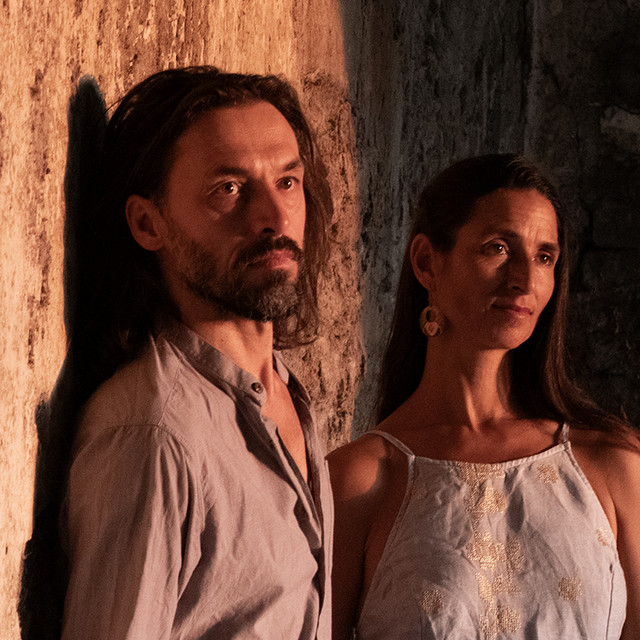
This live performance captures Mirabai Ceiba, an acclaimed devotional chant artist, performing kirtan (Sanskrit call-and-response chanting) in Barcelona during her 2012 Awakened Earth Tour. The performance features Mirabai's voice alongside Jamshied Sharifi on keyboards and Simone Haggiag on percussion, spanning traditional mantras including Shree Ma, Ong Namo, and Yemaya—songs rooted in Hindu, Sikh, and Yoruba spiritual traditions that invoke healing, consciousness, and divine feminine energy.
Who Is Mirabai Ceiba and Why Does She Matter in Contemporary Kirtan?
Mirabai Ceiba is a contemporary kirtan artist and spiritual teacher who has become central to the modern revival of devotional chanting in Western contexts. Named after Mirabai, the 16th-century Hindu saint and poet known for ecstatic devotion to Krishna, Ceiba brings a fusion approach to traditional Sanskrit mantras—pairing them with world music instrumentation, particularly keyboard and percussion arrangements that honor both ancient lineages and contemporary sensibilities. Her Awakened Earth Tour, documented in this Barcelona performance, reflects her commitment to bringing kirtan practice to international audiences as a tool for spiritual awakening and communal healing.
What Is Kirtan and How Does It Function as Spiritual Practice?
Kirtan is a call-and-response form of devotional chanting rooted in the Hindu and Sikh traditions. A lead vocalist (in this case, Mirabai Ceiba) sings a mantra or sacred phrase, and the community responds, repeating the refrain. This participatory structure differs fundamentally from concert-style performances—attendees are invited into active spiritual practice rather than passive listening. The mantras themselves are believed to carry vibrational frequencies that support healing, meditation, and the awakening of consciousness. Unlike meditation, which emphasizes silence, kirtan engages the body through voice, rhythm, and collective intention, creating what practitioners describe as a heart-opening practice.
What Are the Specific Mantras Performed in This Barcelona Session?
Shree Ma is an invocation of the divine mother, or Shakti—the primordial feminine creative force in Hindu philosophy. Singing Shree Ma engages devotion to the nurturing, protective, and transformative aspects of the divine feminine. The mantra honors the goddess in all her forms and is often used to invoke courage, compassion, and strength.
Ong Namo is a Sikh mantra meaning "I bow to the infinite creative consciousness." It is the opening mantra in many yoga and kirtan traditions, setting an intention to align with higher consciousness and the teacher within. Ong Namo invokes the connection between individual and universal consciousness, making it a grounding point for practices that follow.
Yemaya draws from the Yoruba-Cuban tradition, honoring the ocean goddess associated with motherhood, protection, and the flow of life force. Yemaya represents the womb of creation and the rhythms of nature. The inclusion of this mantra in Mirabai's practice reflects her commitment to honoring spiritual wisdom across cultures and recognizing the universal themes of divine feminine power that transcend religious and cultural boundaries.
How Do Keyboards and Percussion Shape the Kirtan Experience?
In this performance, Jamshied Sharifi's keyboards and Simone Haggiag's percussion provide instrumental grounding for Mirabai's voice. Rather than replacing traditional tabla or acoustic instruments, these modern additions create a bridge between ancient Sanskrit practice and contemporary world music aesthetics. The keyboards offer harmonic and melodic support, often layering drone notes (the fundamental frequency underlying the chant) while percussion marks the rhythm in ways that invite physical engagement. This arrangement makes the practice accessible to Western audiences unfamiliar with Indian classical music while maintaining the integrity of the mantras themselves.
What Is the Awakened Earth Tour and Why Did Mirabai Undertake It?
The Awakened Earth Tour represents Mirabai Ceiba's effort to bring kirtan and devotional practice to audiences globally. By touring internationally—as evidenced by this Barcelona performance in May 2012—she positioned kirtan as a universal spiritual tool relevant across cultures and spiritual backgrounds. The tour's name suggests its underlying philosophy: that collective chanting and devotional practice can awaken consciousness not only in individuals but in the earth itself, supporting planetary healing and spiritual evolution. Tours like this reflect a broader contemporary movement in which traditional Eastern spiritual practices are adapted for Western contexts while preserving their essential teachings.
How Does Live Kirtan Differ From Recorded Music?
While Mirabai's music is available for purchase and at-home practice, the live performance captured in this Barcelona video carries a different energetic quality. In live kirtan, the call-and-response structure is interactive—the audience's voices actually shape the event. The teacher (in this case, Mirabai) holds and amplifies the collective intention, and participants feel the resonance of their own voices joining a larger field. The video format, though it documents the experience, cannot fully capture this participatory dimension; viewers are still observers rather than participants in the call-and-response. This is one reason why many kirtan practitioners emphasize attending live events as central to the practice.
Where to Go From Here
If this live performance resonates with you, explore Mirabai Ceiba's broader discography available at Spirit Voyage and her official website (mirabaiceiba.com). You can find recordings of these specific mantras and others she teaches. More importantly, seek out live kirtan events in your community—whether led by Mirabai Ceiba or other kirtan artists—where you can experience the participatory dimension of the practice. If you're new to Sanskrit mantras, begin with Ong Namo as a simple entry point: its meaning (connection to infinite consciousness) and accessibility make it ideal for newcomers. Consider the philosophical frameworks of the traditions these mantras come from—Hindu, Sikh, and Yoruba—to deepen your understanding of what you're invoking. Finally, if you're drawn to the spiritual philosophy behind these practices, explore texts like the Bhagavad Gita or the Yoga Sutras, which contextualize devotional practice within broader spiritual systems.


