What makes kirtan different from other forms of meditation or chanting?
Kirtan is a participatory, call-and-response form of devotional singing rooted in Hindu and Krishna-conscious traditions. Unlike silent meditation or solo chanting, kirtan requires at least two parties: a leader who sings a line or phrase, and responders—the assembled community—who repeat it back. This call-and-response structure creates a feedback loop that deepens attention and builds collective resonance.
The Rose Temple session centers on two primary mantras: the Hare Krishna mantra (Hare Krishna, Hare Krishna, Krishna Krishna, Hare Hare / Hare Rama, Hare Rama, Rama Rama, Hare Hare) and invocations to Radha and Govinda (Bolo Radha Ramana Haribol / Radhe Radhe, Govinda Govinda). These are not random syllables but sacred names and titles—Radha the divine feminine energy of love, Govinda the divine masculine, Krishna the all-attractive one, Rama the supremely blissful. The repetition of divine names is believed to attune the practitioner's consciousness directly to the reality those names represent.
What distinguishes kirtan from recorded music or congregational hymn-singing is its improvisational, energetic responsiveness. The leader feels the energy of the room and modulates the chant—tempo, pitch, emphasis, melodic ornamentation—in real time. The community, in turn, brings their own presence to the echo. This mutual attunement creates what might be called a group nervous system: individual bodies and breaths synchronize, the mind's habitual thought-stream quiets, and what remains is a shared vibration.
How does the temple environment shape the kirtan experience?
The Rose Temple is not merely a room with good acoustics—it is a container of spiritual intention. According to the speaker, the temple holds "the beautiful strong energy of regular prayer and practice." This is not metaphorical. Environments where people have meditated, prayed, or chanted for years develop a palpable energetic signature. Neuroscience has shown that group meditation synchronizes the brains of participants; traditional dharma teaching would say that repeated sacred practice sanctifies a space, making it easier for newcomers to access deep states.
The presence of a devoted community further amplifies this effect. The speaker notes that the community at The Rose Temple was "SOOOO full of light and enthusiasm"—a perception rooted in the tangible lift of collective energy when groups of people gather with sincere intention. When a room is filled with practitioners who have already quieted their minds or opened their hearts, a newcomer—or even the leader—can more readily access those states. The temple becomes a tuning fork for the collective body-mind.
This is why kirtan leaders historically prefer to sing in temples, ashrams, or sacred spaces rather than concert halls. The physical and energetic infrastructure supports the practice's aim: not entertainment but transformation of consciousness through sound vibration and community resonance.
What role does storytelling play in this kirtan session?
The speaker mentions "retelling bits of the Ramayana" during the evening at The Rose Temple. The Ramayana is one of Hinduism's two great epics, a narrative that contains within it the entire philosophy of dharma (righteousness), bhakti (devotion), and the nature of divinity in human form. While the video excerpt does not capture these stories directly, their presence in the full evening is significant.
Kirtan sessions, especially longer ones held in temple settings, traditionally weave together three elements: chanting, storytelling, and silence. Stories from the Ramayana or Bhagavad Gita serve multiple functions. They provide context for the names being chanted—why we invoke Rama, what his life teaches us about surrender and duty. They give the intellect something to engage with, preventing the mind from collapsing into boredom or distraction. And they remind the body why it is participating in this practice: not out of rote habit, but out of genuine love and reverence for the divine principles those stories illuminate.
The Ramayana, in particular, is structured as a story of love—Rama and Sita's bond, the devotion of Hanuman, the loyalty of the monkey kingdom. This emotional resonance prepares the heart to receive the mantras not as syllables to be repeated but as love-letters to the divine, calls to reunion with the source of all love.
What is the Hare Krishna mantra, and why is it central to this practice?
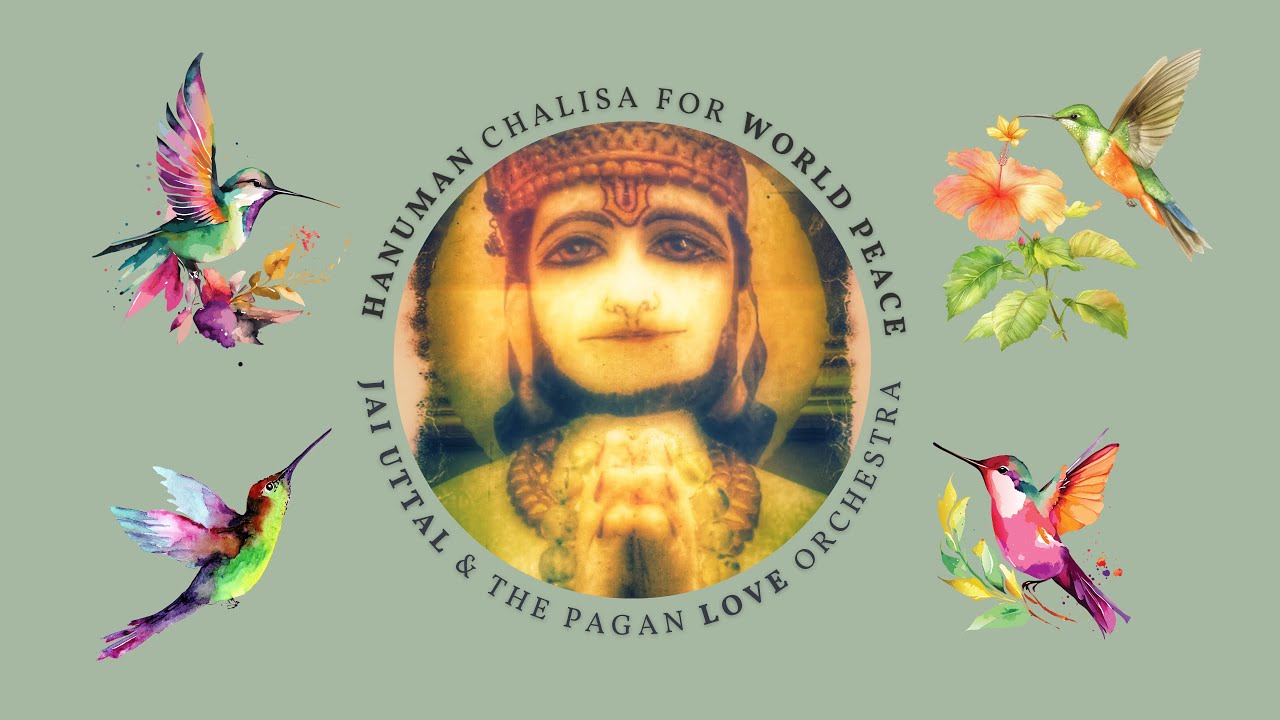
The Hare Krishna mantra—Hare Krishna, Hare Krishna, Krishna Krishna, Hare Hare / Hare Rama, Hare Rama, Rama Rama, Hare Hare—is one of the most widely recognized and chanted mantras in the world, particularly through the International Society for Krishna Consciousness (ISKCON) and related traditions. However, its use predates ISKCON by centuries.
Breaking down the mantra: Hare refers to the energy of divine love and attraction; Krishna means "all-attractive" and refers to the divine as the ultimate source of all beauty and bliss; Rama refers to supreme happiness or divine joy. The mantra cycles through invocations of these divine principles, alternating masculine (Krishna, Rama) and feminine (Hare) aspects. No single English word captures the depth of these Sanskrit terms—they are more like passwords to layers of consciousness than simple nouns.
According to the Bhagavata Purana and other classical texts, chanting the names of God is the most accessible path to liberation in the current age—more accessible than ritual performance or abstract meditation. The mantra works not through intellectual belief but through sound vibration itself. As the speaker and many kirtan teachers understand it, the divine is not separate from its names; speaking the name is a direct encounter with the reality it represents.
In the Rose Temple recording, the mantra is sung repeatedly, with variations in emphasis and melody. This is intentional. The repetition—called japa when done individually and kirtan when done collectively—creates a groove in consciousness. The mind, which ordinarily spins in endless conceptual loops, finds a single track to run on. The breath naturally synchronizes with the chant. The body relaxes. What emerges is a state sometimes described as samadhi—absorption in the object of meditation, in this case the divine names.
What is Radha and Govinda in the devotional context?
The mantras in the second half of this recording shift to Bolo Radha Ramana Haribol and invocations of Radhe and Govinda. These represent a more specific devotional focus than the broader Hare Krishna mantra.
Radha is the divine feminine—not a literal historical figure but a principle of divine love and emotional ecstasy (bhava). In Krishna theology, Radha represents the perfection of devotion: she loves Krishna without wanting anything in return, without even needing Krishna to know she loves him. She is the standard-bearer of pure, selfless love.
Govinda means "one who nourishes all" or sometimes "one who pleases the senses"—referring to Krishna in his form as the cowherd boy who dances and plays with his devotees. When we chant "Radhe, Radhe, Govinda, Govinda," we are invoking the dance of divine masculine and feminine, the eternal play (lila) of attraction and love at the heart of existence.
Haribol means "speak the name of Hari (Krishna)." So Bolo Radha Ramana Haribol translates roughly as "Speak! Call out to Radha and Krishna!"—an imperative to move from passive listening into active, heartfelt invocation. This shift in the mantras mid-session is a deliberate deepening: from the universal principles in the Hare Krishna mantra to the intimate, emotionally charged relationship between Radha and Krishna.
How does repeated chanting create physiological and psychological changes?
Modern neuroscience is beginning to validate what kirtan practitioners have known for millennia. Repetitive chanting—whether of mantras, prayers, or even secular affirmations—engages the parasympathetic nervous system, the body's rest-and-digest response. Heart rate slows, blood pressure drops, and the amygdala (the brain's alarm center) quiets. Meanwhile, the prefrontal cortex—associated with reasoning and self-awareness—shows altered activity patterns.
The combination of rhythm, melody, and meaning amplifies these effects. The steady beat of the kirtan acts like a metronome for the nervous system. The melodic variation keeps the brain engaged but not agitated—in what neuroscientists call a "flow state." And the meaning of the words, especially for practitioners who understand them, adds emotional and intentional resonance. The whole being—body, breath, mind, and heart—aligns around a single focus.
Over time, regular kirtan practice creates stable changes in the practitioner's baseline state. Anxiety diminishes not because one has "positive thoughts" but because the nervous system itself has learned a deeper pattern of ease. The mind, too, benefits: the capacity to hold a single focus strengthens, chatter quiets, and what emerges is a kind of natural meditation.
What is the significance of the call-and-response structure in building community?
The call-and-response structure of kirtan is not decorative—it is essential to the practice's power. When you sit in a silent meditation group, you are responsible for your own practice; the group's presence helps, but ultimately the work is individual. In kirtan, there is no hiding. You are asked to respond—to echo, to participate, to add your voice to a collective voice.
This creates several effects. First, it prevents the mind from drifting into fantasy or sleep; you must stay alert to catch each phrase and return it. Second, it builds a felt sense of interconnection. Your voice is literally interwoven with dozens or hundreds of others; there is no "me" doing this and "them" observing. The boundary between self and other becomes porous. Third, it creates accountability and openness. In a room of people chanting together, pretense falls away. The person next to you is not judging your singing ability; everyone is equally vulnerable, equally opening their mouth to sing divine names.
The speaker's note that the community was "full of light and enthusiasm" speaks to this effect. When a group gathers to invoke the divine together, the individual egos that normally keep us separate dissolve into a larger presence. What remains is a shared heartbeat, a shared breath, a shared love reaching toward something greater than any single person.
Where to go from here
If this recording resonates with you, consider seeking out a live kirtan session in your area. No prior experience is necessary. Kirtan communities exist in cities worldwide—in temples, yoga studios, ashrams, and community centers. The practice is simple: listen to the leader sing a phrase, then sing it back. Let your body move if it wants to; let your eyes close if they want to; let your voice be part of the collective sound.
If you are interested in deepening your understanding of the Ramayana or Krishna theology that underlies these practices, classical texts like the Bhagavata Purana or the Ramayana itself offer rich material. Many contemporary teachers offer accessible interpretations. The speaker has created Kirtan Camp experiences (mentioned in the video description) that combine extended chanting, storytelling, and community—a format worth exploring if extended retreat experience appeals to you.
The Rose Temple session demonstrates a principle central to all contemplative traditions: when we gather with sincere intention, when we offer our voices and hearts to something greater than our individual concerns, something shifts. The boundary between inside and outside dissolves. Loneliness, which is the baseline condition of ego-consciousness, gives way to belonging. This is not romantic sentiment but the direct result of aligning individual vibration with collective vibration, individual consciousness with universal consciousness. Kirtan is simply one accessible technology for that alignment.
]]>