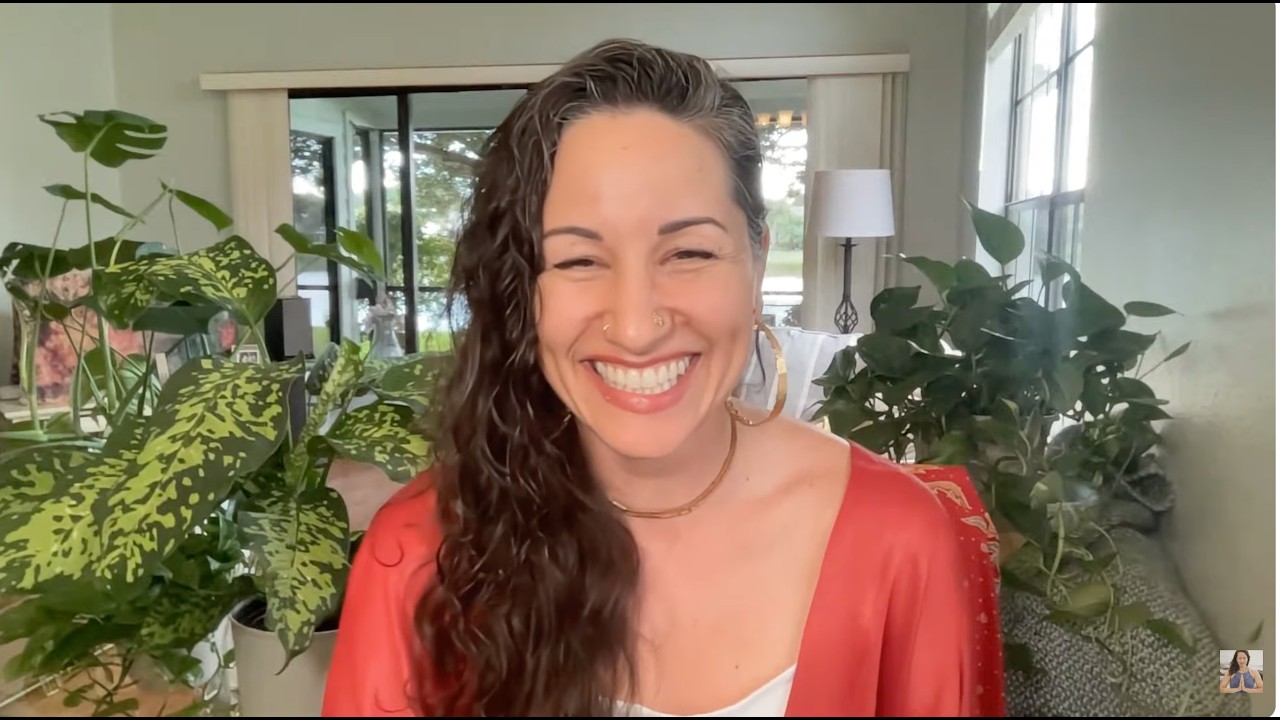
This guided meditation teaches five foundational practices built on mindful breathing: (1) anchoring attention through breath awareness at the abdomen or nose; (2) deepening the breath naturally through practice; (3) calming body and mind through intentional breath; (4) releasing tension through smiling and letting go; and (5) returning to the present moment as the only real moment available to live. Each practice is designed to be accessible anywhere—on a bus, while waiting, during daily tasks—making meditation not a separate activity but an integrated way of living.
Why attention anchor matters when your mind is active
The meditation opens by acknowledging a common obstacle: excessive thinking. When the mind is busy, Thich Nhat Hanh recommends shifting focus to the abdomen rather than forcing attention upward. "If you are thinking a lot, and then focus your attention on your abdomen," he instructs (0:20). The reasoning is physiological and practical. The abdomen is closer to the emotional and instinctive center of the body, and watching its gentle rise and fall can quiet mental chatter more effectively than abstract focus.
For those who struggle with drowsiness instead, the remedy is the opposite: focus on the tip of the nose, noticing the cool air entering and the warmer air leaving. This creates more sensory engagement and wakefulness. The practice does not demand perfection—it offers a graduated approach based on current mental state. "Noticing the air coming in, and the air coming out" (0:38) provides concrete sensory anchoring that begins to settle the nervous system immediately.
How does breathing naturally deepen through mindful practice?
After establishing attention, the meditation introduces deepening the breath. Crucially, Thich Nhat Hanh emphasizes that this depth must arise naturally, not through force: "My in-breath becomes deeper in a very natural way. I do not force it to be deeper. It just becomes deeper, because I have been practicing breathing in and out mindfully" (7:17).
This is a subtle but essential teaching. Many practitioners make the mistake of artificially controlling the breath, creating tension rather than ease. When attention is genuinely focused on the breath with awareness—not effort—the nervous system gradually downregulates. Deeper, slower breathing follows as a result of calm, not as a cause of it. Thich Nhat Hanh notes that enjoyment is the sign of correct practice: "If you feel that you enjoy your deep and slow breath. It means that you are practicing correctly" (7:53).
What is the relationship between body calm and mind calm in meditation?
The core practice moves to a key insight: "Breathing in, I calm my body. Breathing out, I ease everything" (12:54). This may sound like two separate actions, but Thich Nhat Hanh clarifies the underlying unity: "When you breath in, the in-breath is making your body calm. And as you are in a meditation posture, your mind is becoming calm also. Body here means also mind" (14:52).
In the Plum Village tradition, body and mind are not divided. A relaxed posture, slow breath, and gentle awareness naturally co-arise with mental clarity. There is no need to chase calm mentally while the body remains tense. Instead, by attending to physical ease—the natural relaxation that follows calm breathing—the mind settles as a secondary effect. This embodied approach makes meditation accessible to those who find abstract mental techniques frustrating.
How does smiling function as a nervous system regulation tool?
A distinctive element of this practice is the instruction to smile: "Breathing in, I smile. Breathing out, I release" (19:24). This is not cheerfulness or suppression. Thich Nhat Hanh explains the physiology: "Smiling means relaxation to all the muscles on your face. Every time you smile, you relax all these muscles on your face. And your nervous system becomes relaxed" (21:15).
The face holds tremendous neural density and directly influences the vagus nerve, the main pathway of parasympathetic activation. A gentle smile—even one directed inward, at oneself—signals safety to the nervous system. Thich Nhat Hanh frames this as "the practice of loving kindness, directed to oneself" (21:36). The smile is not false positivity; it is a somatic gesture of self-compassion that creates physiological relaxation.
Paired with the breath, this becomes powerful: the exhalation carries the instruction to "release"—meaning to let go of projects, worries, and tension. "Release here means to let go of everything, including our projects, our worries, our tension, so that we be able to enjoy our presence in the here and now" (21:48). Freedom emerges not from forced positivity but from genuine surrender of what binds the mind.
Why is returning to the present moment described as a miracle?
The final core practice addresses the deepest dimension: presence itself. "Breathing in, I go back to the present moment. Breathing out, I know this is a wonderful moment" (27:35). This may sound poetic, but Thich Nhat Hanh grounds it in lived reality: "To be alive, and to know that you are alive is the greatest of all miracles. And if you don't go back to the present moment, you cannot perform that miracle" (29:44).
Most human suffering arises from mental time travel—regret about the past, anxiety about the future. The present moment is the only place where life actually occurs, yet it is easily lost in thought. By breathing in with the intention to "establish myself in the present moment" and breathing out recognizing "it is a wonderful moment," the practitioner recalibrates awareness to reality as it is (29:59, 30:11). Thich Nhat Hanh notes: "In fact, it is the only moment available to me to live" (30:11).
When concentration is present, this practice generates spontaneous joy—not from achievement or accumulation, but from the clarity of simply being alive, here, now.
How can these practices fit into ordinary daily activities?
A final teaching addresses accessibility: these are not practices limited to the meditation cushion. "These exercises could be practiced everywhere, at any time" (35:31). Thich Nhat Hanh offers concrete examples: "When you sit on a bus, you can practice these exercises. When you are in the kitchen preparing breakfast, you can practice these exercises. You can also practice during walking. If you are walking from one building to another building, you can practice these exercises. When you line up to wait for your time to do something, you can do that also" (35:40–36:08).
This transforms meditation from a specialized activity into a way of relating to ordinary moments. While waiting, preparing food, walking between places—all become opportunities to return to presence, calm the body, release tension, and smile. The bell, which punctuates this meditation, serves as a reminder to pause and return. In daily life, any moment can be a bell: a door closing, a breath, a moment of noticing.
Where to go from here
This guided meditation establishes a complete yet simple foundation for mindfulness practice. The five core instructions—attention anchoring, natural breathing, body-mind calm, smiling-releasing, and present-moment return—form an integrated whole. Begin with one practice at a time, allowing it to settle naturally before adding the next. Most importantly, remember that the goal is not perfection but gentle, consistent presence. The practices are most powerful when they become woven into daily life rather than isolated as special activities. Return to the bell—whether literal or metaphorical—again and again.