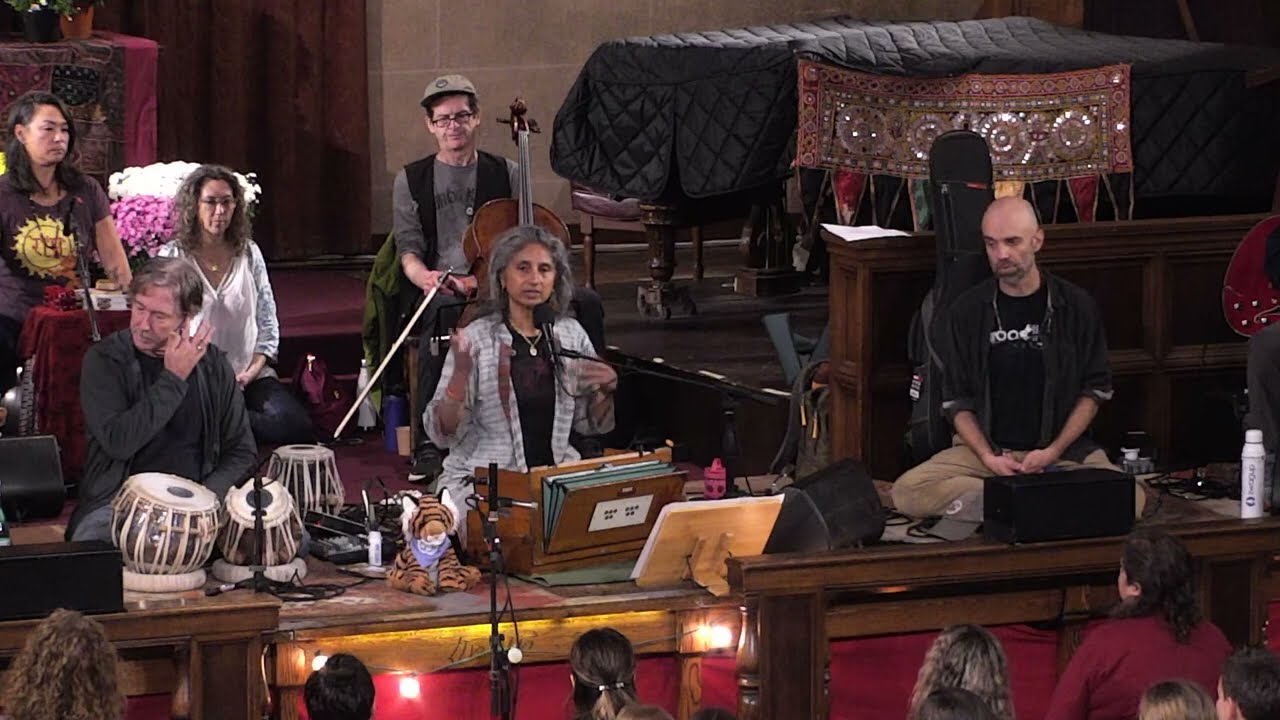
What is the vision behind Ekam meditation?
The Ekam meditation movement is rooted in a specific vision of world transformation centered on shifting human consciousness away from suffering toward a state of inner peace and beauty. Preethaji emphasizes a foundational principle: "For every day spent in suffering is a wasted day, and every day lived in a beautiful state is life truly lived." This statement sets the philosophical tone for the entire practice—meditation is not a luxury or hobby, but a direct counter to wasted days and unnecessary suffering.
The broader vision extends beyond personal benefit. Ekam meditators are invited to see themselves as active participants in what Preethaji calls a "global leadership" of consciousness. When enough people meditate and stabilize their inner state, the theory goes, this generates a positive frequency that benefits the collective field. The teaching draws on the principle that consciousness operates at both individual and collective levels, and that personal inner work has real, radiating effects on the broader human landscape.
How does collective consciousness shift through individual practice?
A central teaching in Ekam meditation is that individual meditation is not isolated—it contributes to what Preethaji describes as a "collective consciousness" that can be influenced and elevated through coordinated practice. This operates through a field-based model: when meditators cultivate inner peace and embody a peaceful state, they are literally broadcasting that frequency into the human consciousness field.
Preethaji gives real-world examples to illustrate this principle. She mentions a well-known peace activist who has been working in conflict zones for 30 years without a single act of violence occurring in those areas. The teaching suggests that this person's inner peace—maintained through meditation and spiritual practice—radiates outward and transforms the volatile field around them. This is not presented as magic or miracle, but as a natural consequence of consciousness itself operating at multiple scales.
The implication for Ekam meditators is clear: your inner state matters not just to you, but to everyone around you and, by extension, to the field of human consciousness itself. This reframes meditation from a personal wellness practice to a form of service to the world.
What is the role of daily meditation in world transformation?
Preethaji emphasizes that consistency and commitment to daily meditation are essential. The teaching suggests that meditation does not work in isolation—it requires regular practice to create a stable, sustained shift in consciousness. She invites meditators to dedicate even a modest amount of time—7 minutes per day—as a contribution to the larger vision of world transformation.
The logic is that if enough people meditate daily and maintain their inner peace, the "waves" created in the collective consciousness will accumulate and translate into observable shifts in the world: movement toward compassion, peace, and away from conflict and violence. This is presented not as wishful thinking but as a "tried and tested" principle—something that has been observed and verified through the work of Ekam and its lineage.
The commitment to daily practice is also personal: Preethaji suggests that by meditating regularly, each individual stabilizes their own consciousness and becomes less reactive, more grounded, and better able to handle life's challenges. In this way, personal transformation and world transformation are inseparable. When you stabilize your own inner state, you naturally contribute to the field; and as the field shifts, it becomes easier for others to also find peace.
Can individual meditators really make a difference?
A recurring theme in Preethaji's teaching is that every person can make a tangible difference. She states directly: "Every one of us can make a difference to the world." This is framed not as motivational platitude but as a function of how consciousness itself works. According to this model, you do not need to wait for permission, resources, or external validation to contribute to world transformation. Your commitment to inner peace through meditation is itself the contribution.
Preethaji acknowledges that the world faces complex, entrenched problems—violence, conflict, volatility. But she suggests that these problems arise from and are perpetuated by suffering consciousness. When individuals shift out of suffering and into a beautiful inner state, they are actively reducing the frequency that sustains these problems. Even those who are "active and meditated," as she puts it, can support the cause through their presence, their inner stability, and their radiating peace.
She frames this not as Ekam meditators being special, but as an invitation to recognize the latent power that exists in every human being. You can "secure your own future and that of your family" by participating, and you can simultaneously contribute to the larger vision of a world moving toward compassion and peace rather than conflict.
What does participation in Ekam meditation look like?
Ekam meditation is presented as an accessible practice available to anyone. The teaching does not require dramatic lifestyle change or renunciation—instead, it asks for commitment to a daily practice that can be integrated into ordinary life. The invitation is to join others in a synchronized, global effort: "10 days will be focused on translation, and the world will move toward compassion, toward peace."
This suggests that Ekam periodically organizes focused meditation events—global gatherings where large numbers of meditators coordinate their practice around a specific intention or vision. Such synchronized practice is thought to amplify the collective field effect. Beyond these structured events, individual practitioners maintain their daily meditation to sustain the frequency they have cultivated.
Preethaji also mentions community infrastructure: Ekam maintains communication channels (such as Telegram groups) through which meditators can connect, share, and support one another. This community aspect serves multiple functions—it provides practical guidance, maintains motivation, and reinforces the sense of participation in something larger than oneself.
What is the connection between suffering and wasted days?
The opening quote—"For every day spent in suffering is a wasted day"—is not mere sentiment but a philosophical stance on what constitutes a life truly lived. In this framework, suffering is understood not just as acute pain but as any state of contraction, reactivity, anxiety, or inner fragmentation. Such states are seen as antithetical to genuine living. A day spent anxious, angry, resentful, or defeated is a day when the human being is not fully present or aligned with their true nature.
Conversely, "every day lived in a beautiful state" is one in which the person is conscious, at peace, responsive to others, and embodying their full potential. This reframes the entire purpose of meditation: it is not an escape from the world but an alignment with what makes living actually valuable. When you meditate and cultivate inner peace, you are not being passive—you are actively claiming back those days from suffering and living them fully.
This philosophy underlies the urgency Preethaji brings to the invitation to meditate. It is not a luxury practice offered to the spiritually advanced; it is framed as a necessity for anyone who wants their days to count.
How does Ekam relate to Sri Amma Bhagavan's teachings?
Preethaji positions Ekam meditation within a lineage of teaching and grace from Sri Amma Bhagavan and Sri Krishnaji. The vision of world transformation through consciousness is not Preethaji's innovation alone but is presented as the continuation of teachings and intentions set by these figures. This gives the movement a sense of grounding in an established spiritual lineage rather than as a new, untested idea.
The implication is that those who practice Ekam meditation are not starting from scratch—they are aligning with a vision and a field of practice that has already been cultivated and verified by advanced practitioners. This is meant to inspire confidence and commitment in new meditators, who can trust that they are participating in something with depth, history, and proven effect.
Where to go from here
If you are curious about Ekam meditation, the first step is to learn and commit to a daily practice. Even 7 minutes of meditation per day—done consistently—is presented as a meaningful contribution to the larger vision. You can connect with the Ekam community through their communication channels to access guided meditations, receive updates about synchronized global events, and connect with other meditators. The teaching emphasizes that you do not need to wait for the "right" moment or special conditions; you can begin today. Each day you practice, you shift your own consciousness away from suffering and toward a beautiful, peaceful inner state—and in doing so, you contribute to the ripples of transformation that Preethaji describes as moving through human consciousness itself. The vision invites you not just to meditate for yourself, but to see your practice as an act of service to the world.