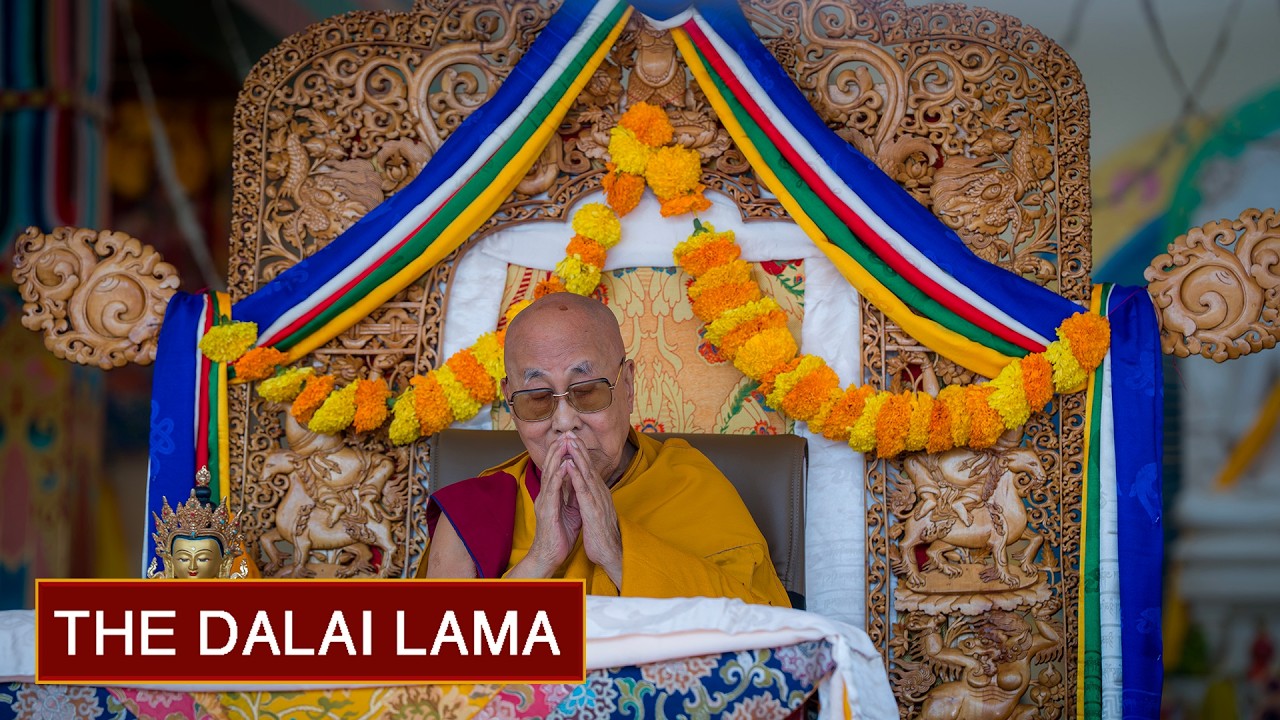
Sharon Salzberg reflects on her four-decade relationship with the Dalai Lama, beginning with their first meeting in India in 1970 and culminating in a transformative encounter at the Insight Meditation Society in 1979. During that visit, while Salzberg was recovering from a broken foot, the Dalai Lama's simple act of genuine attention—seeing her fully despite her injury—became a lived lesson in what compassion actually means: not fixing someone's pain, but acknowledging their presence and dignity.
Who Was Sharon Salzberg When She First Met the Dalai Lama?
In 1970, Sharon Salzberg traveled to India seeking Buddhist teachings and direct contact with teachers. She made her way to Dharamshala to meet the Dalai Lama, finding him "very young and very accessible, very open." From the outset, she observed a quality that would define his public presence for decades: genuine curiosity about everything. This openness was not performative or diplomatic—it was an intrinsic trait that Salzberg notes has "maintained all these decades."
At that time, Salzberg was a young practitioner building the foundations of her own work. In 1976, she and her colleagues established the Insight Meditation Society, a retreat center in Barre, Massachusetts dedicated to vipassana (insight meditation) practice. Three years later, in 1979, word came that the Dalai Lama would be visiting Amherst, Massachusetts, nearby their center. Salzberg and her team took an informal approach: they wrote directly to his private office with a simple invitation—essentially saying, "We're a Buddhist meditation center; would you like to visit?" To their surprise and delight, they received a letter back confirming his visit.
What Happened During the Dalai Lama's 1979 Visit to Barre?
The logistics seemed straightforward, but a personal injury transformed the encounter into something profound. Just before the Dalai Lama's arrival, Salzberg had been in a car accident that broke a bone in her foot. On the day of his visit, she was still using crutches and took position outside the retreat center to greet him. About 100 people had gathered to receive him.
What happened next became a cornerstone teaching for Salzberg. As his car pulled up, the Dalai Lama stepped out and did something unexpected: rather than proceed through the large crowd assembled to greet him formally, he moved directly toward Salzberg. He "cut through 100 people," took her hand, looked her in the eye, and asked simply, "What happened?"
In that single gesture—the directness, the eye contact, the question—Salzberg experienced something she had been studying intellectually but had not fully embodied. As she reflects, "I realized in that moment he couldn't make the injury not have happened and he couldn't make me any more skillful in my use of crutches." In other words, he didn't offer false reassurance, fix her problem, or minimize her experience. He simply saw her.
How Does Witnessing Create Compassion?
What Salzberg articulates next is the existential dimension of her experience: "That feeling of like I'm so in the back I'm so unseen—it just went away." The Dalai Lama's attention dissolved a subtle but pervasive sense of invisibility. Many people experience this: in crowds, in pain, in difficulty, there is often a secondary suffering—the feeling of being overlooked or forgotten. The primary injury is real, but the sense of isolation compounds it.
The Dalai Lama's act was not grand or miraculous by conventional standards. He didn't heal her foot or offer profound words. Instead, he offered what might be called the root of compassion: undivided presence and genuine recognition. Salzberg understood in that moment that compassion is not primarily about fixing, improving, solving, or even comforting. It is about seeing someone—truly, directly, in their particularity—and letting them know they matter.
As Salzberg concludes, "I realized oh, that's what compassion means." This realization was not abstract. It came from her body, her experience, her sense of isolation dissolving under genuine attention. It is a definition that bypasses sentimentality and connects directly to action: to be compassionate is to turn toward someone fully and recognize their existence.
What Does This Moment Reveal About the Dalai Lama's Approach?
Salzberg's anecdote illuminates why the Dalai Lama has been a global symbol of compassion for decades. He did not isolate himself from ordinary human encounters or treat them as interruptions to his schedule. Instead, he moved toward someone in need of acknowledgment. He broke protocol (cutting through a formal receiving line) to follow the actual person who needed attention.
This aligns with Buddhist teachings on compassion (karuna) and loving-kindness (metta), both of which Salzberg has spent her career teaching and refining. Compassion, in this framework, is not an emotion primarily. It is a quality of awareness—an ability to recognize suffering and respond to it. The Dalai Lama demonstrated this not through words but through the architecture of his attention.
The encounter also exemplifies a principle that runs through Buddhist practice: the present moment is where genuine meeting happens. The Dalai Lama's question "What happened?" was not a social formula. It was an actual inquiry, rooted in the here-and-now reality of Salzberg's injury and her presence in that moment. This is radically different from performative compassion or sympathy offered from a distance.
Why Does Salzberg Return to This Memory in 2015?
This tribute video was released on the Dalai Lama's 80th birthday, July 6, 2015. In choosing to share this specific memory—not a grand teaching, not a philosophical insight he imparted, but a moment of simple human recognition—Salzberg was honoring something essential about his life's work. She framed the memory with gratitude: "Thank you for everything you do. May you continue to have long life and good health. May many beings enjoy the fruits of your work."
By centering a personal anecdote rather than listing his accomplishments, Salzberg was making an argument about what makes the Dalai Lama's work significant. It is not primarily his titles, his political advocacy, or even his teachings (though all matter). It is his capacity to be present to individual human beings in their actual situations—broken foot, isolation, invisibility and all. That presence, that attention, that refusal to look away: these are the fruits of a life of practice.
Where to Go From Here
For practitioners of meditation and lovingkindness, Salzberg's account offers a concrete model. Compassion is not something you generate as a feeling; it is something you practice through attention. The next time you encounter someone in difficulty—physically injured, socially uncomfortable, emotionally isolated—notice whether your tendency is to fix, minimize, offer platitudes, or move on. Notice instead if you can turn toward them fully, meet their eyes, ask directly what is happening, and let them be seen.
Salzberg's teaching career has expanded and refined this initial insight. Her books on lovingkindness and real love develop the theory and practice in depth. But this moment with the Dalai Lama remains the seed: compassion begins when someone decides, in a crowded moment, that your particular existence matters enough to turn toward.