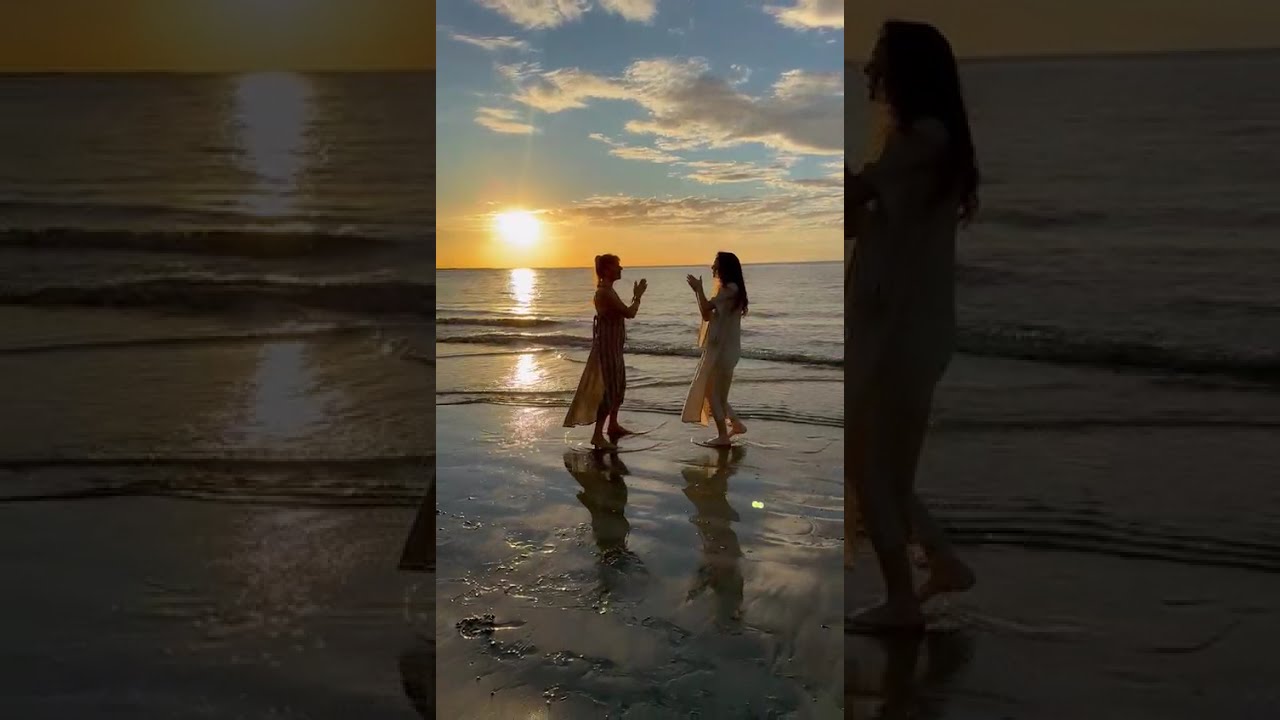
"Calma e Tranquilidade" is a devotional kirtan performance that uses Portuguese and Sanskrit-rooted language to guide listeners toward states of calm and inner stillness. Through call-and-response chanting, repetitive mantra, and collective vocal participation, the performance demonstrates how sacred sound and rhythmic repetition function as practical tools for settling the mind and accessing tranquility—not as metaphorical concepts, but as embodied experiences that arise when the nervous system synchronizes with the group's vibration.
What is Kirtan and How Does It Create Calm?
Kirtan is a participatory form of devotional chanting rooted in Hindu and yogic traditions, though it has been adapted and shared across many spiritual lineages. Unlike passive listening to music, kirtan invites the audience into an active role as singers. The structure is simple: a lead singer (or ensemble) introduces a phrase or mantra, and the group repeats it back in a call-and-response pattern. This reciprocal structure serves a specific function—it anchors attention, synchronizes breath across individuals, and creates a shared rhythmic field.
"Calma e Tranquilidade," which translates to "Calm and Tranquility" in Portuguese, uses this structure to cultivate states of inner quietness. The repetition is not meant to bore the mind into submission; rather, it gives the mind a single, manageable object to return to. In the context of yogic and meditative traditions, this focal point—whether it's a mantra, a breath, or a sound—is understood as a doorway to deeper states of attention and awareness. When external distractions are replaced by a unified sonic field and a collective rhythm, the nervous system can shift into a more parasympathetic (rest-and-digest) mode.
The Role of Repetition in Mantra and Chanting Practice
The lyrics of "Calma e Tranquilidade" include phrases like "come my queen," "here or to sing," and extended passages of "la la la" vocalization. This mixing of language and pure vowel sounds is intentional. The Sanskrit and Portuguese elements carry linguistic meaning and cultural resonance, while the vocalized "la" passages release the listener from the burden of semantic interpretation and allow the voice itself—and the body's resonance with it—to become the primary experience.
Repetition in mantra practice operates on several levels:
- Neurological anchoring: The brain's default mode network, which generates mind-wandering and rumination, becomes less active when attention is fixed on a repetitive stimulus. Chanting a mantra engages the same neural pathways involved in focused attention and working memory, effectively "occupying" the mental space that would otherwise fill with worry or distraction.
- Vibrational resonance: Every sound has a frequency, and when the vocal cords produce these frequencies repeatedly, the body itself becomes a resonance chamber. Practitioners of mantra traditions have long observed that certain sounds—like "om" or the extended vowels in kirtan—create subtle vibrations in the head, chest, and throat that many describe as calming or clarifying.
- Breath synchronization: Kirtan naturally aligns the breath with the melodic and rhythmic structure. When a group sings together, their breathing synchronizes, which has measurable effects on heart rate variability and parasympathetic activation—physiological markers of relaxation.
Collective Singing as a Tool for Individual Calm
One of the distinctive features of kirtan is that it is not a solo performance but a collective one. The audience is not passive observers but active participants. This shift from listening-only to singing-together creates a distinct psychological and physiological state. When individuals chant or sing as a group, several things happen simultaneously:
The individual ego or self-critical voice often quiets because the focus is on blending with the group rather than performing perfectly. The nervous system entrains—or synchronizes—with the group's rhythm and resonance. This is not mystical but measurable; research on group chanting and singing shows increased coherence in heart rate variability across participants and reductions in cortisol and other stress markers. There is also a social bonding effect; when people produce sound together, oxytocin levels rise, creating a sense of safety and belonging.
In "Calma e Tranquilidade," the performers invite listeners to "sing this together" at key moments. This invitation is more than a musical instruction; it is an offer to shift from being a receiver of calm to being an active generator of it. The tranquility is not transmitted from the stage to the audience like a broadcast; rather, it arises collectively through the shared act of vocalization.
The Language and Intention of the Mantra
The performance uses Portuguese and what may be Sanskrit or Sanskrit-influenced terms. The phrase "my queen" or "come here queen" carries a devotional tone—in bhakti (devotional) traditions, the divine is often addressed as a beloved, a queen, or a presence one is calling toward. The repetition of "come my tranqu," "come my queen," and similar phrases suggests an invocation—a calling-in of tranquility and divine presence as if they were living qualities that respond to sincere vocalization.
This may seem poetic rather than practical, but in the context of how language affects the nervous system, the intention embedded in these phrases matters. When a person repeats a word or phrase associated with calm, safety, or beauty, the mind and body respond to the emotional resonance of that intention. The brain does not distinguish sharply between "real" external calm and the felt sense of calm generated by consciously voicing the word "tranquility." The body hears it, and the nervous system begins to organize itself accordingly.
How Sacred Sound Differs from Everyday Music
While all music can affect mood and attention, sacred or devotional music is typically structured with specific aims: to quiet the mind, to open the heart, to invoke presence, or to facilitate connection to something beyond the individual self. "Calma e Tranquilidade" is not arranged to build excitement or emotional intensity; instead, it uses a steady rhythm, repetitive melodic patterns, and extended vocal passages that encourage a slowing-down of mental activity.
The performance structure—with its call-and-response, its stretches of "la la la" vocalizing, and its return to core phrases—mimics the structure of meditation. Like meditation, kirtan is not primarily entertainment; it is a practice, a discipline of attention. The goal is not to feel moved or emotionally stirred in the moment (though that may happen); the goal is to create conditions under which the mind can settle, the breath can deepen, and the individual can access a state of presence that persists beyond the performance itself.
Where to Go From Here
If you are drawn to the experience of "Calma e Tranquilidade," consider exploring kirtan practice more deeply. Many cities now have regular kirtan circles or sessions where people gather to chant together. The practice does not require prior knowledge of Sanskrit or Portuguese, only willingness to participate vocally. Start by listening to the performance several times, allowing the repetition and melody to become familiar. Then, if you have the opportunity, sing along—not to perform well, but to feel the shift in your own nervous system and attention when you join the collective voice. You might also explore the traditions from which kirtan arises: bhakti yoga, mantra practice, and the philosophy of how sound (shabda) is understood in yogic and tantric traditions as a vehicle for consciousness itself.