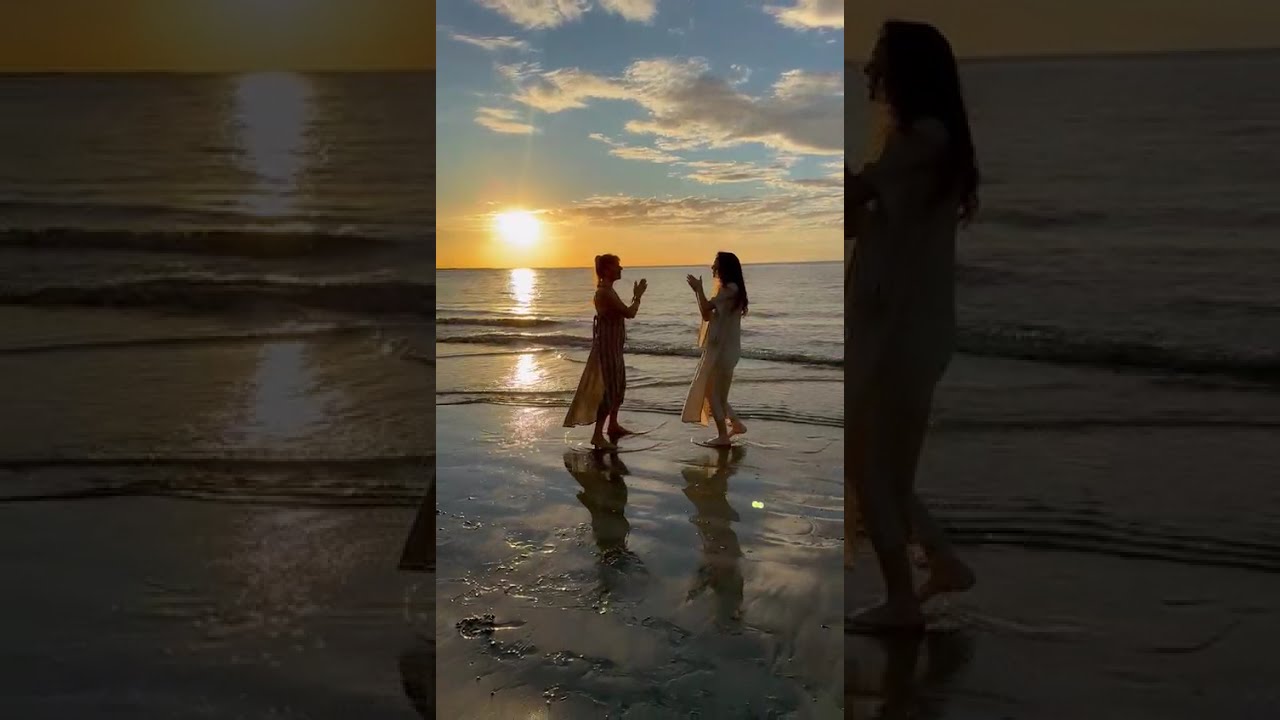
Spiritual awakening doesn't require dramatic experiences or superhuman achievement. It begins the moment you notice there is a voice in your head—and the critical insight is that you are not that voice. The recognition of thought is itself not a thought; it is awareness or presence, a dimension of consciousness that exists underneath the incessant mental commentary. This spaciousness has always been there. We glimpse it in moments when thinking stops—a sunset, a baby's eyes—moments we often write off as accidental beauty rather than contact with a deeper dimension of consciousness that remains largely dormant in most humans.
The Illusion That You Are Your Thoughts
One of the foundational misconceptions about consciousness is that thinking is something you do. Most people live under the assumption that the voice in their head—the continuous stream of commentary, judgment, memory, and anticipation—is who they are. This is the core delusion that keeps awakening dormant. When you examine this closely, you find that you don't actually think; you are being thought by thought. Thinking arises automatically, not by your conscious choice or command. You do not voluntarily initiate every thought that passes through awareness. The energy of thought simply generates itself, and most humans are so thoroughly identified with this process that they experience it as their identity.
This misidentification is so complete that language itself reinforces it. People say "I think" the way they say "I walk"—implying that thinking is a voluntary action under their control. But examine your own experience: Can you stop thinking right now? Not redirect it, but stop it completely? The fact that you cannot is evidence that thinking is not something you do. It is something that happens to you, something that has captured your sense of identity so thoroughly that you believe yourself to be nothing more than the thoughts themselves.
How Does the Recognition of Thought Differ From Thought Itself?
This is where the awakening begins to unfold. There is a crucial difference between thinking and recognizing thought. When you notice that there is a voice in your head—when you observe the commentary without getting swept into it—that observation is not itself a thought. The recognition that a thought is occurring is not a thought. This is the shift that opens the door to spiritual awakening.
Consider what happens when you read the words "that's interesting—there's a voice in my head." The thought about the voice arises. But before that secondary thought, there is something else happening: a direct recognition, an awareness of the thought itself. This recognition comes through what might be called awareness or presence—a dimension of consciousness that is not generated by the thinking mind, but rather stands apart from it and can observe it. This is what is meant by higher consciousness or the emerging new consciousness. It is not a thought; it is the capacity to be aware of thoughts.
What Is the Spaciousness Beneath the Mental Clutter?
In Zen Buddhism, there is a teaching about a student approaching a master with a full cup. The master asks, "How can I teach you Zen unless you first empty your cup?" This emptiness has been often misunderstood in Western spiritual culture as something missing or lacking. But the actual dimension being pointed to is better translated as spaciousness—a quality of consciousness that exists in every human being.
Spaciousness is not the absence of something negative, but the presence of a dimension of consciousness that underlies all mental activity. It is what remains when the constant stream of mental commentary temporarily stops. This spaciousness is the spiritual dimension of consciousness—the deeper or higher consciousness, though the terminology matters less than the direct recognition of it. It is already within you. The problem is that in most humans, this spaciousness remains a dormant faculty, obscured by the density of mental clutter that has accumulated over a lifetime. The mind is so full of automatic commentary, judgment, memory, and projection that most people have no experiential realization that anything exists beneath it.
Yet there are moments—fleeting moments that come to almost everyone—when this spaciousness becomes accessible. These are not accidents. They are direct contacts with a dimension of consciousness that is always present but usually unrecognized.
When Do We Actually Access This Deeper Dimension?
If you watch closely at your own experience, you will find that certain situations naturally interrupt the stream of thinking and open access to spaciousness. A sunset is one of the most common examples. You stand before an extraordinary vista of color and light, and you give it your complete attention. In that moment, you are not thinking about yourself, your problems, your history, or your anxious projections about the future. The incessant stream of thinking subsides. There is just this—the vastness and beauty in front of you. What you felt in that moment was not merely appreciation of external beauty, though that was present. What you felt was something deeper: a heightened aliveness, a sense of connectedness, and a profound peace. These came from the temporary cessation of the thinking mind.
But notice what happens afterwards. You move back into thinking and reflect on the moment: "That was so beautiful. Why did it touch me so deeply?" You try to explain it by attributing it solely to the external object—the sunset must have been particularly beautiful, the light was just right, the colors were vivid. This is partially true, but it misses the essential point. The true reason the moment felt so good is that, for those seconds, you were freed from the incessant stream of thinking. A dimension of consciousness opened that is not the thinking mind.
There is another common experience that illustrates this equally well: looking into the eyes of a baby, perhaps one year old. The baby is not yet thinking in the way adults think. Words have not accumulated. The conceptual mind has not yet fully formed. And yet there is consciousness there—an intense consciousness looking through those eyes, unmediated by judgment or fear or agenda. In that moment when you lock eyes with the baby, something in you recognizes something in the baby that transcends thought. Your stream of thinking pauses. The baby is not thinking about you, and in that moment, you stop thinking about yourself. For a few seconds, both of you are in that dimension of pure being, of presence without commentary. And in those seconds, you feel profoundly good. This too is not an accident. The baby has temporarily liberated you from your own mind.
Why Do Most People Not Recognize These Moments as Spiritual?
Most people experience these flashes—in nature, with children, in moments of beauty or danger when the thinking mind goes quiet—but they do not recognize them as spiritual experiences. They attribute them to the external circumstance or to a momentary pleasant feeling, without understanding that these are glimpses into a dimension of consciousness that transcends the thinking mind. And yet, even without understanding them intellectually, these moments serve a vital function: they keep people sane. They provide enough contact with a deeper dimension of existence to sustain hope that life is worth living.
For some people, the cumulative burden of mental noise becomes so dense that even these natural gateways are blocked. Their minds are so relentlessly active, so full of judgment and interpretation, that they cannot truly perceive a baby without labeling it. They see the baby and think "that's a cute baby" rather than truly seeing the baby—the direct consciousness present before the mind's categorization. They cannot be present with beauty because their mind is always narrating, comparing, assessing. The veil between themselves and direct experience becomes total.
Where to Go From Here
The beginning of spiritual awakening is simple: notice the voice. Notice that there is a stream of thinking, and notice that in the very moment of noticing, something else is there—something that is not a thought, not a feeling, not the voice itself, but the awareness of the voice. Do not try to quiet the mind or achieve some special state. Simply be aware that the awareness observing the thoughts is not itself a thought. Allow yourself to recognize the spaciousness that has always been underneath the mental activity. You need not wait for a sunset or a baby to access this. It is available now, in this moment, in the very gap between one thought and the next, in the awareness that is aware of reading these words. The most important realization in life is not what you achieve in worldly terms—your success or failure, gain or loss—but the recognition of this spacious dimension of consciousness that exists in you, waiting to be noticed.