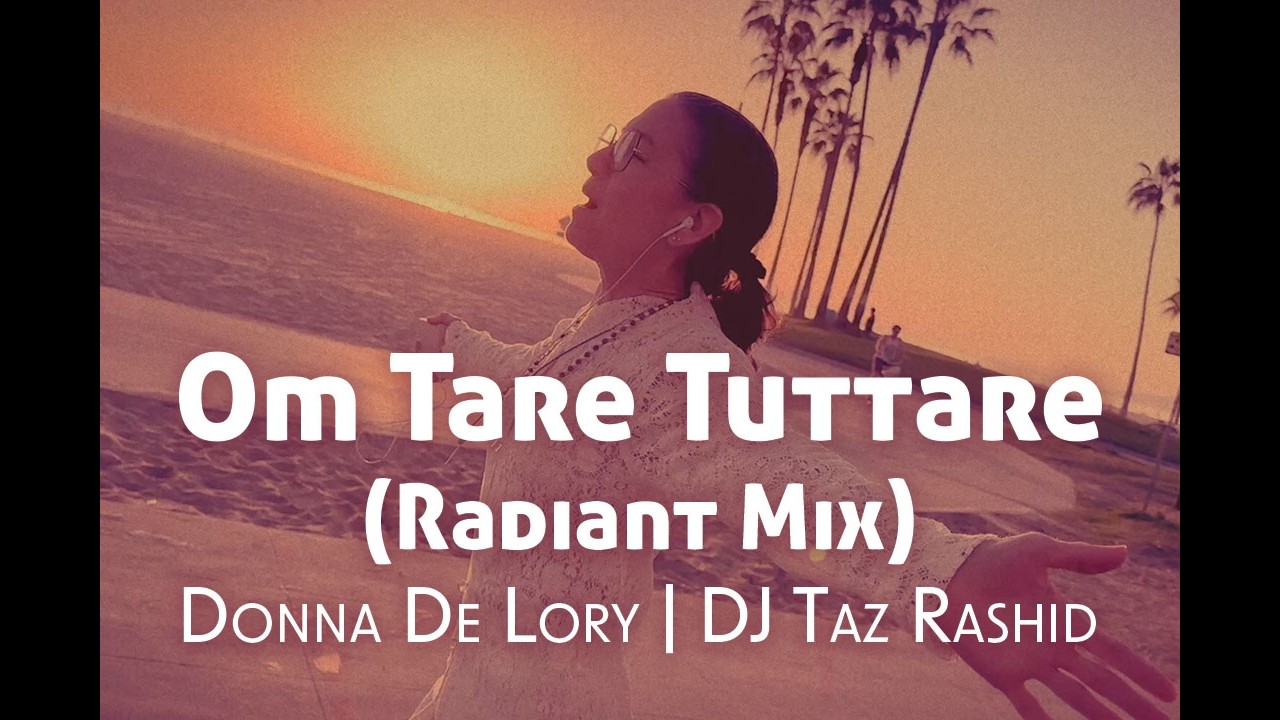
Donna De Lory's "Heaven" (Atom Smith Remix) is a devotional music video that reimagines heaven not as a distant afterlife destination, but as a present-moment spiritual state accessible through embodied practice—song, dance, and collective presence. The piece suggests that heaven exists in the quality of consciousness we bring to this moment, in reflection, in love, and in the body itself. Rather than purely instrumental or lyrical instruction, the video communicates spirituality through movement, visual metaphor, and sonic immersion.
What Does "Heaven" Mean in Spiritual Music Practice?
In much devotional and contemplative music, "heaven" operates as a metaphor for a state of consciousness rather than a literal geographic location. Donna De Lory's approach in this video deepens that convention by making the metaphor embodied and immediate. The lyrics—"heaven can be anyone not here" and "love can draw anywhere"—suggest that heaven is not reserved for the afterlife or for special people, but is available to anyone willing to shift their perception and presence in the here and now.
This reframes a core spiritual insight: that liberation, transcendence, or divine union is not contingent on external circumstances but on the quality of attention and openness we cultivate. The Atom Smith Remix emphasizes the musical and visual dimensions of this realization, moving beyond intellectual understanding into felt experience. The presence of professional dancers—members of Artist Entrance Dance Company—alongside the singers suggests that the body is not secondary to spiritual experience but is itself a vehicle for spiritual transmission.
How Does Embodied Practice Create Spiritual Opening?
The video features sustained choreography involving multiple dancers moving together in coordinated patterns. This ensemble movement serves several functions in spiritual practice:
- Synchronization as collective consciousness: When bodies move in unison, individual boundaries soften. The nervous system begins to entrain with the group rhythm, creating a literal physical foundation for the experience of unity consciousness. This is not metaphorical—neuroscience confirms that synchronized movement increases feelings of social cohesion and spiritual belonging.
- Dance as prayer: In many traditions, movement is a form of devotion as valid as sitting meditation or chanting. The choreography in this video does not distract from the music but amplifies it, translating the song's message into physical language. The body becomes a voice.
- The gaze and presence: The dancers maintain awareness and eye contact, suggesting that spiritual opening happens in the context of witness and mutual recognition. "Heaven" is not a solo experience but something that occurs in the presence of others.
What Is the Role of Repetition and Sonic Immersion?
The remix format—featuring Atom Smith's production—uses musical repetition as a tool for consciousness alteration. Minimal, evolving loops create a hypnotic field that allows the listener's ordinary discursive mind to settle. The phrase "heaven can be anyone not here" repeats, not as didactic reinforcement, but as a mantra. In many spiritual traditions, mantra repetition is understood to rewire the nervous system and open direct perception.
The video's visual language mirrors this sonic approach: the dancers repeat movements, the camera holds on sustained moments, and the overall pacing resists quick cuts or overstimulation. This deliberate slowness is countercultural in the context of contemporary media, and that resistance may itself be part of the teaching—an invitation to inhabit time differently, to taste what it might feel like to move and exist without urgency.
How Do Reflections and Inner Light Function Spiritually?
The transcribed moments include references to "reflections," suggesting the video may employ mirrors, pools of water, or visual elements that show dancers seeing themselves or each other. Reflection in spiritual contexts has multiple meanings:
- Self-awareness and introspection—the capacity to recognize oneself as conscious
- The idea that the divine is reflected in creation, and particularly in the eyes and presence of other beings
- The teaching that we do not find heaven by escaping the world, but by seeing clearly what is already here
If the video uses literal visual reflections, it invokes this spiritual vocabulary directly. We find heaven by recognizing it in ourselves and in each other.
What Is the Significance of Collective Practice?
The presence of multiple dancers, musicians (Stevie Blacke and Girish), and featured performers (Kevin Stea, Ashley Yano, Edison Park) underscores that spiritual opening is not solely individual. The video does not present a solo sage or guru dispensing wisdom, but rather a web of practitioners moving, sounding, and witnessing together.
This democratizes spiritual experience. It suggests that anyone—Donna De Lory, the dancers, the musicians, the viewer—can be a gateway to heaven. The teaching is not "Follow this person to enlightenment" but rather "This state is available in the quality of presence you bring right now, among your community."
How Does Music Production Serve Spiritual Communication?
The remix context matters. Atom Smith's production choices—the structure of the track, the processing of vocals, the instrumental palette—are not decoration but are integral to the message. A spiritual teaching in a devotional song is not separate from its sonic form. The warmth or clarity of the production, the space around the notes, the rhythm that holds the listener's body—these are all part of the transmission.
The album "Here In Heaven," from which this video is drawn, suggests that the entire work is an exploration of this theme. "Heaven" is available through multiple songs, multiple remixes, multiple approaches. This multiplicity itself may be the point: there is no single correct way to access transcendence, but many doorways.
Why Present This as a Dance Film Rather Than Just a Song?
By directing the music video (with cinematography by Jake Hilger and direction by Nick Spanos), the team made a choice to communicate through image and movement as well as sound. This honors the truth that human beings receive spiritual transmission through all sensory channels, not only through words or melody.
The professionalism of the production—makeup and hair by Mari Bowring and Cat Boyles, the coordination of multiple performers—signals that this is not casual. It is a formal offering, a ritual. At the same time, the lack of narrative plot or explicit messaging keeps the door open for the viewer's own experience to arise, rather than imposing an interpretation.
Where to go from here
If this video resonates, consider exploring other devotional music practices that emphasize embodied spirituality—kirtan, chanting circles, ecstatic dance traditions. Notice what happens when you listen to or participate in music designed for collective uplift rather than entertainment or information. Pay attention to how synchronized movement or group singing alters your nervous system and sense of self. Investigate traditions that teach heaven or liberation as a present-moment shift in consciousness rather than a distant reward. Donna De Lory's catalog offers additional explorations of these themes; the album "Here In Heaven" is a full-length inquiry into how music can open direct spiritual perception.