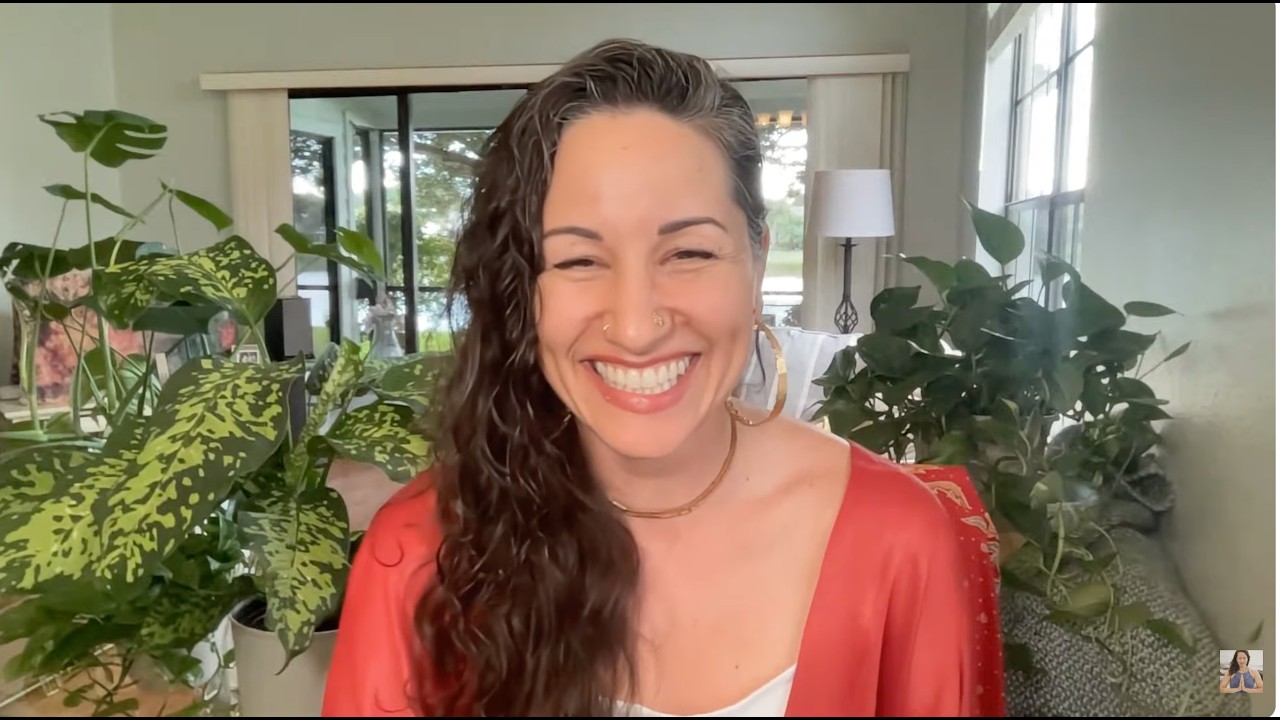
Wisdom Healing Qigong is a somatic practice that integrates gentle, flowing body movement with visualization and healing sound to discharge accumulated stress, traumatic tension, and physical blockages. The method works by consciously connecting the mind with subtle energy (chi) throughout the body, using spinal rotations, hand gestures, and three layered heart-opening sounds—each corresponding to physical, emotional, and spiritual dimensions of healing. The practice is designed to be accessible (can be done sitting, standing, or lying down) and to restore energy flow, reduce energetic contraction, and support the nervous system's capacity to release.
What is Wisdom Healing Qigong and How Does It Address Stress?
Wisdom Healing Qigong, as taught by Master Mingtong Gu, is a system for consciously working with the body's energy to reduce what he describes as "the cumulative stress of life"—the layers of physical, emotional, mental, and spiritual contraction that accumulate from both daily work pressure and larger life circumstances, including natural disasters and personal challenges. Unlike purely cognitive approaches to stress management, Qigong works directly through the body and energy system.
The foundational principle is that the mind is "a key" to connecting with one's own body and with the subtle, invisible energy that flows within and around us. By pairing conscious intention with movement and breath, practitioners awaken dormant life force (chi) and create conditions for blockages—physical and energetic—to release. This differs from exercise aimed only at physical fitness; instead, the practice explicitly targets the energetic root of stress and trauma held in tissues and the nervous system.
How Do Spinal Rotations Release Physical Tension?
The core movement sequence in this practice involves slow, mindful rotations of the spine—working the low back, middle back, and upper back in each direction. Master Gu instructs practitioners to hold each rotated position while internally straightening the spine and stretching the skeletal frame, creating what he calls an "internal stretch" that operates simultaneously with relaxation. This is not a forced stretch; rather, it's a held position that invites the nervous system to recognize and release chronic holding patterns.
The instruction is to "embrace all the sensation feeling inside of you—especially the tightness, the stress, even the pain." Rather than pushing sensation away or distracting from it, the practice asks the practitioner to notice, acknowledge, and allow the body to release what it has been holding. The rotation works the entire spinal column progressively, addressing different segments and the nerve pathways associated with them. By continuing these rotations through multiple cycles, moving toward the front center and repeating, the practice creates a rhythm that conditions the nervous system toward relaxation and lets go.
What Role Do Healing Sounds Play in Opening the Heart?
After the spinal rotation work, the practice shifts to three distinct healing sounds, each layered with specific intention. The first sound resonates deeply into the chest, activating the physical dimension of the heart and the lungs. Practitioners make the sound while opening their hands outward, feeling energy expand in front and around the body. The instruction is to repeat this sound multiple times with the intention of releasing "any stress, any tension, any contraction from the past, beyond any story, any history," and to activate "greater energy flow, more health, greater happiness."
The second sound shifts to the emotional dimension, specifically opening what Master Gu calls "the emotional energy of your heart for more joy, more happiness, more loving kindness." This sound is made with the same outward hand motion, allowing practitioners to consciously discharge emotional holding and activate heartfelt states. The third and most subtle sound, "Shing," is kept quiet and involves moving the hands up and down between the heart and brain, awakening what is called "the spiritual dimension of your heart."
The three-part sound sequence recognizes that trauma and stress are not stored only in the physical body but also in emotional and spiritual dimensions. By engaging the voice and directing intention, practitioners harness the vibrational medicine of sound itself—a principle long established in traditional Chinese medicine and Qigong practice.
How Does Visualization With the Blue Sky Support Healing?
In the final meditation phase, Master Gu guides practitioners to visualize an "infinity blue sky" and "pure energy" in this boundless space. This visualization is not escapist; instead, it serves as a healing resource. Practitioners are instructed to smile inwardly (a technique known as inner smile in Taoist energy work) and to consciously direct the image and felt sense of the blue sky toward areas of the body where tension, disconnection, or challenge is felt.
The visualization works by establishing a mental image of vastness and purity (the infinite sky) and then "conditionally nourishing" tense, contracted, or painful areas with this image. The instruction is to imagine the pure energy and the blue light "naturally nourishing, naturally purifying, naturally cleansing, naturally energizing" the affected region. This engages what in neuroscience is called the parasympathetic nervous system—the body's relaxation response—while simultaneously using the mind's capacity to direct healing intention and energy flow toward specific areas that need support.
What Is the Role of the Inner Smile and Inner Awareness in This Practice?
Throughout the practice, Master Gu emphasizes "inner smile" and "inner awareness" as the energetic substrate of healing. The inner smile is not a facial expression but a felt sense of friendliness, compassion, and acceptance directed toward one's own body and all the sensations within it. This is significant because many people, when experiencing pain or emotional discomfort, instinctively contract further, creating a secondary layer of resistance and tension.
By cultivating an attitude of loving kindness toward what arises—including the tightness, stress, and pain itself—practitioners create a paradoxical condition: relaxation within the stretch, acceptance within discomfort. The nervous system interprets this shift from resistance to acceptance as a signal of safety, which allows the parasympathetic brake to engage and genuine release to occur. Inner awareness is the capacity to notice, without judgment, what is being held in the body, emotions, and spirit, making it possible to work with it rather than deny or dissociate from it.
How Is This Practice Accessible to People With Different Physical Abilities?
Master Gu emphasizes that Qigong movements are "adaptable for accessibility, gentle, and free flowing." The spinal rotations can be performed at whatever speed and range of motion feels safe for the individual; the bouncing movement at the beginning can be modified to suit joint health or mobility constraints. Crucially, the accompanying visualization and meditation components can be done in any comfortable position—sitting, standing, or lying down—making the practice available to people recovering from injury, managing chronic pain, or experiencing mobility limitations.
The focus on internal sensation and subtle energy work, rather than on achieving external form, also democratizes the practice. A person lying in bed can engage the same quality of mind-body-energy connection as someone standing and moving. The healing is not dependent on how large the movement is, but on the quality of attention and intention brought to it.
What Is the Intended Outcome and How Long Does a Full Practice Take?
The overall intention, as stated by Master Gu at the beginning, is to "reduce the energetic stress, energetic contraction" across all dimensions—physical, emotional, mental, and spiritual—while simultaneously "renewing your life energy to enhance your health, enhance the functioning of mind, body, heart, and spirit." The full guided practice, as presented in this 22-minute session, moves through three phases: relaxation and bouncing, spinal rotations with intention, heart-opening sounds, and closing meditation with visualization.
The practice is structured to work within a single session but can also be integrated into daily life. Because the core movements and sounds are relatively simple and can be learned through this video, practitioners can return to them as needed—using the spinal rotation sequence when stress accumulates, or using the heart sounds when emotional release is needed. The meditation can extend or shorten depending on the time available.
Where to Go From Here
To deepen this practice, Master Mingtong Gu and the Chi Center offer online courses, retreats, and additional resources through their website (chicenter.com). The free "Ancient Healing Secrets" eBook available at chicenter.com/ancientsecrets provides foundational knowledge about energy and healing principles. For anyone interested in learning this practice, the guidance is to begin by following along with this video, initially with eyes open if needed, and to progress toward eyes-closed practice as familiarity grows. The emphasis throughout is on working at "your own best effort," without force or perfection, and on continuing to honor and notice the sensations that arise as healing occurs.
Chinese Qigong master and founder of the Chi Healing Institute who bridges ancient energy practices with modern wellness to guide global students toward healing and spiritual devel…
Wisdom Healing Qigong uses slow spinal rotations combined with inner awareness and acceptance of tension—rather than pushing it away. By holding stretched positions while breathing and directing loving attention to tight areas, the nervous system signals safety and releases chronic holding patterns, often enhanced by healing sounds that resonate tension out of the physical and emotional body.
The blue sky visualization creates a mental image of vastness and purity that can be consciously directed toward areas of pain or disconnection. By imagining infinite blue light and pure energy naturally nourishing and cleansing affected regions, practitioners engage the parasympathetic nervous system's relaxation response while using intention to guide healing energy to specific areas that need support.
Yes. Qigong movements are adaptable and can be done sitting, standing, or lying down depending on comfort and ability. The practice emphasizes the quality of attention and internal energy work over the size of external movement, making it accessible to people recovering from injury, managing pain, or with mobility limitations.
The inner smile is an attitude of compassion and friendly acceptance directed toward your own body and the sensations within it, rather than a facial expression. It shifts the nervous system from resistance and tension to acceptance, which signals safety and allows genuine relaxation and release to occur—creating the paradox of relaxation within discomfort.
The first sound resonates into the chest to release physical tension and activate lung function; the second opens emotional energy for joy and loving kindness; the third, kept quiet, connects the heart and brain to awaken spiritual dimensions of healing. Together they work the physical, emotional, and spiritual layers where stress and trauma are held.
No. Wisdom Healing Qigong is a complementary practice designed to reduce stress and support wellness. It should not replace professional medical advice or treatment. Always consult your healthcare provider before beginning any new wellness program, especially if you have existing health conditions or are taking medications.
The complete guided practice shown in this video takes approximately 22 minutes, moving through relaxation, spinal rotations, heart-opening sounds, and closing meditation. However, individual components can be practiced separately or extended as time and need allow.