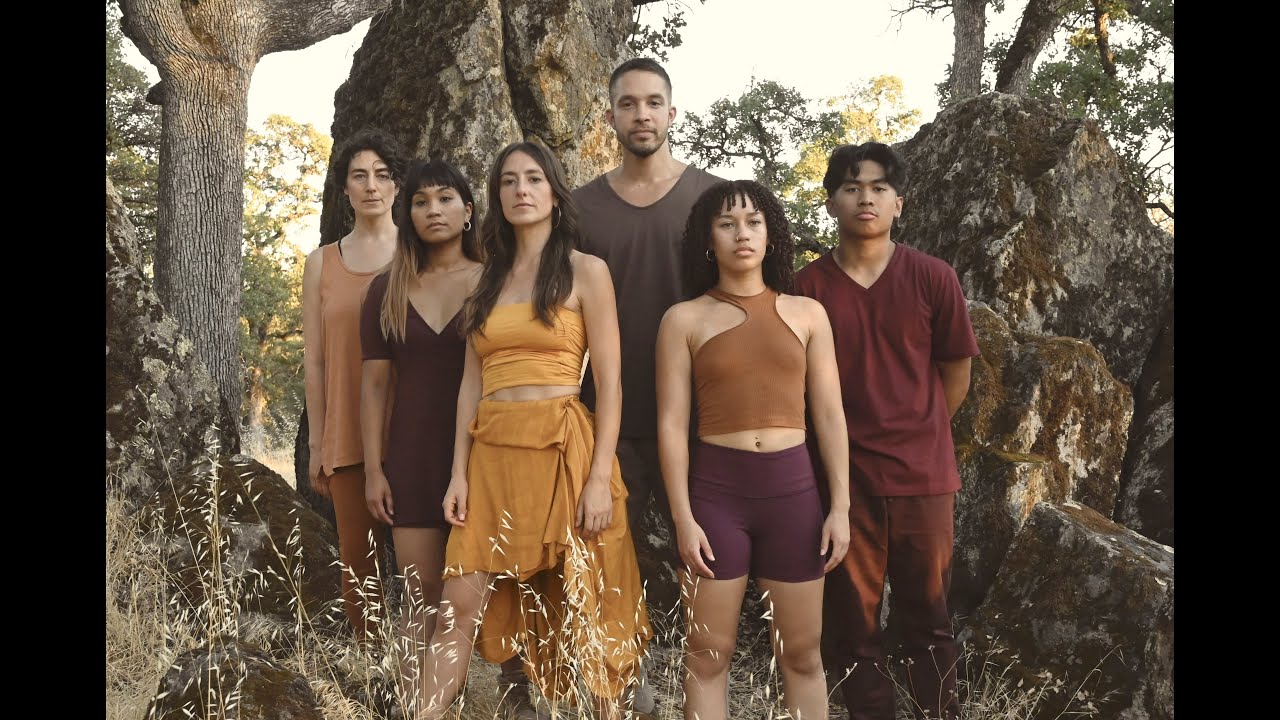
In this live performance recorded in Northern California's forests, Ayla Nereo sings "Whispers"—a song that weaves together themes of deep listening, reciprocal relationship with the living world, and the vulnerability required to receive guidance from sources beyond ourselves. The piece moves from intimate address to specific trees and elements to a collective inquiry about how we tend to those who sustain us, exploring the interconnected web of care that runs through all life.
What Is the Core Invitation of "Whispers"?
The song opens with a direct address: "Pine, I am calling to you" and "singing to you red cedar." Rather than viewing nature as backdrop or resource, Nereo frames the song as a conversation—a practice of vocally reaching toward specific beings and asking them to meet her with their own voice. The opening establishes a reciprocal stance: she is not speaking into a void but entering into dialogue with the more-than-human world.
This approach reflects a different epistemology of voice and song. The song is not about transmitting a pre-formed message but about creating a vessel through which other forms of knowing and presence can flow. "Help us open these vessels to receive your Whispers," she sings, positioning humans as receivers rather than sole speakers. The request is to become permeable—to open the ears, to "surrender what will you tell me," to allow guidance and wisdom that originates elsewhere to enter the body.
How Does the Song Address the Body as a Channel?
Central to "Whispers" is the image of the body as a living instrument—literally, vessels and lungs. "You bore my body, open these vessels to receive your Whispers tender breath, keepers, give life to these lungs." The song treats breathing and embodiment not as private or separate but as deeply relational. The air itself becomes a messenger; the lungs become conduits for communication between human and world.
This framing challenges the common Western assumption that voice originates from individual intention. Instead, Nereo suggests that to truly sing or speak is to allow one's body to become a channel for breath and wisdom that comes from beyond the isolated self. The visceral language of lungs, ears, and breath grounds this philosophical claim in lived embodied reality. When she sings "may I open my ears and surrender," the conjunction matters: listening and yielding are inseparable actions.
What Role Does Acknowledgment of Pain and Drought Play?
Midway through the song, the lyric turns darker: "There are rivers going, borrowed, made of pain, drought of rain." This is not a turn away from the song's core message but a deepening of it. The acknowledgment that the world is suffering—that rivers are depleted, rain is scarce, pain is embedded in the systems that sustain us—is necessary context for the ask that follows: "Help us open these vessels to receive your Whispers."
The song does not offer platitudes or bypass the reality of ecological and human suffering. Instead, it holds both the beauty of receiving wisdom and the urgency of our moment simultaneously. The pain and drought are part of what we are asked to listen to and tend. The whispers are not separate from these realities; they may come through them.
What Does the Song Propose About Reciprocity and Regeneration?
As "Whispers" progresses, Nereo introduces an explicit principle of regeneration: "For every one of us, you can sow it by planting another of the same as the kind. You, every ending, beginning. Choose." This shifts the song from a stance of receiving to one of responsible action. To receive life—to be sustained by the forest, the rivers, the breath itself—carries with it an obligation to regenerate.
The phrasing "every ending, beginning, choose" suggests that choice and agency are central to this regenerative cycle. We are not passive recipients but agents who can choose to plant, to restore, to give back in kind. This is not a moral demand imposed from outside but an understanding of how life actually works: reciprocity is built into the fabric of existence. To participate in life is to participate in a cycle of receiving and giving, and how we complete that cycle is up to us.
How Does the Song Expand from Individual to Collective?
The song's pronouns shift subtly but significantly. It begins with "I" addressing singular trees and asking "what will you tell me?" As it develops, the voice expands: "How can I tend to the ones who pour life through these?" and eventually "How can we tend to the ones who pour life through these love?" The movement is from individual listening to collective responsibility.
This expansion matters because it suggests that the work of opening vessels, of learning to hear whispers, of regenerating what sustains us—these are not solitary spiritual practices but necessarily communal ones. "We" must open our ears together. "We" must choose to plant, to restore, to tend. The final invocation recognizes that the ones who pour life through these vessels—whether trees, soil, water, or other humans—constitute a web that cannot be honored by isolated individuals but only through collective care and commitment.
What Is the Aesthetic and Spiritual Function of the Repeated Refrain?
The core refrain—"Whispers tender breath, keepers, give life to these lungs, may I open my ears and surrender, what will you tell me?"—recurs throughout the performance with slight variations. This repetition is not filler; it is a devotional structure. The refrain functions as both request and affirmation, as a kind of invocation that deepens each time it is sung.
By repeating these lines, Nereo is not simply hammering home a message but creating a sonic and embodied space in which the listener can also practice the stance described: opening, listening, surrendering, asking. The live performance setting amplifies this; present listeners are invited into the same posture through the singing itself. The repeated refrain becomes a form of training in attention and receptivity.
How Does the Northern California Forest Setting Inform the Work?
The choice to film and perform "Whispers" in the forests of Northern California is not merely scenic. This is redwood and cedar country—ancient, large-bodied trees that embody the long view and deep roots that the song invokes. The specific geography grounds the song's address to "pine" and "red cedar" in actual, living beings present at the time of recording. Nereo is not singing metaphorically to nature in general but literally in the presence of these specific trees.
This particularity—the insistence on addressing actual pines and cedars rather than speaking about nature abstractly—aligns with what the song proposes: that true listening and reciprocity require specificity, presence, and genuine encounter. The forest is not a backdrop for human expression but a participant in the ceremony of the song.
Where to Go from Here
For those drawn to this work, Ayla Nereo offers several pathways. Her free five-day course "Meeting the Muse" invites participants into a practice of unlocking voice and creative capacity—aligned with the embodied, receptive listening that "Whispers" models. The more comprehensive "Empowered Voice" course provides a systematic approach to understanding the voice as a vehicle for authentic expression and connection. Exploring Nereo's wider discography (available on Spotify, Apple Music, and SoundCloud) reveals how these themes of reciprocity, listening, and embodied presence thread through her broader artistic work. Ultimately, "Whispers" is an invitation to begin practicing: to step into a forest or open space, to name the specific beings present, to ask what they have to teach, and to listen with the whole body.